

Bob Weir's Story Behind The Grateful Dead's 1970 Hit Truckin' Is Just As Iconic As The Song
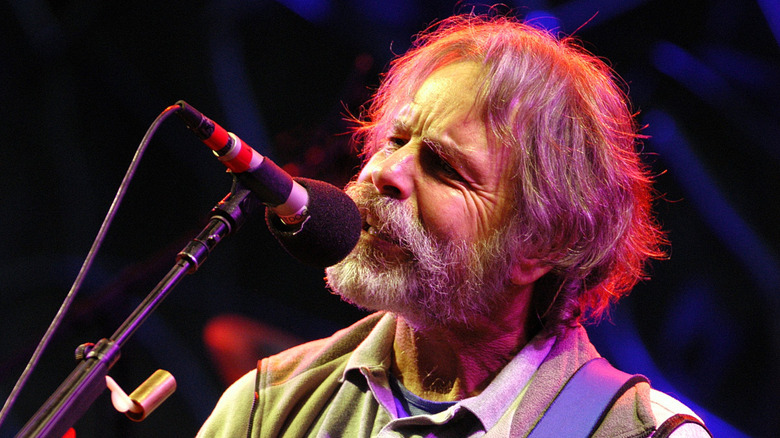
Music fans are mourning the passing of Bob Weir, who died January 10, 2026, at the age of 78. As a guitarist, singer, songwriter, and co-founder of The Grateful Dead, Weir spent three decades standing onstage next to guitar icon Jerry Garcia. Handling rhythm guitar duties for the legendary jam band, Weir's unique approach allowed Garcia to take off on his trademark improvised solos, weaving through each song while often soaring above it.
Garcia cast a long shadow, and it's fair to say that Weir's not-inconsiderable talents were often overshadowed by those of his bandmate. It wasn't until the years after Garcia's tragic death in 1995 that Weir truly became appreciated for his own major contributions to the band. That came into focus when Weir became leader and frontman of Dead & Company, which kept the band's music alive for a decade after launching in 2015.
Of the numerous songs revived by Dead & Company, "Truckin'" always got huge applause, an enduring fan favorite from the band's watershed 1970 "American Beauty" album. When examining what die-hard fans don't even know about the Dead, these fans often have varying degrees of knowledge about the origins of the song — and the real-life incident it recounts. And, when hearing that tale from the proverbial horse's mouth, it's clear that Bob Weir's story behind the Grateful Dead's 1970 hit "Truckin'" is just as iconic as the song.
Truckin' tells the story of the Dead's relentless touring — and an infamous bust in New Orleans
Over the years, Bob Weir and Jerry Garcia's quotes about one another prove their bond went beyond The Grateful Dead. And when they weren't discussing that bond, they often shared stories from the band's ragged history, dating back to when the group served as the house band at the now-infamous "acid tests" of the mid-1960s.
One of the more entertaining anecdotes from Dead lore comes from the period in the late 1960s, when the band was constantly on the road. "We were young and full of fun, and we didn't go to bed real early. We were on the road a lot, and our nightly 'celebrations' probably made touring more difficult than it had to be," Weir said in a 2017 interview with The Wall Street Journal. According to Weir, the Dead's unrelenting schedule in those days meant playing a gig in one city, partying all night and then flying to another city in the morning. "We'd sleep for an hour or so and then head to the airport," he added. "It was an endless cycle."
After a gig in New Orleans, the band's not-so-hidden history of drug use captured the attention of the local cops, who'd searched the band's hotel rooms and found precisely what they were looking for. "A bunch of us were arrested," Weir recalled, "but a settlement was reached."
Truckin' still takes Bob Weir back to those early days on the road
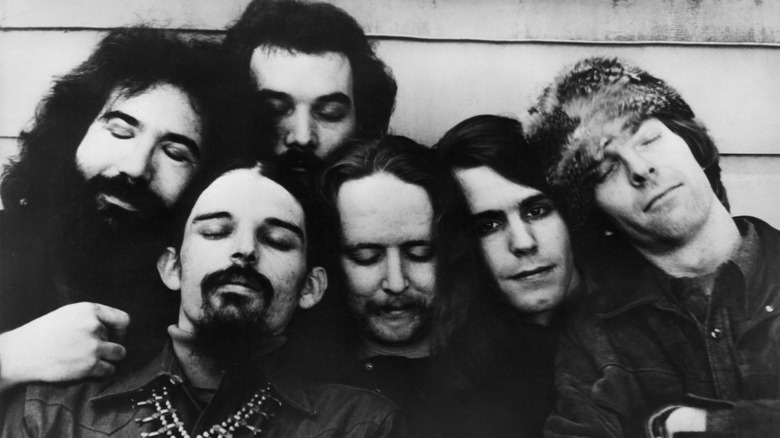
A few months after the bust in the Big Easy, Weir and the rest of the Grateful Dead were hanging out at a hotel pool in Florida, killing time until playing a gig that night. Dead lyricist Robert Hunter had presented the lyrics for "Truckin'," encapsulating the experience of traveling from town to town, the title inspired by the underground comics of Robert Crumb. Hunter even referencing the bust in one of the verses: "Busted, down on Bourbon Street."
Weir, Jerry Garcia, and bassist Phil Lesh took out their guitars and began jamming, eventually finding the melody to accompany those lyrics. "As we wrote, we came up with this bluesy shuffle," Weir told the Wall Street Journal, recalling the song was written in less than three hours. They performed it for the first time at the Fillmore West in San Francisco, later recording it for "American Beauty."
"Truckin'" quickly became a staple of Dead shows until the band's dissolution in 1995, and continued to be so with Dead & Company. For Weir, performing that song is like stepping into a time machine and returning to that time in the band's history. "Today, when I sing 'Truckin',' I go back to that time through my character's eyes. It's sort of a fantasy version of what my life was like then and what I was observing on the road," he added.