

Why The Hate Against Grunge Music From Metal Fans Is Totally Unjustified
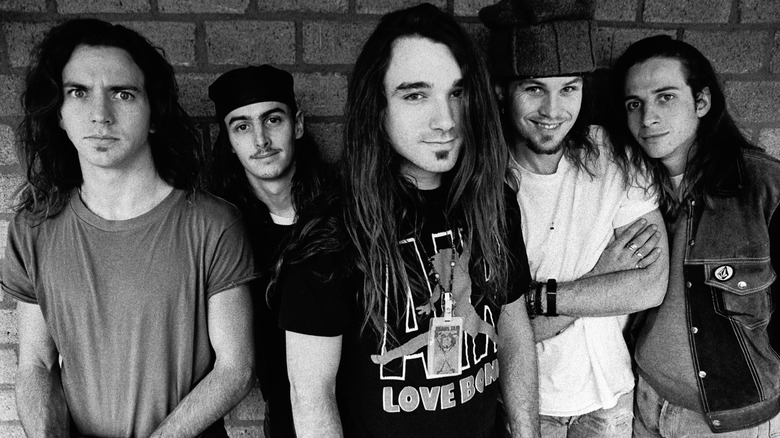
Anyone raised on metal music has likely heard grunge dismissed, laughed off, or straight-up beaten down by fellow fans. In the eyes of purists, grunge's lyrics were too mopey, its music was too sludgy, it didn't shred enough to be considered "legitimate" heavy music, and it was mocked for achieving the one thing it disdained most: commercial success. In the minds of many metalheads, it was a silly fad responsible for "killing metal" and ending an era of epic rock theatrics and big hair debauchery. The truth is, though, that this lingering hate for grunge is completely misplaced. The theory that grunge killed metal is a tired chapter in the bizarre history of heavy metal and total nonsense, fueled by outdated genre politics and a reluctance to face metal's identity crisis in the early 1990s.
So, let's say it loud and clear: Grunge didn't kill the entire metal genre with its meteoric rise to the mainstream. Plenty of metal acts found success during the grunge years; Metallica's self-titled album (aka "The Black Album") dominated charts in 1991, Faith No More delivered a funk metal classic with 1992's "Angel Dust", TOOL released their groundbreaking debut album "Undertow" in 1993, and Pantera released three highly successful groove metal albums throughout the early '90s, with their third album, "Far Beyond Driven," reaching the top spot on the Billboard 200 chart shortly after its release in 1994. Saying grunge decimated the entire metal genre completely ignores the success of these artists and minimizes their incredible contributions.
Grunge didn't kill all metal music
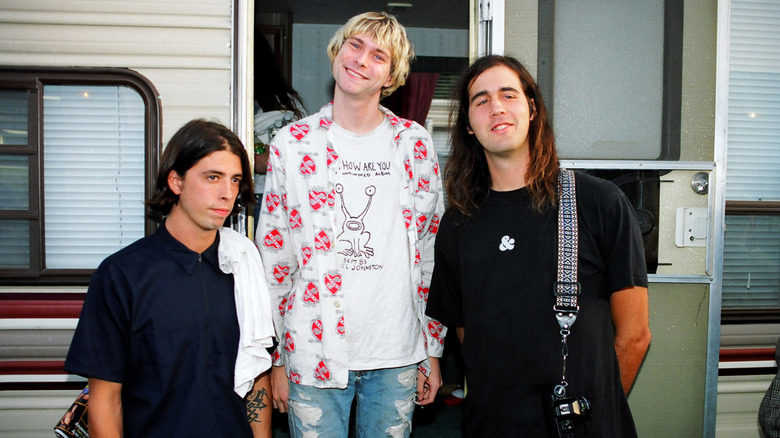
What grunge did do, though, was shift the public's focus away from glam metal, which was already in a state of decay by the time Nirvana, Alice in Chains, Soundgarden, Pearl Jam, and other grunge acts rose to superstardom. Many people, but especially the discontent and prematurely burnt-out youth of Generation X, were sick and tired of its flashy riffs and often hollow anthems. They craved something that spoke to their reality instead of a rock arena fantasy — and, at the same time, major record labels were looking for the next big thing to sell them. That next big thing hit the masses on September 24, 1991, when Nirvana's generation-defining album "Nevermind" dropped and made it clear that grunge, with its unpolished sound and raw, introspective lyrics, was the antidote Generation X was waiting for. The public said "goodbye" to hairspray, spandex, and decadence and embraced flannels, grit, and authenticity.
Sure, the ethos of these grunge acts was similar, and the complete opposite of glam metal's vibe, but make no mistake — the music was diverse. Listen closely, and you'll notice grunge acts that became some of the most important rock bands of the '90s had different sounds despite being lumped together as "grunge." Alice in Chains and Soundgarden ripped metal riffs, while Nirvana channeled punk, and Pearl Jam leaned into classic and alternative rock. People got a slightly different flavor from each act, which helped keep grunge interesting.
Grunge helped metal redefine its future
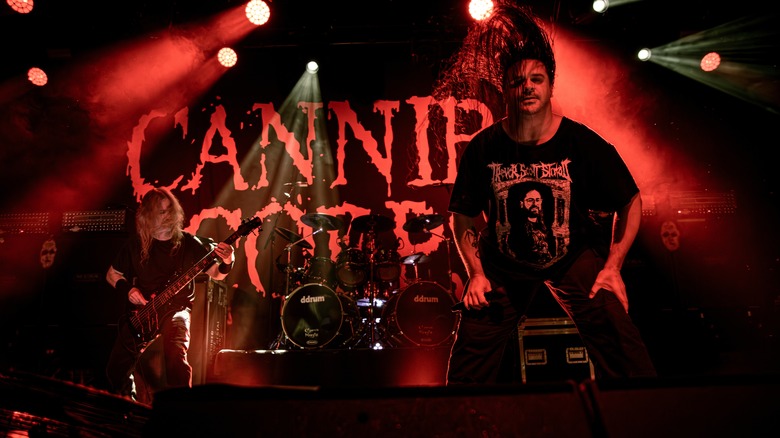
Metal needed to evolve and cultivate more authentic and original acts if it wanted to re-emerge as a rock power player. Luckily, plenty of interesting music was made behind the scenes as the Seattle Sound flooded the airwaves. Away from the public eye, metal was finally able to explore more acts that pushed boundaries with heavier sounds, darker themes, and genre-bending music. Don't get it twisted, though — extreme metal scenes existed long before the early '90s, and grunge's rise did not cause their success. However, grunge taking the rock 'n' roll spotlight for a few years gave metal time to reset and figure out what was next.
It turns out that the future was lingering in the shadows of underground metal scenes, with bands like Cannibal Corpse, Mayhem, Sepultura, Death, and Cradle of Filth gaining momentum and growing their fan bases while grunge took over MTV. This growth helped subgenres like death metal, black metal, progressive metal, and industrial metal establish themselves as key pillars for metal's future and paved the way for even more explorative genres, like nu-metal and metalcore, to emerge in the new millennium. Without this period of exploration, the current metal scene may not be the big, beautiful melting pot it is today.
Here's an often untold truth of grunge music for rock fans to remember: it never killed metal. What grunge actually did was show how stagnant mainstream metal was and gave the genre time away from the spotlight to look within during an uncomfortable, but necessary, period of transformation that helped evolve it into the strong ecosystem it is today.