

Fleetwood Mac's Dreams Was Rock Perfection Until TikTok Ruined It
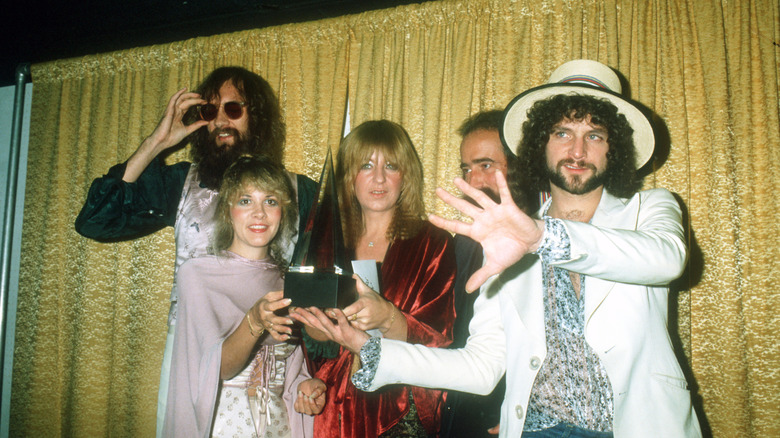
No matter how perfect or renowned a song is, the internet may always find a way to ruin it. And this has been tried once again with a song without many competitors in quality, or popularity. When Fleetwood Mac released their breakout, and now classic, "Rumours," in 1977, it went on to go No. 1 on charts in the U.S. and U.K. alike, among others, won Album of the Year at the 1978 Grammys, and now has sold over 40 million copies today. It's plain and simple: there's not many rock albums that have been as successful, beloved, and acclaimed.
And on this classic album was the smooth, groovy rock track "Dreams," which has become the band's top hit to this day, and is now being rediscovered, and posted to oblivion, on popular social media platforms. But some new fans don't know the gold they've struck with this Fleetwood Mac masterpiece, and may not be appreciating it fully, so it's worth taking a moment to understand where the song came from, and why it's so great.
The song, written by Stevie Nicks, was conceived in the height of the tumult following the band at the time, making the song and album's success all the more impressive. It contains one of the most memorable and catchy hooks in all of classic rock, sung by Nicks, Lindsey Buckingham, and Christine McVie: "Oh, thunder only happens when it's rainin'/ Players only love you when they're playing / Say, "Women, they will come and they will go"/ When the rain washes you clean, you'll know."
History of virality
As is understandable with this near-perfect statement found by the band, "Dreams" has gone consistently viral in the 2020s, especially on short-form social platforms like TikTok, as well as Instagram Reels and YouTube Shorts. An original video went viral of a man drinking from a large bottle of cran-raspberry juice while skateboarding, set to the song, and it became so popular that Mick Fleetwood, the drummer and co-founder of the band, enthusiastically recreated it in 2020 and posted it to TikTok.
It has an undeniable, earworm nature sprouting from the mellow and pretty vocals that are backed by warm chords and harmonies. This is a track that's appealing for almost all audiences, and has thus become the backdrop for all kinds of videos — ranging from cooking to lipsyncing to edits and more, as it's been popular on the platforms. This success online has kept the song and the band especially relevant among modern audiences, with "Dreams" boasting over 2.5 billion streams on Spotify alone, but as fans of classic music know, the internet doesn't always get it right. Often, the meaning, message, or story behind the music is left behind to the tune of clicks and unappreciative audiences.
Where it went wrong
"Dreams" is undeniably a masterpiece, a height of classic rock music by one of the most successful bands ever. With it, the band set standards for how popular music would sound. Unfortunately, a side effect to old songs blowing up online in the internet age is a lack of understanding, and at times appreciation, behind the music. Many users of short-form content apps like TikTok are of Gen Z, born between 1997 and 2012, and were obviously not around for the song, and Fleetwood Mac's, heyday.
When reduced to short-form content, often as a backdrop to something completely unrelated, music isn't able to be appreciated fully, or as intended by the artist. The song can also become horribly overplayed online, much like popular radio stations driving some hits into the ground, and though "Dreams" still holds that unforgettable, near-perfect air for some listeners, new fans who picked it up for the week may soon drop it back into the bowels of the internet, forgotten, and declared a trend of the past. In this practice, of viral videos and unappreciation, a song even this good can become ruined — but the battle is not over. To fight back, all we need to do is put the phone down, close our eyes, and let "Dreams" take us away, at full and uninterrupted attention.