

5 Rock Songs From 1968 That Sound Even Cooler Today
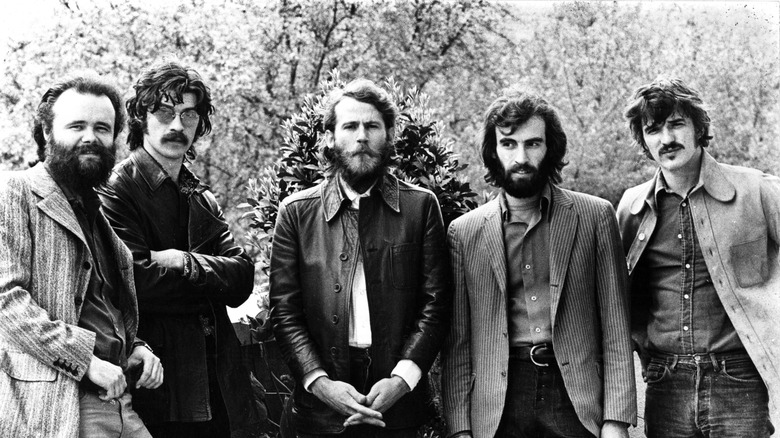
The year 1968 was fraught with change and turbulence, with a rising tide of young people and other groups calling for change and the murders of both Martin Luther King Jr. and Robert F. Kennedy. The rock music that came out that year reflected this tumultuous moment in time, and while this music may have been made close to 60 years ago, there are a few tunes that not only hold up but actually sound cooler today.
There's Pink Floyd's spaced-out and super-trippy "Set the Controls for the Heart of the Sun," with lyrics borrowed from ancient Chinese poetry that's as hypnotic today as it was in 1968. Similarly, the timeless sound of the Band's "The Weight" seamlessly combined genres — rock, folk, gospel, and soul — to create music that goes beyond time and space with its Biblical references in this cryptic traveler's tale. These and several other songs from 1968 continue to connect with us decades after they were recorded.
Set the Controls for the Heart of the Sun — Pink Floyd
Pink Floyd's song "Set the Controls for the Heart of the Sun" from the band's second studio album, "A Saucerful of Secrets," is filled with mystery and meditation, as well as a touch of menace underpinning the tune. With an unconventional use of instrumentation, including Richard Wright's vibraphone and Nick Mason's jazz-inspired improvisational tom-tom playing, and a studio's worth of echo, reverb, and the prerecorded sounds of seagulls, the song seems removed from time or place.
The lyrics only add to this feeling, with singer and bassist Roger Waters including lines taken directly from the works of several 9th-century Chinese poets of the late Tang Dynasty. Lyrics like "Little by little the night turns around / Counting the leaves which tremble at dawn" give the song an otherworldliness, especially contrasted with Waters' repeated lyrics sung in a mesmerizing cadence, "S et the controls for the heart of the sun / the heart of the sun." The latter lyric was inspired by "The Fireclown," a science-fiction novel by the author Michael Moorcock. This was Waters' first Pink Floyd song during a pivotal moment in the band's history when guitarist Syd Barrett, dealing with mental health and other issues, was exiting the band and David Gilmour was coming in. History aside, this song remains as fresh today as when the band recorded it in 1968.
Sympathy for the Devil — Rolling Stones
At first blush, the Rolling Stones' "Sympathy for the Devil" may appear to be an ode to Satan, but this song from 1968's "Beggar's Banquet" is really a condemnation of humanity's capacity for evil. Sure, you can blame Lucifer for all the horrific episodes throughout history from the Nazi atrocities of World War II to the murders of John F. Kennedy and his brother Robert F. Kennedy, but in truth, it's "you and me," — i.e., humanity — who are ultimately responsible.
With its samba beat that keeps the song rolling along, a rollicking piano line, and Jagger's swaggering portrayal of the Dark One, it's a song that defies its time even as it plows through history, beginning with Jesus' crucifixion and ending in 1968 with Robert's murder, the year the song was recorded. Even if the lyrics could go on to describe all the horrors unleashed by people on other people in the decades since the end of the 1960s, Jagger's jiving Lucifer has already made his point with no updates needed. The Rolling Stones may have been one of the most important rock bands of the 1960s, but nearly all of the songs on "Beggars Banquet" have managed to continue to sound contemporary. Still, "Sympathy for the Devil" holds a special relevance for pointing the mirror at us amid the ongoing suffering in our world.
White Light/White Heat — Velvet Underground
When you hear the song "White Light/White Heat" from the Velvet Underground's second studio album of the same name, with its muddy sound, chugging asymmetrical guitars, and Barrelhouse boogie piano, you're probably not thinking this came out nearly 60 years ago. The song, like much of the Velvets' output, defied its time and was a blueprint for later punk rock. Unlike two of the album's other songs, "I Heard Her Call My Name" and "Sister Ray," with feedback scrawl and dissonant sound, "White Light/White Heat" retains a sense of traditional song craft that helps ground it in a contemporary sound.
The album was made without the input of the Velvet Underground's manager, pop artist Andy Warhol, who the band's singer and guitarist, Lou Reed, had fired a few months earlier. The album was recorded in only two days, which helps explain its rough sound during a time when bands like the Beatles, Pink Floyd, and the Beach Boys were using the studio as another instrument. And while most people focus on the song's lyrical content about amphetamine use, Reed has described the song as also relating to enlightenment, creating a duality between the physical and spiritual, which is a subject that continues to fascinate us today.
Crown of Creation — Jefferson Airplane
Jefferson Airplane's "Crown of Creation" has a plaintive, driving sound, tight vocal harmonies, a fuzz-laden psychedelic guitar, and heavy bass that makes for a wild ride that still sounds fresh decades after the San Francisco band recorded it back in 1968. Grace Slick's soaring voice drives the song on with its somewhat apocalyptic lyrics about the need to forcefully push through the walls put up by those in power: "In loyalty to their kind / They cannot tolerate our minds / In loyalty to our kind / We cannot tolerate their obstruction."
The song's creator, Paul Kantner, based the song on a science-fiction novel, "Re-birth," by John Wyndham (yes, another song inspired by sci-fi). The novel takes place in a post-apocalyptic world in which a new race of psychic people are hunted down by an old guard trying to prevent change. It makes sense that this theme would resonate with a young Kantner in 1968 during a time when a new generation was pushing for change. And these themes remain as relevant today, perhaps even more so, than they were when Jefferson Airplane recorded the song.
The Weight — The Band
The Band's "The Weight" has a heaviness that keeps it from ever drifting into nostalgia or being tossed away as a historical artifact. It lives and breathes and sounds as vital today as it did when the Band recorded it for the debut album "Music From Big Pink." The song is full of compelling characters, Biblical references — Nazareth, the devil, Luke, and the Judgement Day, among others — and a rolling storyline that matches the spirited feel of the music. Robbie Roberston, who wrote the song (and was a woefully under-appreciated guitar wizard), once said: "The Weight" had "a kind of American mythology I was reinventing using my connection to the universal language" (via "The Encyclopedia of Great Popular Song Recordings").
A sense of the universal manages to shine through this song, helping to keep it relevant. Musically, its a fusion of various genres, close harmonies, and a variety of instruments, including mandolin, organ, and piano, that combine to give it a timelessness. The song's staying power is also on display in the number of other artists who have covered the song (more than 100), both in the past, as was the case with Aretha Franklin, but more recently as well by bands like Weezer, Travis, and Giant Sand. Though "The Weight" was released in 1968, its timelessness makes it even cooler today.