

5 Classic Rock Album Interludes That Are Actually Worth A Listen
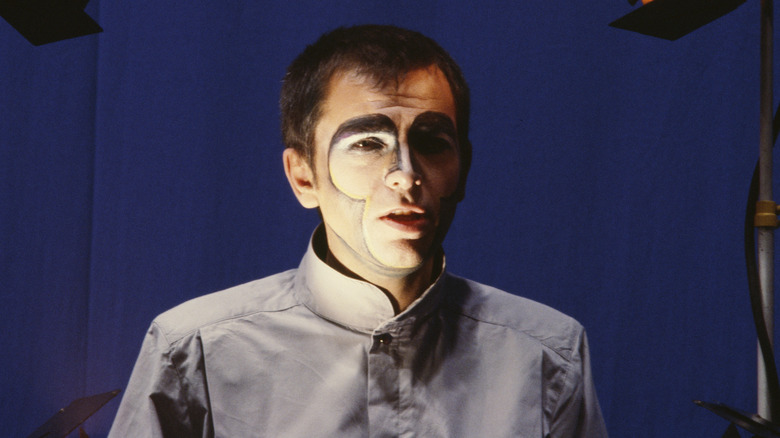
Sometimes, our favorite moments from classic-rock albums aren't even songs. They're interludes, the brief not-quite-tunes that emerge from a record's grooves to entrance and bewitch us, often weaving a spell more powerful than the full-fledged songs that surround them. Our picks for five classic rock interludes worth listening to can be spare and nostalgic, like Roxy Music guitarist Phil Manzanera's Latin-infused acoustic guitar and oboe duet "Lagrima." Or, they can set the stage for what happens next, like the moody, mysterious, and emotional "Start," which pricks the hair on the backs of our necks before colliding with Peter Gabriel's paranoid "I Don't Remember."
Interludes can include lyrics, like Jethro Tull's storytelling "Cheap Day Return," an everyday vignette set on a freezing train platform, or they can spotlight wordless vocals, like Iggy Pop's tortured wails, which accentuate the sense of loneliness and dread that undergirds "Night Music." Some of the best interludes, like Led Zeppelin's rippling "Black Mountain Side," deftly bridge the longer songs that precede and follow them.
Ultimately, interludes are short, so we've limited the length of our choices to two minutes and 30 seconds or less. They also don't open or close an album, serving as either a palate cleanser or a linking device between two songs. Here, then, are our picks for classic rock's best interludes, the intriguing, enchanting, and most-listenable pieces of music that often enhance great albums.
Phil Manzanera - Lagrima
As snaking, backward-tracked acoustic guitar entwines with eerie, sorrowful oboe, a Latin melody emerges, suggesting a Caribbean folk tune you've heard somewhere before but can't place. Clocking in at just under two minutes and 30 seconds, the instrumental interlude "Lagrima" shines brightly on an album filled with virtuosic playing, inventive arrangements, and memorable songs.
Noted for his textured guitar work in Roxy Music, Phil Manzanera released his first solo album, "Diamond Head," in 1975. Split between songs and instrumentals, the collection showcases Latin music, quirky art rock, and sinuous funk. Boasting a battalion of guest stars including Roxy Music members, Mazanera's bandmates in outré jazz combo Quiet Sun, Soft Machine's Robert Wyatt, King Crimson's John Wetton, and ex-Roxy member Brian Eno, "Diamond Head" is as sophisticated as progressive rock but with a lighter, yet no less exploratory, touch.
Nestled near the end of the LP's second side, "Lagrima" is relatively stripped down. While Wetton's sashaying, bottom-heavy duet with Doreen Chanter, "Same Time Next Week," boasts seven musicians, "Lagrima" is a visceral pas de deux between Manzanera's plucked, strummed, and rattling guitar and Roxy reedman Andy Mackay's fluttering oboe. With coiled intensity, the mournful instrumental utilizes space as deftly as it spotlights the delicately plucked guitar and the spiraling oboe. "Lagrima" is a haunting interlude that serves as a palate cleanser between the multi-part, shape-shifting Quiet Sun showcase "East of Echo" and the soaring and epic "Alma," which closes this remarkable album.
Peter Gabriel - Start
Three tracks into Peter Gabriel's third self-titled album, "Start" runs the gamut of emotions in its brief running time. Kicking off with Gabriel's and Larry Fast's seething, oscillating currents of synths, the instrumental snippet gains an ominous sense of dread from Fast's encroaching, growling, and almost subliminal synth bass notes. Out of Phase notes that the subtle, swirling samples on "Start" may be the first use of the Fairlight synthesizer, a revolutionary instrument that would be used on countless '80s albums including Kate Bush's "Never for Ever" and Yes' "90125."
This moody bed is merely the springboard for British jazz-rock musician Dick Morrissey's bluesy, spiraling saxophone solo that gives "Start" its melodic and emotional drive. As Morrissey ululates, wails, and whirlpools, we realize that his horn is providing the "voice" for this brief, impactful piece.
"Peter Gabriel III" is a stunning example of literate, involving storytelling that is empathetic as well as paranoid. Both a howl of fury and a heartfelt plea for understanding, Morrissey's sax-work on "Start" exemplifies the album's dichotomous embrace of hope and fear, and it provides the perfect segue into the album's next song, the percussive and jittery "I Don't Remember."
Jethro Tull - Cheap Day Return
"Cheap Day Return" bridges "Cross-Eyed Mary," with its braided stream of wailing guitar, pulsing bass, and gritty vocals, and the pastoral, flute-driven "Mother Goose" on Jethro Tull's 1971 album "Aqualung." One of the untold truths of Jethro Tull is that it is an uncategorizable band, and just like the tunes that bookend it, "Cheap Day Return" is a surprising mix of styles.
Opening with delicate, cascading acoustic guitar, which unfurls a hypnotic pattern like eddies in a slow-moving stream, "Cheap Day Return" switches gears 20 seconds into its one minute and 20 second running time. After a second of silence, Ian Anderson introduces a new pattern with his acoustic, incorporating flanged strums into electric guitarist Martin Barre's sharper, spider-walking figure. The tune is nearly half over when Anderson's dusky meditative vocals kick in, singing, "On Preston platform / Do your soft shoe shuffle dance."
In Great Britain in the '70s, a "cheap day return" was an inexpensive train ticket, now called an "off peak" ticket. Anderson told The Telegraph that the interlude is about having to switch trains in the freezing cold on a visit to see his father in the hospital. "It's a little ode to my father and perhaps more importantly to the nurses looking after him in hospital," he said. Musically and lyrically, the wistful, hopeful "Cheap Day Return" connects Anderson's gritty urban portrait of a kindly sex worker in "Cross-Eyed Mary" with his surreal depiction of a summertime English park in "Mother Goose."
Iggy Pop & James Williamson - Night Theme
Amid Iggy Pop's eerie banshee wails and zombie moans, James Williamson's grimy, almost spindly-sounding electric guitar traces the percussive, cyclical melody of "Night Theme." The instrumental fragment follows the shambolic, swaggering, and saxophone-driven "Johana" and then closes out the first side of Pop's and Williamson's 1977 album "Kill City."
The one minute and 13 second "Night Theme" gets an even shorter one-minute reprise at the top of the LP's second side before segueing among a thicket of feedback and backward tapes into the chunky and charging "Consolation Prizes." The cinematic, malevolent piece of music would be the perfect soundtrack to director Edgar Ulmer's no-budget 1945 noir "Detour" or Dwain Esper's 1934 sleaze horror movie "Maniac."
Recorded as a demo in 1975 to garner a record deal and released two years later, "Kill City" was recorded under difficult circumstances. Experiencing drug addiction, Pop checked himself into the Neuropsychiatric Ward of UCLA and recorded his vocals while on weekend leave from the facility. "We were all pretty desperate at that point and we did it on the shoestring," Williamson told Write on Music. "I think it was a really good effort on our part, especially considering the circumstances." That make-or-break, against-the-odds attitude comes through in "Kill City's" music, particularly "Night Theme." The brief interstitial suggests a lonely late-night walk along rainswept streets. It's a hypnotic soundtrack for the dark night of the soul.
Led Zeppelin - Black Mountain Side
Jimmy Page unleashes coils of Celtic DADGAD-tuned acoustic guitar on "Black Mountain Side," the second track on side two of Led Zeppelin's 1969 self-titled debut album. Cyclical yet changing, the under-two-minute tune interpolates Viram Jasani's cantering tabla with Page's spiral picking and jostling strums, giving the bucolic yet invigorating piece an India-by-way-of-British-Isles vibe.
One of the darkest untold truths of Led Zeppelin is noted in Rolling Stone: The band arguably plagiarized some of its songs, including two on the debut album: "Dazed and Confused" and "Babe I'm Gonna Leave You." "Black Mountain Side," credited solely to Page, is also questionable. It bears a striking resemblance to Bert Jansch's "Blackwaterside." On his 1966 LP "Jack Orion," Jansch credited "Blackwaterside" as his arrangement of the Irish folk tune "Down by Blackwaterside." ("Folksongs of Britain and Ireland" contains a 1904 version of the song.) Asked about Page's alleged plagiarism, Jansch told Classic Rock (via Far Out), "Well, he ripped me off, didn't he?"
Regardless of the tune's provenance, "Black Mountain Side" is a meditative yet galvanizing piece of music, harder hitting and more rhythmically complex than Jansch's vocal-forward version. With irresistible momentum, Page's corkscrewing arrangement flows like a swift running stream, linking the swaying organ-driven soul rocker "Your Time Is Gonna Come" to the harder-charging, psychedelia-infused "Communication Breakdown." "Black Mountain Side" plays an integral part in establishing the flow of one of rock's most iconic and memorable debut albums.