

5 Rock Songs From 1964 That Sound Even Cooler Today
When it comes to rock music, there were so many breakthroughs in 1964 in terms of sound, songwriting, and performance style that there are countless gems that still hold up. For one, rock fans received a huge windfall of new and exciting artists in 1964, when the phenomenon that was Beatlemania arrived on American shores, blasting open the door for the so-called British Invasion that followed. At the same time, homegrown bands were exploring harsher sounds and embracing a can-do attitude to create the first generation of garage rock.
Here, then, are five tracks that we think sound even cooler today than when they were released all those years ago. Not only do they capture the cutting-edge spirit of 1964 and offer a glimpse into the changing rock landscape of the day, but they have all remained important reference points for later rock musicians, and are fresh enough to sit on our playlists alongside the work of the modern artists they inspired.
All Day and All of the Night – The Kinks
Who could argue that sticking to a formula is cynical when it sounds as good as the Kinks' "All Day and All of the Night"? The 1964 smash, which hit No. 7 on the Billboard Hot 100, boasts an almost identical guitar sound to "You Really Got Me," the band's breakthrough single that was released just three months before "All Day and All of the Night." It also features the same shameless lyrical yearning, but dials up the innuendo and, with it, the subversiveness of the track while remaining vague enough to allow it to receive widespread play on rock radio.
Written by Ray Davies and recorded in a matter of hours as the Kinks sought to capitalize on their early success, "All Day and All of the Night" goes further than its predecessor in its growling power chords and in Ray Davies' vocal performance, which grows more unhinged as the track continues. "I cranked up my guitar more than on 'You Really Got Me.' When we went into the studio, everybody knew what they were doing. There was a new-found confidence. I think we did it in three takes," guitarist Dave Davies told Classic Rock. His brother Ray agrees that at the time the band was "cocky," but we have that to thank for the swagger the song would establish in generations of garage and punk rockers thereafter.
The Witch – The Sonics
In 1964, the Sonics, a pioneering garage rock group from Tacoma, Washington, released its debut single, "The Witch." Founded on a driving drumbeat interspersed with riotous fills, "The Witch" features a three-chord guitar and bass riff that bristles with creeping menace as vocalist Jerry Roslie squeals urgent warnings about the titular character.
Though it never charted, "The Witch" soon developed a cult following, and gave 1960s American garage bands the license to be as wild as possible on record. Low-budget recording and distortion, both intentional and not, lend the song a raw authenticity that would become a hallmark of garage rock. The track also inspired many bands of the era to turn toward horror and supernatural themes in their lyricism — without the Sonics there would probably be no Cramps, for one.
The success of The Sonics' debut album "Here Are The Sonics!!!", which "The Witch" opens, helped bring attention to the band as a live act, and saw it open for both the Beach Boys and the Kinks in the months that followed. The band's discography is now regarded as one of the underappreciated cornerstones of rock, underpinning everything from punk to grunge; though several other notable singles would follow throughout the 1960s, nothing in the band's discography is quite as seismic as its debut single.
The House of the Rising Sun – The Animals
The British Invasion of the mid-1960s brought a wave of incredibly talented acts from across the Atlantic to American shores — and in many cases, these British bands were entertaining American audiences with songs that were American in character. Take "The House of the Rising Sun" by British rockers the Animals, a cover of an old blues tune that seems to evoke early 20th-century America like no other song in existence.
The track is a one-take wonder. Recorded between concerts and captured immaculately in the very first pass, it sees a performance of a lifetime from vocalist Eric Burdon — whose youth in the music video seems at odds with the maturity of his voice — as well as an utterly pristine opening arpeggio lead guitar riff. Considered by some critics to be the first folk-rock record, "The House of the Rising Sun" remains a rite of passage for guitarists, a karaoke favorite, and one of the defining songs of the British Invasion. Try as you like, it remains irresistible even to modern ears.
Not Fade Away – The Rolling Stones
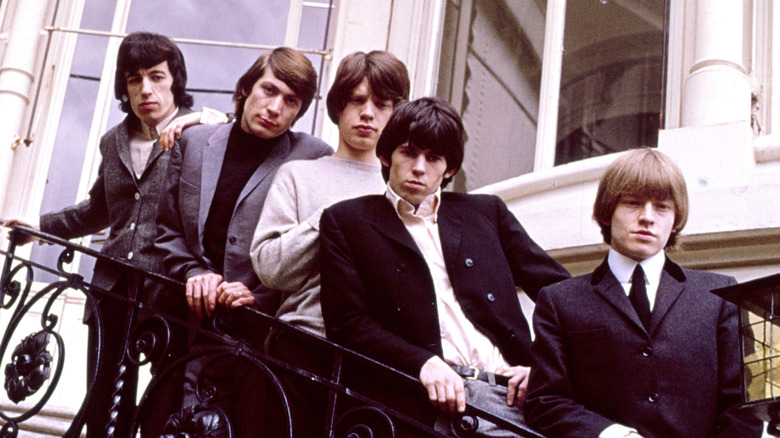
The key members of the Rolling Stones became celebrated songwriters in their own right by the late 1960s, but early in their career they looked to make their commercial breakthrough with cover versions of other people's songs. After the band became established in its native U.K. with the Beatles-penned single "I Wanna Be Your Man," the Stones turned to 1950s rock 'n' roll pioneer Buddy Holly for its next hit. "Not Fade Away" was an inspired choice. Paired with "I Wanna Be Your Man," which acted as the B-side to the single, it struck No. 48 on the Billboard Hot 100 and announced the arrival of one of the most consequential bands of the British Invasion.
"Not Fade Away" has remained an evergreen fixture of Rolling Stones' live concerts for more than six decades, and defined the sonic palette that has informed the band's best work thereafter. The song features a danceable, shuffling beat, rampant blues-influenced guitar licks, and a defiant performance from Jagger, who already sounds like a rock legend. "I'm tell you how it's going to be," a youthful Mick Jagger wails in the song's opening bars.
Well, quite. There are few songs that are as foundational to rock music as we know it today as the Stones' version of "Not Fade Away." Though countless acts, including The Grateful Dead, Bruce Springsteen, and Bob Dylan, have performed their own covers of Holly's classic down the years, nothing matches this version in terms of pure rock energy.
Gloria – Them
Van Morrison may best be known today for his unique brand of Celtic soul and blues, which has been the calling card of his solo career since the release of "Astral Weeks" back in 1968, but before he became a star in his own right, he was the incandescent frontman of the seminal garage rock band Them. Though the band would only exist for a few short years, it cut some incredible singles. The Morrison-penned "Gloria" is, fittingly, the band's crowning glory, a stomper that still has the power to rock a crowd today.
"Gloria" was originally written while Morrison was still a teenager and released as a B-side alongside Them's version of the blues standard "Baby Please Don't Go." The track features gritty guitar work, growled vocals, and an infectious call-and-response that sees Morrison spelling out the name of the woman the song is dedicated to amid chants of "Gloria!" from the band and, in live shows, the crowd; rarely does rock music get so feverish. Later covered as a successful single by The Shadows of Knight, and covered by legendary acts including Patti Smith, the Doors, and countless others, "Gloria" remains a touchstone of 1960s garage rock for generations of performers.