

These 5 Classic Rock Outros Still Stop Us Dead In Our Tracks Today
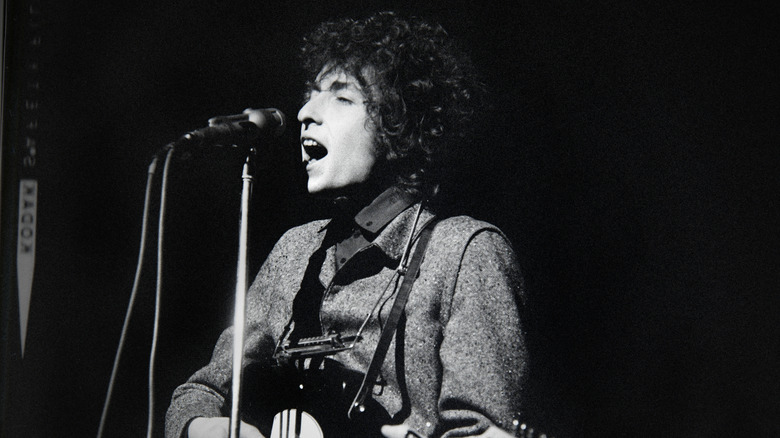
As much as an entrance matters, a song's exit may leave a far more important impression. The final notes struck by the driving pianos, vocals, or guitars, if impressive enough, may make us just have to start the track over again entirely. Whether it's a rousing instrumental outro, a set of lyrics and vocals that drive the central theme home, or an overall feel of credits rolling behind the track's short story, the songs in this list use their greatest strengths at the tail end of their runtimes.
Classic rock 'n' roll is filled with songs that leave us moved in some way, across songs from the mid 1960s to the late 1980s, and the songs in this list draw on special substances of folk, soul, and more to create their unmissable exits. If you're looking to be stopped dead in your tracks at the pure power of music, and be left feeling different than when you started, look no further than these excellent songs by The Smiths, Al Green, Joan Baez, America, and Bob Dylan.
The Smiths — I Know It's Over
"The Queen Is Dead" is perhaps the best-known Smiths album, featuring hits like "There Is A Light That Never Goes Out" and "Bigmouth Strikes Again." But another popular track from this 1986 record, one rife with longing that builds up to an epic conclusion, is the stellar ballad "I Know It's Over." The slow, haunting song is placed third on this classic album, and it's among the heights of Morrissey's captivating, brokenhearted songwriting. Vocally, the entire six-minute recording is equally excellent — it's altogether one of the best tracks in The Smiths' discography.
But where the song really shines is in its ending. "I Know It's Over" builds up to its final refrain throughout its verses and choruses, hinting at the line that will bring the song home in heartbreaking, desperate fashion: "Oh, Mother, I can feel / The soil falling over my head, oh / Mother, I can feel / The soil falling over my head." These lines repeat for nearly two minutes, and the rich delivery of the vocals is chill-inducing as it continues on. It's hard to execute a repetitive outro better than this, and it drives a core emotional pillar of the song home in dramatic fashion.
Joan Baez — Diamonds And Rust
Joan Baez's return to the charts was on the back of "Diamonds And Rust," a 1975 album that was a definite success, being certified gold the same year of its release, and this titular lead single that entered the top 40 in the U.S. The almost eerie song of love and loss, written about Baez's relationship with Bob Dylan, is excellent from start to finish: moving, poetic lyrics, pretty melodies, and an infinitely listenable instrumental. As the track builds up the story of the relationship through detailed anecdotes, it finally reaches its last verse, its outro, where the landing is stuck completely.
The song quiets a bit, and Baez sings the beginning of the verse: "Now you're telling me, you're not nostalgic / Then give me another word for it / You were so good with words / And at keeping things vague," as her voice rings with undiluted emotion and the music builds back for the final punch: "'Cause I need some of that vagueness now / It's all come back too clearly / Yes, I loved you dearly / And if you're offering me diamonds and rust / I've already paid." It just doesn't get more heartstopping than this, as Baez delivers perfect melodies over the rolling instrumental.
Al Green — Dream
Al Green's solo career was marked with heights like "Let's Stay Together" and "How Can You Mend a Broken Heart," but something else special was in the air in 1977 on "The Belle Album." This album's outro, the seven and a half minute odyssey of soul, is "Dream," and its buildup to a grand outro is second to none. It's excellent for its entirety, but the final push of the song into the last minute and a half is another experience entirely.
Green's vocals are among the best of the '70s, but the out-of-body feeling of this track is thanks to the stunning synths, warm guitars, and background vocals, as well as the swinging tempo that lulls back, only to return in full force. The simple chorus — "Dream / Dream / Just dream / We can make it all come true" — which returns during the outro, doesn't read as excellent as it sounds; a full release of soul into the microphone. "Dream" is a can't-miss track if you're looking to be completely wowed by the music, held still and awestruck as a perfect song flies past your ears.
America — Ventura Highway
Though "Ventura Highway's" opener is about as excellent as it comes, with a stunning and instantly recognizable guitar lick, America saved their best for last, with a moving outro that makes the track truly larger than life. Released in 1972 in collaboration with George Martin, "Ventura Highway" is an ode to a picturesque drive down the coast at sunset, or midday, or any beautiful hour of the day. There's not a dull moment in the song, with a memorable chorus and verses that fit the ambiance perfectly, but its short but sweet outro is what makes the moment stick.
In its last 30 seconds or so, the guitars swell to their greatest peak, and the simple "do-do-do-do" lyrics create the feeling of wind swelling and passing over the convertible sound, which the band is driving. It's the climactic moment of the three-minute song, and each part falls perfectly into place to bring us out to that picturesque coast in an instant. The song has remained popular for a reason, and this outro will never fail to hold summertime in a bottle.
Bob Dylan — Like A Rolling Stone
Maybe it's cheating to include one of the most storied tracks in rock 'n' roll history, and though "Like A Rolling Stone" is excellent from start to finish, the track finishes so strongly that it couldn't keep away from this list. Released in 1965, this is the song that vaulted Dylan's career into the mainstream and cemented his place within rock music (as he "went electric"), as well as folk.
Its bright organs and rolling guitar licks contain an undoubted building energy for its nearly seven-minute runtime, and the final verse and chorus complete the grand instant classic. Dylan steadily gets more passionate as the song rolls along, and by the final verse and chorus, he's completely lost in the music, as he sings the iconic chorus one more time: "How does it feel? / Aw, how does it feel / To be on your own / With no direction home / Like a complete unknown / Like a rolling stone?" The organs rock out in a unique pattern behind him, as they haven't for the song previously, and Dylan finally fades out with a harmonica riff. This track has a certain magic to it, and there's no doubt this outro has been a key factor in cementing it as a classic.