

5 Hits That Prove 1965 Was The Decade's Best Year For Blues Rock
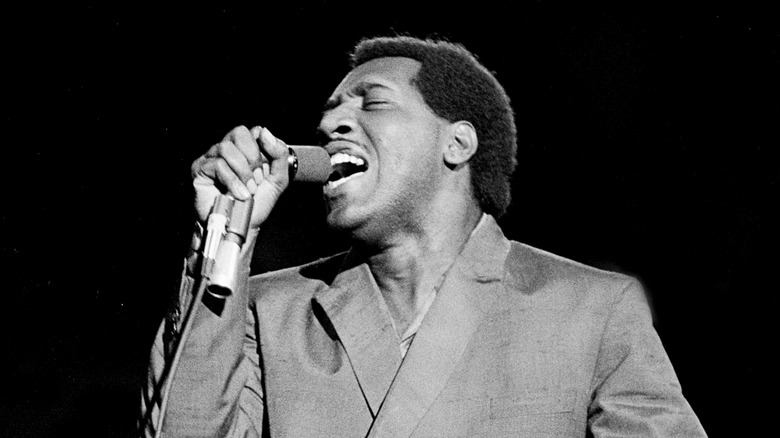
The 1960s birthed and popularized blues rock, which enjoyed a flurry of great years throughout the decade thanks to legendary acts such as Otis Redding. But one year from that decade truly showcased the versatility and range of blues rock: the absolutely stacked peak of 1965, with its sublime combination of pop-focused commercial hits like the Rolling Stones' "Heart of Stone" and more classic yet timeless works from Bob Dylan and the Animals.
For this list, we didn't focus solely on chart success to define these entries as hits, but also considered the outsized influence that these blues rock classics of 1965, such as the Paul Butterfield Blues Band's "Born in Chicago," had on future music. Each of these entries is widely recognized as being an exemplary blues rock masterpiece, and we've selected a variety of different takes on the genre. But aside from being outstanding blues rock songs, they all have one thing in common: they were all part of that premier year for '60s blues-infused rock, 1965.
Don't Let Me Be Misunderstood — The Animals
Originally written for music legend Nina Simone, the blues and jazz song "Don't Let Me Be Misunderstood" took on a new life entirely in '65 when it became a rock hit for the Animals, the British band best known for its superior cover of "House of the Rising Sun." And while "Don't Let Me Be Misunderstood" is sped up to another gear entirely in the Animals' version, it remains authentic to the original. Released in early 1965, it peaked at No. 3 in the U.K. and No. 15 in the U.S. Overall, it's one of the biggest hits for the band.
"Don't Let Me Be Misunderstood" operates within the more early-sounding peaks of blues rock, yet captures many of the factors that made blues rock popular in the first place: a driving, funky bassline, crooning vocals, and catchy emotional hooks. But what makes it really stand out is how it keeps to its roots, employing as much power of Simone's recording as it can across its short two-and-a-half-minute runtime as it delivers the integral, anthemic message: "I'm just a soul whose intentions are good / Oh Lord, please don't let me be misunderstood."
Heart of Stone — The Rolling Stones
During the heyday of the Rolling Stones, it was nearly impossible to visit the charts and not come across one of its songs. The band that defined and popularized rock 'n' roll in all kinds of subgenres and styles was also a key proponent of blues rock, and the '65 hit "Heart of Stone" was yet another reason that year shone for the genre. While it was one of many chart and critical successes for the Rolling Stones in the mid to late '60s, "Heart of Stone" is among the most essential of its blues rock catalog. First released in December 1964, the song entered the U.S. charts in January 1965 and peaked in February that year at No. 19.
The funky, slow swinging song sung by Mick Jagger takes a cynical angle on love, telling the story of a lady noticed by the narrator who is seemingly impervious to the protagonist's wiles: "Oh, no, no, no / You'll never break this heart of stone, darling / No, no, this heart of stone / You'll never break it, darling." Its blend of the blues with a more anthemic, popular rock style is a likely reason for its success and enduring appeal, as listeners of the time and beyond are able to find real emotion packed within this hit track.
I've Been Loving You Too Long — Otis Redding
Otis Redding was a one-of-a-kind musician, turning a uniquely powerful voice into a number of iconic songs that have kept his legacy alive to this day. Though his biggest hit, "(Sittin' On) the Dock of the Bay," came in 1968, after Redding's tragic death the year prior, he was still making waves well before with his unique intersection of blues, soul, R&B, and rock 'n' roll. Redding undoubtedly made his mark in '65, namely with his album "Otis Blue/Otis Redding Sings Soul" and its stand-out track "I've Been Loving You Too Long," which spent 11 weeks on the Billboard Hot 100 and almost made the Top 20.
The song blends Redding's trademark, emotionally charged voice with slow-paced modern electric guitars and backing instruments. With both the spirit of classic soul and rock 'n' roll, Redding delivers a timeless performance that led to it becoming a legendary track. Indeed, the song was covered by the Rolling Stones not long afterward, furthering its entry into rock legend. It's a can't-miss entry of the beauty of blues rock, and among the best ballads of its type.
Born in Chicago — The Paul Butterfield Blues Band
"Born in Chicago," now regarded as a blues standard and covered by all manner of artists from Pixies to Tom Petty and the Heartbreakers, got its start in '65 after being written by Nick Gravenites. It may not have charted well at the time, but was hugely influential and has since found appreciation in the streaming age, with well over 5 million listens on Spotify by mid-2026. The Paul Butterfield Blues Band, featuring musicians like the eponymous Butterfield and Elvin Bishop, as well as contributions from the likes of acclaimed guitarist Mike Bloomfield and others, enjoyed solid success in the '60s and recorded the song to lead off their 1965 self-titled album. The song is powerful though simple in its imagery, documenting the youth of Chicago of the time and their experience with violence, specifically involving guns.
Despite its quick beating tune, there's a lot of depth in its story: "I was born in Chicago in nineteen and forty-one / Well, my father told me / 'Son, you'd better get a gun.' / My first friend went down / When I was seventeen years old." It is as gritty and evocative a tune as it is sonically enjoyable, full of flashy guitar licks and swooning vocals, and it showcases the intersection of blues rock's story and sound.
It Takes a Lot to Laugh, It Takes a Train to Cry — Bob Dylan
Bob Dylan took on a lot of blues influences for his 1965 classic hit LP "Highway 61 Revisited," from the smash hits to the deep tracks. "It Takes a Lot to Laugh, It Takes a Train to Cry" is one of the latter, but not only does it form an essential part of one of Dylan's most successful albums, it's also one of his top blues rock tracks.
"It Takes a Lot to Laugh, It Takes a Train to Cry" features what is likely the most definitive blues rock round: a swinging groove, sparkling piano licks, and a crooning harmonica. The song also utilizes classic blues imagery in its lyrics, showcasing its heavy influence from the parent genre: "Well, I ride on a mail train, baby / Can't buy a thrill / Well, I been up all night / Leanin' on the windowsill." This kind of sound was one of the hallmarks of '65, and Dylan himself was a clearly influential factor in bringing blues rock to the mainstream. With over 11 million streams on Spotify alone by mid-2026, "It Takes a Lot to Laugh, It Takes a Train to Cry" is a prime example of the power of this fusion.