

5 Songs That Take Boomers Back To Their First High School Party
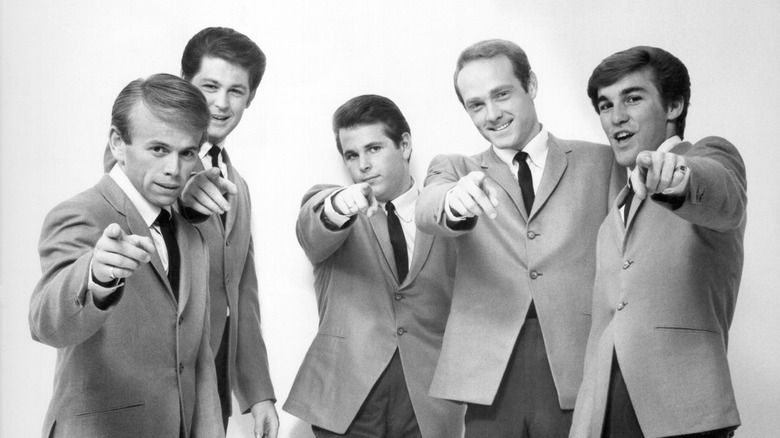
If you're a baby boomer, chances are there are special songs from back in the day that still remind you of specific moments in your youth. And with emotions especially strong during adolescence, for many older generations there are songs out there that have the uncanny ability to transport us all the way back to high school parties, reminding us of the friends we knew and the formative romances that we can still feel decades down the line.
Here, then, are five songs from around the time many boomers came of age — we've stuck to the '60s — that we think are most likely to remind them of their first high school party. From the dulcet sounds of the Beach Boys to the rumbunctiousness of the Kingsmen, they may not all hit the spot — if you are an older or younger boomer, there may be tracks here that came too late or vice versa — but let the tunes cast your mind back and see what memories they summon.
I Want to Hold Your Hand – The Beatles
"I Want to Hold Your Hand" was the Beatles' breakthrough single in the U.S., which hit No. 1 just before the Fab Four's famous appearance on "The Ed Sullivan Show" in 1964. It has remained one of the band's most popular songs, being especially associated with the dawn of Beatlemania that swept across America following its release.
The song is typical of the Beatles' early work in being a relatively straightforward, upbeat love song, but is complicated by a minor-infused chord progression and deceptively simple yet effective lyricism. Hidden feelings that you want to share with the world, and the life-changing intimacy of holding hands with someone as you tell them what you've been itching to say for so long — it's all the universal stuff of high school romances, which explains why the song resonated with millions of youngsters across America and helped to make the Fab Four superstars.
Good Vibrations – The Beach Boys
Considered the Beatles' biggest rivals in terms of songwriting ability during its 1960s heyday, the Beach Boys created some of the most optimistic and fun records of the era. "Good Vibrations" is the California group's signature song, a sun-drenched ode to carefree fun that can't help but summon the image of a long, hot summer, whatever age you might be.
The 1966 song is widely considered a pop masterpiece: With the Beach Boys' distinctive harmonies richly layered over what was later termed a "pocket symphony," the track is abstract in much of its lyricism, yet captures the joyous feverishness of young love like few other songs in popular music. The track hit No. 1 on the Billboard Hot 100, returning the Beach Boys to pop's top table in terms of commercial performance after the critically acclaimed but poorer-selling "Pet Sounds." Today, "Good Vibrations" sounds miraculously innocent, and while it will forever evoke the 1960s for those who were there at the time, it is still remarkable for its forward-thinking production, which gives it a surprisingly modern feel.
Louie Louie – The Kingsmen
Possibly the ultimate garage rock song, the Kingsmen's "Louie Louie" stands as a vivid, three-minute window into the chaos of adolescence through the lens of the 1960s. The track is a one-take wonder, rife with errors, and a bizarre vocal performance that means most of the lyrics are inaudible. The amateurish record led to accusations of obscenity and radio stations banning the supposedly lewd song, as well as an FBI investigation into the lyrics of "Louie Louie" (listen to Richard Berry's 1957 R&B version, however, and it becomes clear that the Kingsmen played it straight).
The shuffling, pulsating track is immense fun, the kind of song that makes you want to pick up a guitar and try to make music with your friends, musical ability be damned. Indeed, the track is a notable party anthem that is danceable despite its rough-and-ready production values. It hit No. 2 on the Hot 100 in 1963, and has remained a garage rock standard ever since.
Dirty Water – The Standells
Though not as well remembered as bigger garage rock classics such as "Louie Louie,"
The Standells' "Dirty Water" heartily summons the liveliness of high school parties in the mid-1960s. An ode to the then-polluted city of Boston — despite the band actually hailing from Los Angeles — the track became a breakout hit for the oft-forgotten band, reaching No. 11 on the pop chart in 1966.
"Dirty Water" is a sneering, rebellious garage number, with infectious guitar and organ parts combined with a pulsing bassline that makes it especially danceable. The song was much rawer than much of the rock that filled the charts in 1966, and it's one of those key tracks that seems to anticipate the sneer of the punk explosion that would take place a whole decade later. "Dirty Water" also gained a new following in later years thanks to its inclusion on the legendary "Nuggets" compilation in 1972. But only those who were there at the time — and possibly danced to it at chaotic high school parties — can attest to the song's riotous impact at the time of its release.
Light My Fire – The Doors
Of course, high school parties can be accompanied by intense feelings, with many of those in attendance finding themselves in the grip of youthful romance. As a result, some of the most evocative love songs of the 1960s also have the power to bring about stirring memories of the time. The Doors' "Light My Fire" sees frontman Jim Morrison at his most seductive, delivering a song that would eventually become a standard outside of the rock genre, covered by crooners and pop stars of all stripes.
But the original is the most impactful, thanks to the song's brewing intensity, with a swoonworthy, bossa nova-inspired instrumental over which Morrison works his magic. Surprisingly, the song wasn't his, but the work of guitarist Robby Krieger, lyrics and all. It was the band's breakthrough, spending three weeks at No. 1 on the Billboard Hot 100 in the summer of 1967, a dark and edgy ode to desire in the middle of the "Summer of Love."