

5 Times Metal Bands Reinvented Classic Rock Songs For The Better
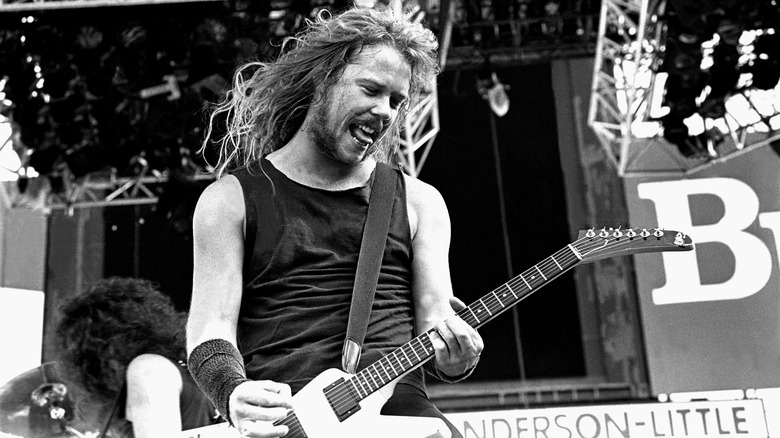
We've all debated about which cover songs are better than the original versions, and metalheads are no different. What sets the genre apart is its capacity for emotional abandon and unrelenting volume. A soulful croon can be elevated to a demonic shriek and confident, mid-tempo drum pattern can become a pummeling blast beat. That dynamic range makes for some fascinating new arrangements.
With that in mind we wanted to take a look at some metal bands that remade classic rock tracks and took them to a whole new level. Some of these reimagined works, like Orgy's take on "Blue Monday" will seem like natural evolutions on a softer concept, and others, such as Type O Negative's "Summer Breeze," will feel like they come entirely out of left field. But in every case, these covers bring out something new and raucously engaging in the source material.
Blue Monday — Orgy
Plenty of artists have broken through on the strength of a good cover. To that end, the LA-based Orgy was happy to use New Order's '80's hit "Blue Monday" as a critical weapon in their campaign to put a science fiction dance-floor stamp on the massively popular nu metal world.
The foremost factor in what sets Orgy's rendition ahead of the original is the sheer ferocity: where New Order sounds depressed — but danceable — Orgy is furious and pummeling. Singer Jay Gordon transforms Bernard Sumner's plaintive lament into a full-scale confrontation. Where Sumner wants a hug, Gordon wants blood. Metal's capacity to elevate unpleasant subject matter into realms of distorted arrangement is on full display.
As the first band to sign with Korn's Elementree Records, Orgy took the MTV world by storm. Their debut album "Candya**" did platinum sales on the strength of "Blue Monday" and another single, "Stitches." Billboard would go on to call the record one of the "three definitive nu metal albums," alongside Korn's "Follow the Leader" and Kid Rock's "Devil Without a Cause." Unfortunately for the band, their follow-up album, 2000's "Vapor Transmission," failed to capture as much attention.
Rocky Mountain Way — Godsmack
Eagles guitarist/vocalist Joe Walsh opens the original release of his solo hit "Rocky Mountain Way" with tastefully overdriven electric guitars and confident honky-tonk keyboards. It's a solid blues groove full of relaxed good time energy — not the sort of thing that initially hints at unrealized levels of heavy metal potential. That's what makes Godsmack's interpretation all the more unexpected and arresting.
Godsmack vocalist Sully Erna turns Walsh's nasally good-ol'-boy tone into a spitfire snarl while guitarist Tony Rombola intercuts with scorching bottle slide leads. Erna makes some choice changes to the lyrics that give it a darker edge. "The bases are loaded and Casey's at bat, playin' it day by day" becomes "my .38's loaded and I'm gonna crack, I'm taking out everything."
A song originally penned to celebrate Walsh's relocation to Colorado and departure from the James Gang becomes a menacing anthem of vigilante abandon. The original's laid back macho charm becomes over-the-top machismo menace.
Turn the Page — Metallica
Bob Seger's "Turn the Page," with its lonesome country-tinged vocals and searing, mournful saxophone lines might seem like an unlikely cover choice for metal's biggest band, but by 1998 it was only the latest step in a process of musical exploration from a band unfamiliar with failure. Metallica's '80s albums had become significant cultural milestones of the trash underground, and 1991's "Metallica" (commonly referred to as "The Black Album") had been their explosive crossover success. With their mid-'90s "Load" and "Reload" albums also doing massive sales numbers, the band decided to release a cover album, 1998's "Garage, Inc."
Metallica moves the sax lines over to guitarist Kirk Hammett, who recreates the passages with a bottle slide and wah-wah peddle. The change signals a new direction for the arrangement, which soon explodes into hard driving blues metal that manages to ramp up the intensity of the original without compromising its atmosphere of world-weary ennui. The ferocity of Metallica and the wistful reflections of Seger combine into a larger whole that neither could have arrived at on their own.
While the album features a slew of metal epics — including classics by Diamond Head, Queen and Mercyful Fate, and other bands that were integral to how Metallica was formed — "Turn the Page" emerged as a massive hit. The track would reach the No. 1 position on Billboard's Mainstream Rock Airplay chart with the album as a whole being certified platinum five times over.
Summer Breeze — Type O Negative
While the original "Summer Breeze" was a mainstream rock hit in its day, the Type O Negative remake emerged as part of a sonic evolution for one of metal's most iconic bands. The folksy soft rock stylings of duo Seals & Crofts might seem like unorthodox territory for a metal cover, but goth metal legends Type O Negative were anything but conventional. Forming after the dissolution of frontman Peter Steele's previous band, the band began experimenting with slower tempos, introspective lyrics, and longform songs. By the time they released 1993's "Bloody Kisses," they had matured into a Beatles-influenced metal combo with often humorous overtones. "Summer Breeze" would emerge as a standout track on the album and was featured on the soundtrack to "I Know What You Did Last Summer."
The band initially planned for their cover to be named "Summer Girl" and feature far more explicit lyrics, but the idea was scrapped following objections from Seals & Crofts. But the final result was unique in its own right: a slow, ominous dirge propelled forward by Steele's signature bass-baritone voice. Covers would go on to be a staple of subsequent Type O Negative albums until Peter Steele's untimely death in 2010.
The Sound of Silence — Disturbed
Covers were already a staple of Disturbed albums by the time a symphonic rendition of Simon & Garfunkel's "The Sound of Silence" appeared on the 2015 album "Immortalized." Previous covers had included a mosh pit-ready take on Tears for Fears' "Shout" and a rendition of the the Genesis anthem "Land of Confusion," the latter landing at No. 1, on Billboard's Hot Mainstream Rock Airplay chart.
Those earlier interpretations took danceable art pop hits and mutated them into belligerent metal monstrosities. "The Sound of Silence" goes in a different direction, opting instead for acoustic instrumentation and orchestral accompaniment. The tonal shift affords singer David Draiman the opportunity to turn in a tour-de-force vocal performance that starts in a somber, ominous lower register before leaping up to operatic highs. Searing vocal fry accentuates the melody in the gorgeous, stirring climax.
Metal remakes serve as a place for gentle emotions to expand into righteous fury. That's absolutely the case with Disturbed's interpretation but the journey — from tense contemplation to barbaric savagery — it carries all the epic gravitas of an Oscar-winning monologue.