

10 Deep Cuts Every Classic Rock Fan Should Already Know
As any classic rock fan who bought actual records back in the day will know, it is always worth delving into the albums, B-sides, and rarities to explore other aspects of an artist's creative endeavors beyond their biggest hits. Sure, the listening public has largely migrated from albums to playlists — either curated by the listeners themselves or by streaming platforms — and it seems more likely than ever that the vast majority of listeners stick to artists' biggest hits.
But
Here are 10 essential classic rock deep cuts that any classic rock fan needs to hear. Predominantly album tracks that are beloved by hardcore fans but little known to casual listeners, they reveal the rich variety of work produced by the biggest acts of the classic rock era. And if you're lucky enough to know them already, now is certainly a good time to revisit these hidden gems.
Stay – David Bowie
David Bowie's 1976 album "Station to Station" is now lauded as one of his defining albums, bridging the gap between his turn toward soul with "Young Americans" and the austere, experimental work he created with the "Berlin Trilogy" toward the end of the decade. "Stay" is an unsettling, funk-infused track from the tail end of the album that was also released as an unsuccessful single the same year. However, it has gained a special place in the hearts of many Bowie fans for his vocal performance, vulnerable lyricism, and the exceptional guitar of Carlos Alomar and Earl Slick, and Bowie himself kept it in his setlists until late in his career.
Isis – Bob Dylan
By the time of Bob Dylan's 1976 album "Desire" — dominated by the opening track "Hurricane," about a real-life miscarriage of justice in the boxing world — the songwriter was capable of deeply symbolic narrative songwriting, which was a feast for listeners who were willing to bend an ear to the stereo and savor every word. The album's second song, "Isis," co-written with Jacques Levy, shows Dylan's visionary lyrical talent at that point of his career.
Over a driving chord progression punctuated by instrumental fiddle passages, "Isis" tells the story of a new husband who decides to leave his wife to explore "the wild unknown country where I could not go wrong." He ends up befriending a man who is seeking to raid the tomb of a pyramid "all embedded in ice." The adventure, of course, goes wrong, and Dylan changes his focus to the character's marriage in a deeply mysterious track full of memorable lines.
Busy Doin' Nothing – The Beach Boys
Arguably America's premier harmonizing rock-pop group, the Beach Boys were famous for the large, bright sounds they were able to cook up in the studio. But they also had a quieter, more introspective side than that shown in their biggest hits, such as "Get Around" and "Good Vibrations." The Brian Wilson-penned "Busy Doin' Nothing" is an elegant bossa nova-inspired work that explores the songwriter's domestic life as he goes about his day, all while attempting to get in touch with friends on the phone and by letter. Hidden away as an album track on the 1968 album "Friends" and relatively obscure, it features some fabulous percussion and guitar, while Wilson's talent for melody shines through.
All Down the Line – The Rolling Stones
1972's "Exile on Main St." is considered one of the Rolling Stones' classic albums — though Mick Jagger himself has claimed that it's overrated – but even on such a classic release, there are songs that get overshadowed. For many Stones fans, "All Down the Line," an upbeat rocker found on the fourth side of the original double vinyl album, is the hit that got away.
Unmistakably Stonesy in its swagger and guitar work but peppered with jazzy brass and soulful backing vocals, the track has been a regular fixture of the band's live shows for the five decades since its release. It was released as the B-side to the single "Happy," a decision which has undoubtedly impacted its familiarity among casual listeners. Give it a spin to hear one of the era's best classic rock bands clearly having a great deal of fun.
Hey Bulldog – The Beatles
The Beatles' "Hey Bulldog" is the often-overlooked highlight of the band's 1969 album "Yellow Submarine." The record opens with several well-known Beatles tracks such as the single "All You Need is Love," but then veers into score compositions for the animated movie of the same name, composed by longtime Beatles producer George Martin. The title track, meanwhile, was already three years old at the time of the album's release, having first appeared on the 1966 album "Revolver."
As such, the album doesn't attract the same level of play as other Beatles albums, meaning "Hey Bulldog" is somewhat neglected. The track was quickly pulled together over 10 hours in studio sessions by the Fab Four at the height of their powers, with the instrumentation, lyricism, and vocal performances being especially playful. Nevertheless, it has become a hardcore fan favorite.
That's the Way – Led Zeppelin
"That's the Way" marked a major shift for Led Zeppelin when the British rockers debuted the song live in 1970. The delicate ballad represented the band's turn toward incorporating acoustic instrumentation, in contrast to the heavy electric blues of their early albums.
"That's the Way" is a lament concerning two childhood friends and neighbors, whose friendship ends when the parent of one of them forbids them from playing with "the boy next door" (the song's original title). It's one of the most moving songs in the Zeppelin catalog.
Bargain – The Who
By the end of the '60s, The Who's Pete Townshend was increasingly pouring his spirituality into the band's songs, inspired by the Indian spiritual leader Meher Baba. On the surface, "Bargain," a cut from an envisaged rock opera called "Lifehouse" but instead released on 1971's "Who's Next" album, is a hard-rocking love song drenched in guitars and synth. But as usual, there is more complexity to The Who's music than first appears. Bend your ear to the lyrics a little more, and you will hear that the song concerns losing one's ego and possessions in the search for enlightenment.
Paintbox – Pink Floyd
Pink Floyd's early experiments in psychedelia have been largely overshadowed by the band's later epics like "The Dark Side of the Moon" and "The Wall," which represent their commercial peaks. But committed fans know there is a wealth of fantastic material dating from the 1960s if you're willing to seek it out, and one prime example is the B-side of the 1967 single "Apples and Oranges," the Richard Wright-penned "Paintbox." It encapsulates the experimental approach the band enjoyed during the Syd Barrett era and features pristine vocals from Wright.
Stone Cold Crazy – Queen
With a greatest hits list including arena-friendly theatrical tracks such as "Bohemian Rhapsody" and "We Are the Champions," it's sometimes easy to forget that Queen could also hard-rock out with the best of them. "Stone Cold Crazy," from the 1974 breakthrough album "Sheer Heart Attack," shows the band at their most untethered. Lasting just two and a half minutes, it's a short, sharp shock that arguably anticipates thrash metal while maintaining Freddie Mercury's glam rock vocal phrasing and Brian May's incredible soloing skills.
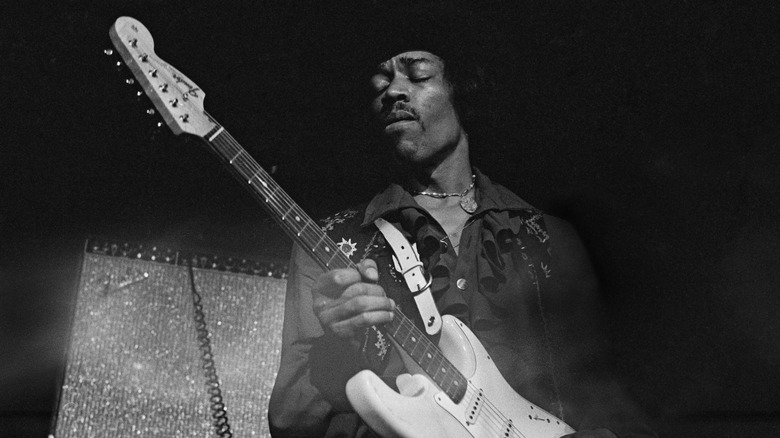
Third Stone from the Sun – The Jimi Hendrix Experience
"Third Stone from the Sun" is an epic track from the Jimi Hendrix Experience's debut album "Are You Experienced?" The composition is hugely revealing for listeners looking to unpick how jazz influenced the work of the masterful psychedelic guitarist.
Conceptually, it sees Hendrix looking to space, with distorted vocal takes seemingly representing an extraterrestrial message to Earth. And of course, the message chiefly concerns music; when it can eventually be understood, we are told: "you'll never hear surf music again." And for listeners experiencing Hendrix for the first time in 1967, that might certainly have seemed to be the case.