

The 1967 Beatles Masterpiece That's Actually Two Completely Different Recordings Spliced Together
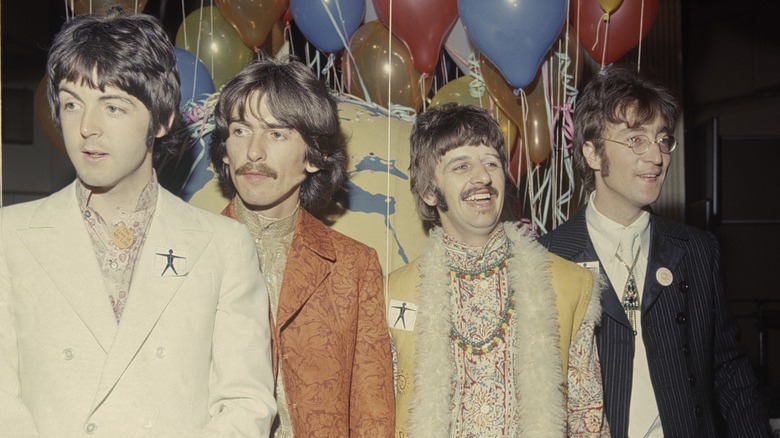
In 1966, the Beatles, fed up with Beatlemania, decided to retire from touring. Their concerts had become so loud with screaming Beatles fans that they were unable to hear each other play, and their music was suffering, so taking a step back from live shows was the best decision. It allowed them to go back to the studio with a different mindset, to experiment without worrying about how the songs would sound live. Which is why they were able to record "Strawberry Fields Forever" in a way that was completely revolutionary for its time. What John Lennon had in mind for this song was complicated, and it required producer George Martin to get creative, splicing two recordings together to get a sound they couldn't have gotten otherwise.
"Strawberry Fields Forever" was a very nostalgic track. It came out as a single for their iconic 1967 album, "Sgt. Pepper's Lonely Hearts Club Band", and Paul McCartney's "Penny Lane" was the flip side of that single, which is another song about their hometown, Liverpool. "Strawberry Fields Forever" was undoubtedly the most experimental one of the two, partly due to the way it was recorded, and it was the first single by the Beatles in four years not to reach No. 1 in the United Kingdom. At the time, critics speculated that, because this track hadn't topped the charts, it meant the band had lost their magic touch. But almost 60 years later, this revolutionary song is a timeless classic.
George Martin spliced two recordings together, and he never got over it
At the time, splicing recordings was a groundbreaking idea, and not precisely easy to do, but John Lennon was very particular about what he wanted for "Strawberry Fields Forever." The song had the Beatle reminiscing about his difficult childhood. He lived with his Auntie Mimi after his mother left him to her care and his father abandoned him. "Strawberry Field" was a Salvation Army children's home that was near Mimi's house in Liverpool. He had a deep connection with that place since he loved to play in the garden of the children's home.
The band did several takes of the song, and producer George Martin selected two as the best ones. Lennon said he liked both of them, and suggested that Martin join the best parts of both to make the perfect version. In the book "The Complete Beatles Recording Sessions," Martin and engineer Goeff Emerick admitted that they didn't even know if what Lennon was asking for was possible.
"With the grace of God, and a bit of luck, we did it," Martin said. Lennon couldn't tell where the splice was, and he was fascinated with the result. George Martin, not so much. He could always tell where the edit was, and could never get over the fact that it wasn't perfect. "I can hear it every time. It sticks out like a sore thumb to me!"