

The 1967 Classic Rock Album That's So Much Cooler Today
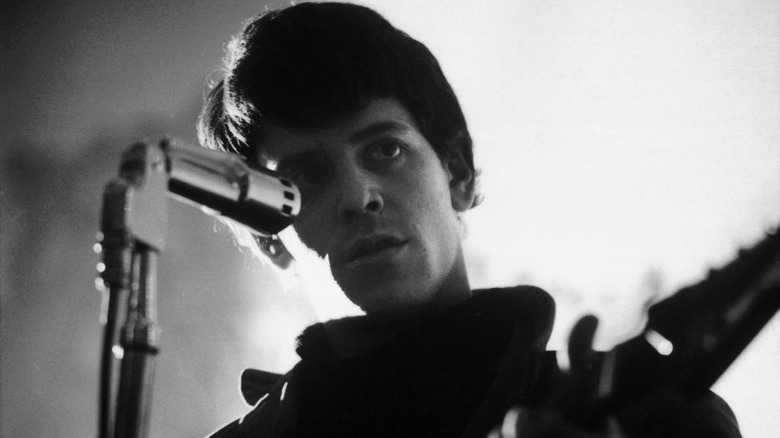
"The Velvet Underground & Nico" is one of the strangest and most unique albums in the history of rock music, especially considering that, at the time it was released in 1967, the world had turned psychedelic alongside the wild so-called Summer of Love. That was the year the Beatles changed the face of music with "Sgt. Pepper's Lonely Hearts Club Band," while the Monkees, the Turtles, and Strawberry Alarm Clock each topped the singles chart with psychedelia-heavy sunshine pop.
But "The Velvet Underground & Nico" was a different beast entirely; a gritty, terse affair shot through with angst and melancholy. If it doesn't seem a fit for the times, it has cast a long shadow over rock music ever since, with Roxy Music's Brian Eno famously saying that, though the record initially failed to sell, everyone who did buy it at the time went on to form a band. In hindsight, it is perhaps the most influential album of all time.
The Velvet Underground's debut album was an unusual introduction to the group led by Lou Reed and John Cale in that it was a collaboration with German chanteuse, Nico. She had first crossed paths with the band thanks to pop artist Andy Warhol, who, despite little technical musical knowledge, took production duties on the album, having curated the artists to perform at his famous "Factory" gatherings in New York, where the Velvet Underground were the house band. Unsurprisingly, avant-garde and modern-art sensibilities permeate the record, opening up new possibilities in rock.
The Velvet Underground & Nico was an experimental success
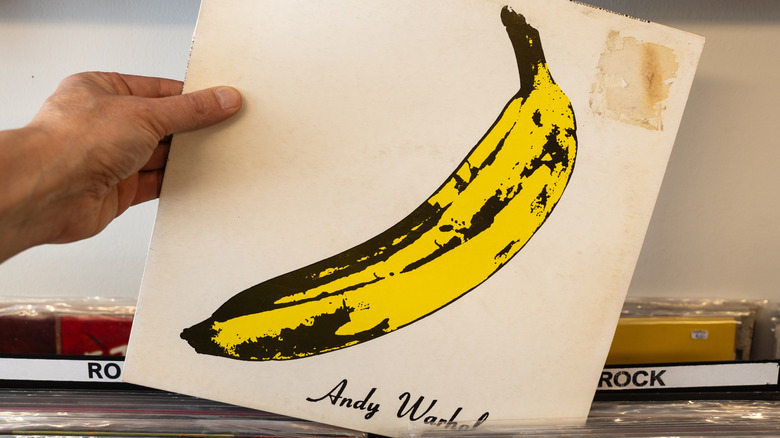
The cover of "The Velvet Underground & Nico," an Andy Warhol illustration of a banana with a tiny instruction reading "peel slowly and see," is perhaps the most iconic album sleeve in rock history. But Warhol's contributions to the Velvet Underground went much further than the album art: He insisted on featuring Nico on the album, and encouraged an atmosphere of experimentation and artistic freedom that reveals itself in the music.
Arguably, the album begins with a misdirection: "Sunday Morning," a lush, dreamy ballad underpinned by a pretty piano melody that seems to be a simple ode to those tender morning hours. However, lines such as "It's just the wasted years so close behind" reveal the preoccupation with mortality and the emotional depth of Lou Reed's songwriting. Warhol's influence also comes through in "Femme Fatale," with Nico on vocals, which is a portrait of band acquaintance Edie Sedgwick, an actress whom Warhol insisted Reed should capture in song. As such, the album prefigures much of Reed's later work as a solo artist in giving a searing insight into the artistic circles he moved in.
But even more thrilling is Reed's willingness to explore themes of sex and drugs, on tracks such as "Venus in Furs" and "Heroin," respectively. Underpinned by Maureen Tucker's tribal drumming, as well as the drone of Reed's down-tuned guitar and John Cale's viola, such songs were topical and sonic avenues for rock that were rarely explored in the charts at the time.
Peel slowly and see
The Velvet Underground's debut album peaked at just No. 171 on the Billboard 200 when it was first released in 1967. However, over the years, it gradually began accruing sales and finding its audience among musicians, as well as music fans who were slowly becoming aware of its incredible influence over a range of rock sub-genres. David Bowie, who became a close collaborator with Lou Reed in the early 1970s, was inspired by the album's free-wheeling approach in his own career, while Iggy Pop, Patti Smith, and a whole host of alternative music icons owe a debt to the album's proto-punk mix of the poetic, vulnerable, raw, and chaotic.
Reed was adamant that he never wanted the Velvet Underground to stand still or retread the same ground, but it is arguable that "The Velvet Underground & Nico" was their definitive statement. Despite attempting to take things to a harsher place on 1968's "White Light/White Heat," they never got more aggressive than they did on "The Black Angel's Death Song." Similarly, few later ballads match the weird beauty of "I'll Be Your Mirror," and no number on the rock-focused "Loaded" album from 1970 has the same dirty swagger of possibly their most famous track, "I'm Waiting for the Man."
But what's really cool about "The Velvet Underground & Nico" is that it remains challenging, an utterly unique album that, as Warhol advises on the album sleeve, is worth peeling open slowly and savoring. Six decades on, it's still a feast of an album.