

5 Classic Rock Vinyl Covers With Details You Never Noticed
One thing missing for listeners in the age of streaming is the ability to pore over the details of the covers of our favorite albums like we used to during the heyday of physical media. But even back then, there were countless details in familiar artwork that likely passed music fans by largely unnoticed. In this article, we're taking a look at five classic rock album covers and pointing out intriguing details that you may have missed the first time around, even if you owned the album back in the day.
We'll be avoiding the big, conspiracy-minded stories behind album covers — we won't be looking at Abbey Road for details of the "Paul is Dead" myth, for example — but will be checking out sleeves by groups including the Velvet Underground, Fleetwood Mac, and Boston to hopefully offer you a fresh perspective on some of the most famous album covers in history. So let's begin.
The hidden face on The Velvet Underground & Nico
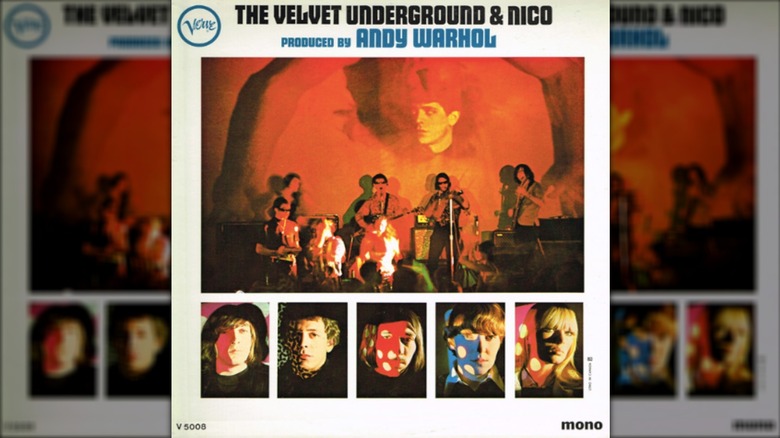
One of classic rock's most effortlessly cool album covers, "The Velvet Underground & Nico" features an iconic image of a banana created by pop artist Andy Warhol, whose design for early pressings of the album included a sticker which allowed you to peel the banana to uncover pink flesh behind the skin. Only the artist's name appears on the front cover, while the names of the Velvet Underground and Nico themselves appear on the back, alongside several vivid photographs of them performing onstage at one of Warhol's famous mid-'60s Factory happenings in New York.
But if you check out the original pressing of the album, there is something hidden in the main image, over frontman Lou Reed's face; flip the image over, and you will see superimposed on top of Reed the face of another man entirely. This is actor Eric Emerson, whose image just happens to have been projected onto the band at the moment the photo was taken. Emerson threatened to sue the band and their record label for failing to clear the use of the image with him, and copies were initially withdrawn, damaging its commercial performance. Later versions have the image reinstated.
An anachronistic guest on The Six Wives of Henry VIII
Legendary keyboardist Rick Wakeman made his name as a member of the British progressive rock group Yes in the late 1960s and early 1970s, establishing himself as one of the genre's most versatile, visionary musicians. He was also offered the chance to forge his own solo career, which he did in 1973 with the album "The Six Wives of Henry VIII."
Featuring several other members of Yes, it is a concept album made up of six tracks, each of which is intended to represent the apparent personality of one of King Henry VIII's wives. Wakeman had become interested in the characters of these women through biographies he had read on tour, and formed it into a premise for his debut.
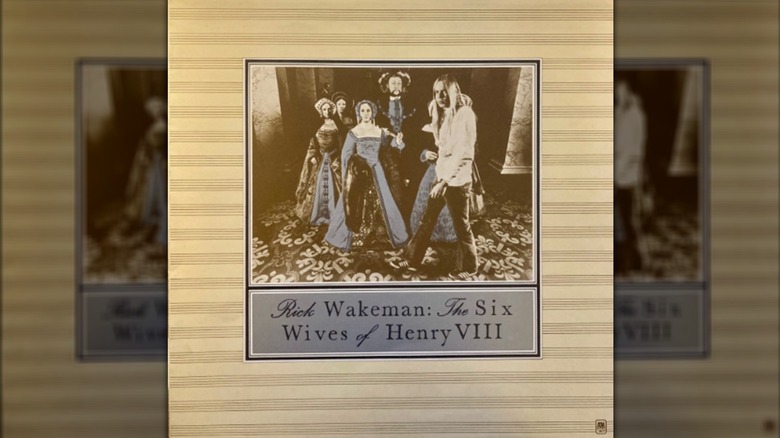
The cover features Wakeman with the titular wives and their king, but rather than use models, the shot includes wax models of the historical figures, with the image taken at the Madame Tussauds waxwork museum in London. Surprisingly, if you look closely in the background, there is another unexpected figure to be found: former U.S. President Richard Nixon, whose own waxwork was visible by chance when the shot was taken.
The meaning behind the wooden balls on Rumours
Fleetwood Mac's "Rumours" has had a remarkable afterlife in the five decades since it was first released. One of the biggest-selling albums of all time, it has shifted more than 40 million copies worldwide and has been in the Top 20 of the Billboard 200 deep into the 2020s, showing both the loyalty of its listenership and its incredible appeal to those who encounter the music on it for the first time.
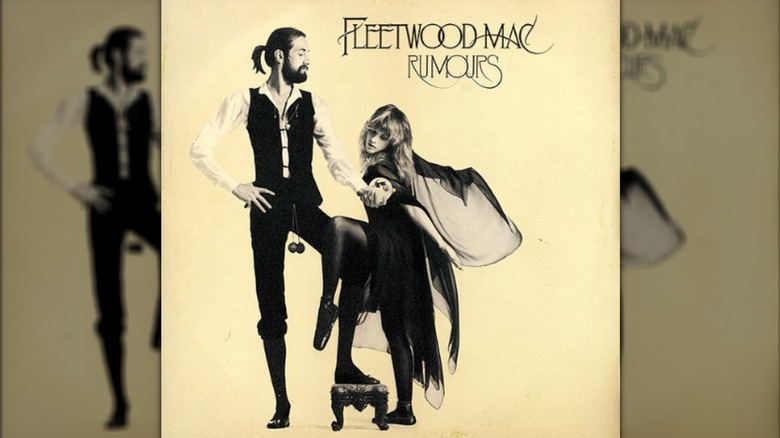
The 1977 album features two of the band's five members on the cover: drummer and founding member Mick Fleetwood, and vocalist and songwriter Stevie Nicks, who had joined the British-American former blues band in 1975. Nicks poses elegantly, with a leg raised in the style of a ballerina over Fleetwood's bent knee, her long sleeve cascading down her right arm.
But the most eye-catching detail of the "Rumours" cover is arguably hanging between Fleetwood's legs: two wooden balls, dangling suggestively from chains. The humorous symbolism doesn't need explaining, but few people know that the balls are actually lavatory chains that Fleetwood ripped from the toilet of a pub early in his career. The balls were actually part of his eccentric stage outfit, with the drummer wearing them from his belt for many years. The originals were apparently lost and replaced, though those that featured on the cover sold at auction for $128,000 in 2022.
Boston's guitar-ships are saving humanity
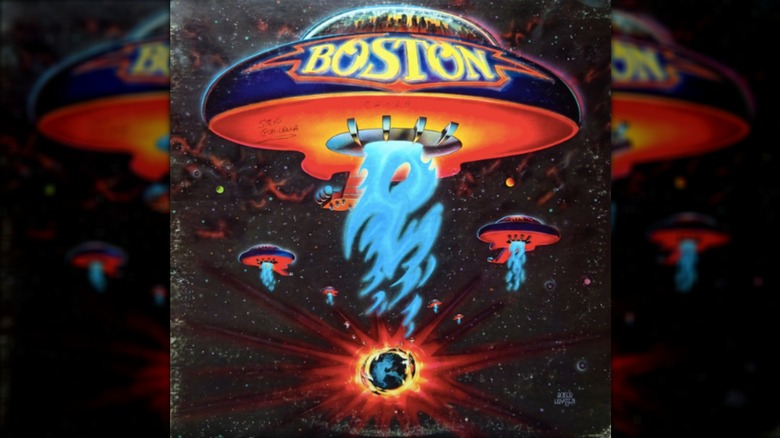
The cover of Boston's self-titled debut album is one of the most recognizable in all of classic rock, having sold 17 million copies in the U.S. alone, where it was certified gold within two months of its release back in 1976. Designed by Paula Scher and illustrated by Roger Huyssen, the central spaceship emblazoned with the word "Boston" has become the symbol of the band and is a much-loved icon among Boston fans.
In case you haven't noticed already, however, the spaceships on the cover aren't typical flying saucers, but rather take the form of inverted flying guitars, which in itself is a neat bit of trickery. But more interesting still is that the cover tells a story. Speaking to the Atlantic, Scher notes that the spaceships are not attacking the Earth, which can be seen blowing up at the bottom of the image, but are rather saving humanity, with each ship seemingly carrying off a human city to be resettled elsewhere — hence Boston's skyline in the central spaceship.
The meaning of the layout of Meet the Beatles!
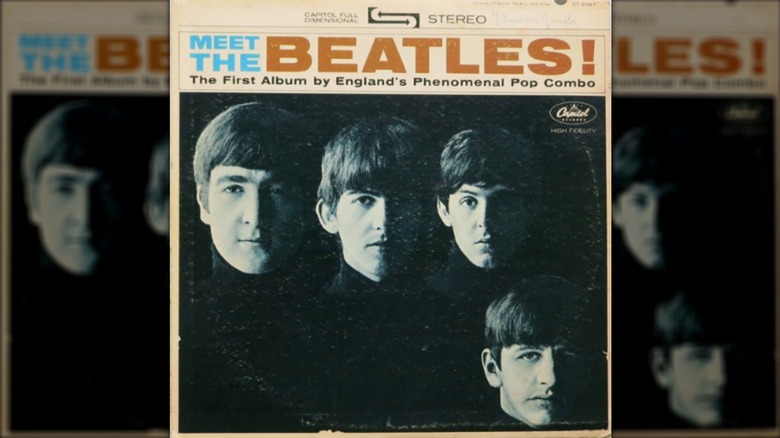
"Meet the Beatles!" was a major musical event when it was released in 1964, introducing American fans to the wider recordings of the Fab Four as Beatlemania was coming into full force. To begin with, Beatles albums on either side of the Atlantic were different, owing to the band already having a following in Europe, and "Meet the Beatles!" reused a now-iconic image from the Beatles' sophomore U.K. album, "With the Beatles."
Taken by photographer Robert Freeman, the cover photograph shows John, Paul, George, and Ringo unsmiling and half-lit on a dark background. It was unusually artistic for an album cover of the day, and differed from typical records sleeves in choosing not to show the musicians as friendly and approachable.
Beatles scholar Barry Miles suggests in "The Beatles Diary Vol. 1" that the unusual placement of Ringo in the bottom corner of the image was the result of having to fit the image to the square sleeve, with him being chosen to be out of alignment as the last member of the Beatles to join the group. However, whether by intention or coincidence, the cover also reflects the positions of the four members onstage — John, Paul, and George standing with their instruments at two microphones, with Ringo sitting behind his drum kit.