

5 Classic Singles That Define '70s Funk
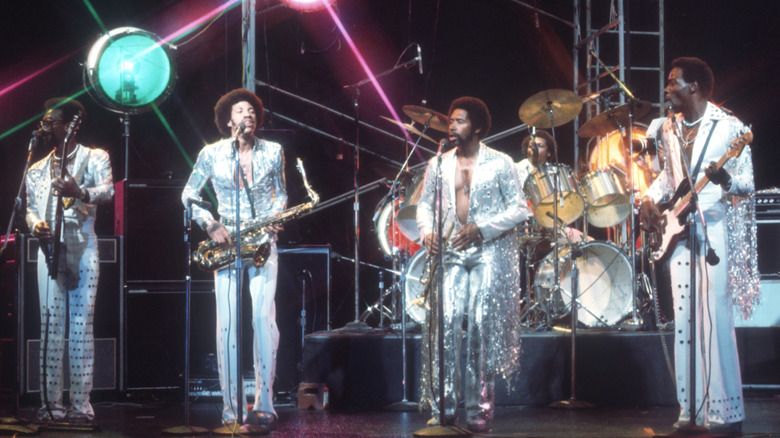
Funk music became a whirlwind in the '70s, capturing the best elements of soul, R&B, and dance music, leading into a disco movement that borrowed generously from the format. But certified grade-A funk that kept its sassy attitude and playful nature in place was duly distinguished from those other descriptors, thanks to a selection of artists and a handful of singles that asserted themselves with irresistible groove. It's nearly impossible to revisit the era without recalling how much impact the biggest funk hits of the decade had on popular music in its entirety.
Our picks for a mini-jukebox of fantastic '70s funk helped define what the sound would be going forward, thanks to a handful of acts that knew where they wanted to take it. Legacy artists like James Brown got his licks in, while one-hit wonders Wild Cherry had some say in the sound's mid-decade direction. With sensational sounds and a party-ready personality offering uplifting and saucy fun for a new generation of music lovers, the genre-defining singles of the '70s turned out to be a playlist that changed the future for the funkier.
Get Up (I Feel Like Being A) Sex Machine — James Brown
Godfather of Soul James Brown released his foundational two-part funk single "Get Up (I Feel Like Being A) Sex Machine" in 1970 and put an indelible stamp on the coming age of funk in the '70s. Brown was shameless in his bravado, using the word "sex" in a song title when that sort of suggestiveness was still considered shocking. Musical assistance from James' collaborator and funk legend Bootsy Collins helped the icon reach new heights of grooviness with a No. 15 hit to christen a new decade.
But "Sex Machine" wasn't just a highlight from one of Brown's classic funk albums; it was also a cornerstone of the funk movement, a formative work that telegraphed the most vibrant elements of the genre in a peppy package that could get anyone moving. Iconic lines "Stay on the scene (Get on up) / Like a sex machine," "Shake your money maker," and "hit it and quit it" loop around over and over; a twangy guitar motif, bluesy piano riffs, and a non-stop droning bass line set the DNA for hip-hop beats of the '80s and '90s.
This classic is easily recognized as a blueprint for funk thereafter, sampled repeatedly by contemporary artists who knew what Brown added to the musical vernacular. It cast a spell over fans of lively R&B seasoned with delicious attitude and inspired countless musicians down the line to "get on up" and do their own funk thing.
Superstition — Stevie Wonder
R&B superhero Stevie Wonder turned his '70s sound stylings in a funkier direction and promptly conjured up "Superstition," a swampy stomp that hypnotized with its groovy Moog synths and crunchy now-iconic Hohner Clavinet riff, echoed in the extra-jazzy horns that hover in the background. "Very superstitious writings on the wall" became a haunting caveat that enticed as much as it admonished; "When you believe in things you don't understand / Then you suffer," Wonder explains, "Superstition ain't the way." Though Wonder initially meant for the song to go to rocker Jeff Beck, Motown head Berry Gordy insisted Wonder keep the future mega-hit for himself.
The song was more than just a musical evolution for the boy Wonder who'd been dazzling fans with his genius for more than a decade. This was a cultural shift that reflected the social climate for Black Americans, an embracing of heritage and ancestry that cracked open the broader mainstream to more funk-flavored fare. Lyrically, "Superstition" was a call for more enlightened thinking, a summoning to move beyond old ways that had resulted in racial disparities in America.
The end result of this innovation in Wonder's style was a very lucky No. 1 single atop the Billboard Hot 100 in January 1973 and Grammys for best R&B song and best R&B male vocal performance — nothing superstitious about success like that. It carried the torch from funk artists past and cleared a path for new funk makers to come.
Brick House — The Commodores
The reductive nature of "Brick House" by the Commodores may be a byproduct of the times it was written in, but the influential funk work being churned up by Lionel Richie and his cohorts was undeniably iconic. Although lines like "Ow, she's a brick house / she's mighty mighty, just letting it all hang out" have aged horribly beyond their 1977 setting, the vocal delivery paired with a musical brew of impeccable horn work and an unstoppable bass groove provided a mesmerizing funk loop that set a tone that funk acts still follow today. Whether viewed as leeringly sexist or celebratory of the non-traditional female figure, there's an expressive spirit in the musicality and vocal performance by Walter "Clyde" Orange, who gave the band a savvier lead voice than Richie's usual silky tones.
Despite the embarrassment Richie felt at the thought of his classically-trained pianist grandmother hearing the objectifying lyrics his band had come up with, audiences went wild for it. "Brick House" became a top 5 hit on the Billboard Hot 100 singles chart and the album it came from, simply called "Commodores," was a top 3 smash. Pace-setting funk like this may have started in the '70s, but it's also helped the Commodores sail into the 2020s as a live act without Richie leading the band.
Play That Funky Music — Wild Cherry
The cross-cultural appeal of '70s funk generated "Play That Funky Music," a raucous ride through the experiences of all-Caucasian funk unit Wild Cherry. The spirit was undeniable, and the message of acceptance in the community of funk fans came in an era when racial integration was bringing people together. Cultural touchstones like popular music offered vehicles for promoting collective appreciation, and Wild Cherry was a reflection of the times ... even if they hadn't started out in that direction when their musical ventures began.
Despite releasing four albums during the '70s, "Play That Funky Music" was Wild Cherry's one and only time as a hitmaking rock-turned-funk band. But what a time it was; the song ran all the way up to the top of the Hot 100 and the R&B charts, giving these adaptable players a double No. 1 in 1976. That's a heady ride for a song that, as lead singer Rob Parissi describes, was inspired by a real incident at a live show where an attendee made the request that became the classic title and chorus. Who would've thought a song written in mere minutes based on a concert-goers suggestion could become such a representative piece of '70s funk history?
Shining Star — Earth, Wind & Fire
Maurice White's aspirational nature was seldom funkier or more present than on the Earth, Wind & Fire standard, "Shining Star." White knew how to combine uplifting messages about self-fulfillment with arrangements that maximized the funk factor. Those brassy horns and that wandering bass line create a banger of a backing track set that infuses the song with confident energy. With lyrics like, "Shining star for you to see / What your life can truly be," it all comes together in an inspirational yet danceable package that gave listeners a sense of hope for the future, an especially personal cause for White as a motivational figure in the Black community in the mid-'70s.
"Shining Star" became Earth, Wind & Fire's only No. 1 song, hitting the top of the Billboard Hot 100 in May 1975, though their biggest year ever was still a bit down the line. The success demonstrated that unabashed positivity delivered with a danceable groove from musicians who've mastered their craft is not just soulful and spiritually edifying, but lucrative for the music industry as well. Listen to it now and you'll hear an original work that defined '70s funk with echoes that resounded through generations, influencing a slew of funk hitmakers who came afterward.