

Music Biopics That Lied To Your Face
We may receive a commission on purchases made from links.
The music biopic has long been a staple of the movies, and with fans always wanting an inside look at their heroes, a well-made one is usually guaranteed to be a smash hit at the box office. But trying to condense the complexities and contradictions of an artist's life into the standard two-hour film has perplexed many a filmmaker, and even the best biopics are littered with inaccuracies, revisionist history, and glossed-over details that shoehorn everything into an easily digestible, traditional narrative.
Admittedly, sometimes these changes genuinely made sense, such as when band members wouldn't sign away the movie rights to their name or when the conservative nature of the times wouldn't allow certain material. Nonetheless, these biopics — with their subjects all legends of rock, soul, country, hip-hop, punk, and pre-rock pop — aggravated those closest to the story and the most knowledgeable of fans, even as they helped draw in new ones.
The following article mentions and includes allegations of addiction, domestic abuse, mental health issues, and sexual assault.
The Dirt cleaned things up a bit
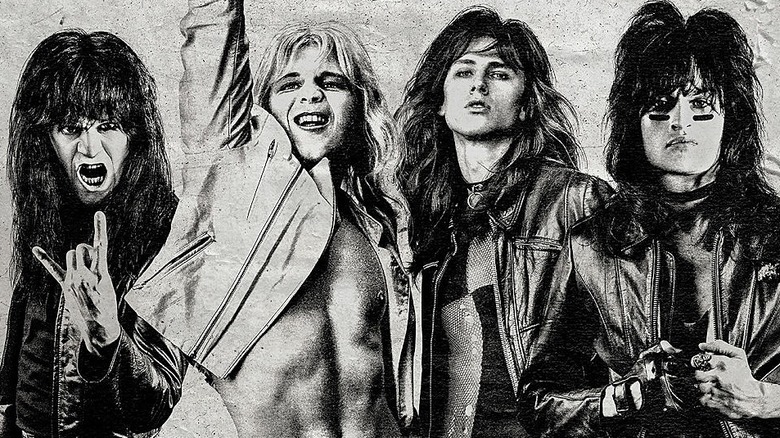
Biopics often take a bit of artistic license with the truth in order to soften the subject's image, so it may seem strange that Mötley Crüe, which made a career out of being unapologetically excessive, would have a few facts changed around for "The Dirt," the film version of its notorious 2001 memoir. But strangely, the cinematic take on "The Dirt" gave short shrift to or completely overlooked those times when either Vince Neil or Tommy Lee weren't in the band.
And while it's logical to focus on the lineup with whom they made all their biggest hits, their firing of former manager Doc McGhee in the movie doesn't jibe with the official story. In the movie, Nikki Sixx gets upset when McGhee tries to reunite Sixx with his estranged mother, but in reality it was when McGhee slotted them below headliners Bon Jovi — another McGhee client — at the Moscow Music Peace Festival, which was arranged as a condition of McGhee's plea bargain for getting caught smuggling 20 tons of marijuana into the U.S.
Upon learning that they were to be Bon Jovi's opening act, Lee wrote in "The Dirt" that he "hunted Doc down and found him backstage. I walked right up to him and pushed him in his fat little chest, knocking him over onto the ground like a broken Weeble." That was the end of that partnership, and Bon Jovi dropped him, too.
Not everyone went nuts over Bohemian Rhapsody
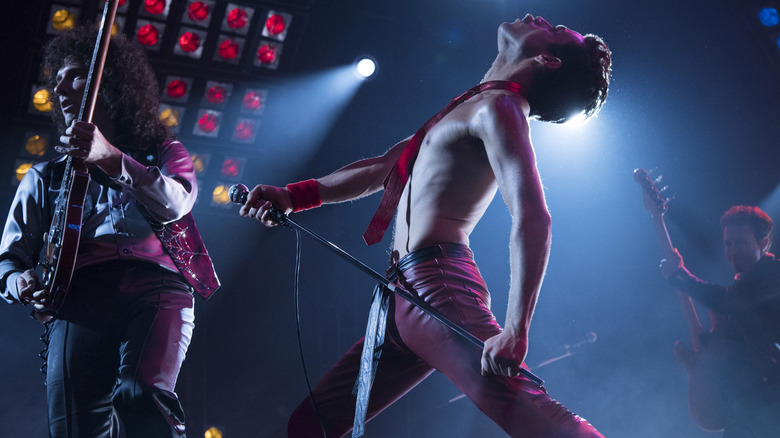
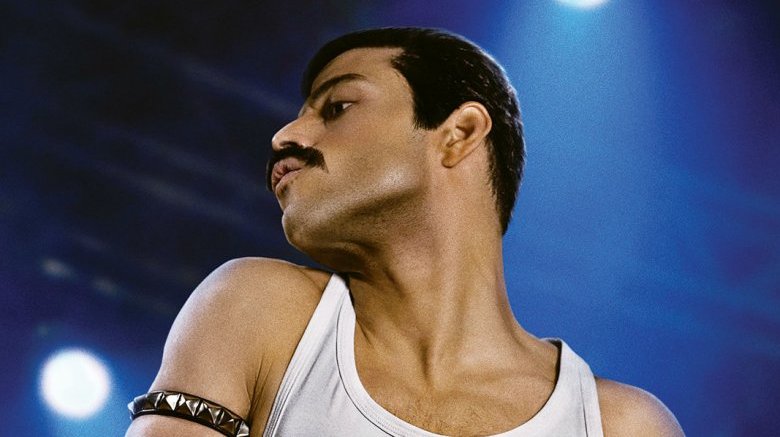
The story of Freddie Mercury was so extraordinary that it seemed almost perfect for a big-screen adaptation, hence it was a shame that "Bohemian Rhapsody" wasn't the real life, but just fantasy. Despite what "Bohemian Rhapsody" told you, Freddie Mercury didn't introduce himself to Brian May and Roger Taylor after the gig in which Smile lead singer Tim Staffell quit; he already knew all three of them, and they were even roommates for a spell. The movie would also lead you to believe that John Deacon was Queen's original bassist, although the band went through three other men — Mike Grose, Barry Mitchell, and Doug Bogie — from its formation in 1970 until Deacon's first show in July 1971.
And then there's the treatment of Paul Prenter, Mercury's former manager. Although he's rightfully portrayed as the villain in the story, they got a lot of the details surrounding his firing wrong. For starters, the film says he was fired prior to the Live Aid concert in 1985 and then, in retaliation, went on television to out Mercury. However, the truth is that Prenter was fired in 1987 after he sold his story, called "AIDS Kills Freddie's Two Lovers," in the notorious British tabloid, The Sun.
The Buddy Holly Story was amazing ... unless you knew Buddy Holly
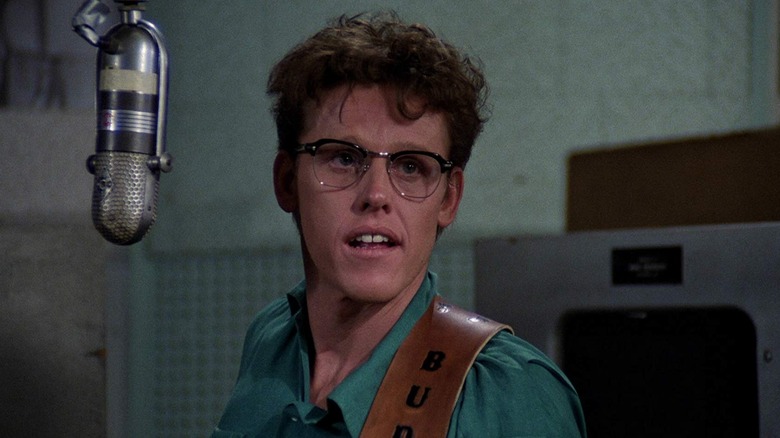
"The Buddy Holly Story," which featured a breakout, Oscar-nominated performance by Gary Busey as the title character, received uniformly strong reviews, except from those closest to Holly. Because the other two members of The Crickets, Jerry Allison and Joe B. Mauldin, had sold their rights to another studio, their names were changed to Jerry Charles and Joe Bob Simmons. Norman Petty, who produced the bulk of Holly's classic recordings, was left out of the story entirely, supposedly because he wanted control over the script, though Petty denied that.
Holly's mother and his brother were also unhappy with the way his family life was portrayed, claiming the filmmakers went back on their word to consult with them. "We were behind Buddy one hundred percent," Ella Holley said to Rolling Stone, in response to the film's depiction of her and her husband as pushing Buddy to quit rock 'n' roll. "We were very anxious for him to make a career as a singer. We were his biggest fans."
"It didn't portray his life at all, really," added Larry Holley, Buddy's brother. "They didn't ask us about a thing. It was mostly Maria Elena's version of his life. I didn't feel that was my brother up there on the screen. We weren't happy with the movie at all."
Straight Outta Compton was not straight outta the history books
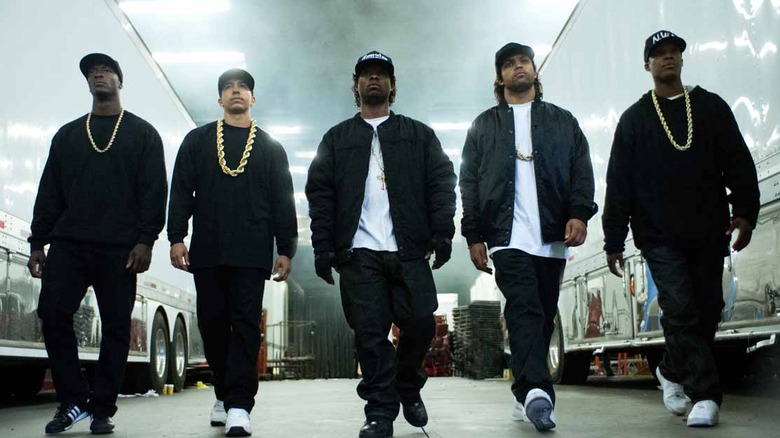
Jonathan Herman and Andrea Berloff received an Oscar nomination for their screenplay about N.W.A., but "Straight Outta Compton" earned plenty of headlines for what they left out of it. Some of them came across as minor, such as the reason for Dr. Dre's arrest (for unpaid tickets rather than for defending his brother, as seen in the movie) that kickstarted the hip-hop group's formation, or the time they were arrested for performing "F*ck tha Police" in Detroit (in the hotel later that night, not onstage). It also virtually ignored the contributions of founding member Arabian Prince.
Perhaps more importantly, "Straight Outta Compton" completely omits Dr. Dre's early history of violence against women, particularly high-profile incidents involving his girlfriend Michel'le and hip-hop television host Dee Barnes, who wrote a lengthy Gawker article about it (via The Guardian).
Barnes said she didn't necessarily want to relive the experience on-screen, but she wanted some acknowledgement that it was part of his character. "In his lyrics, Dre made hyperbolic claims about all these heinous things he did to women," she wrote. "But then he went out and actually violated women. 'Straight Outta Compton' would have you believe that he didn't really do that. ... So which is it? You can't have it both ways. That's what they're trying to do with 'Straight Outta Compton': They're trying to stay hard, and look like good guys."
Backbeat backed away from the truth
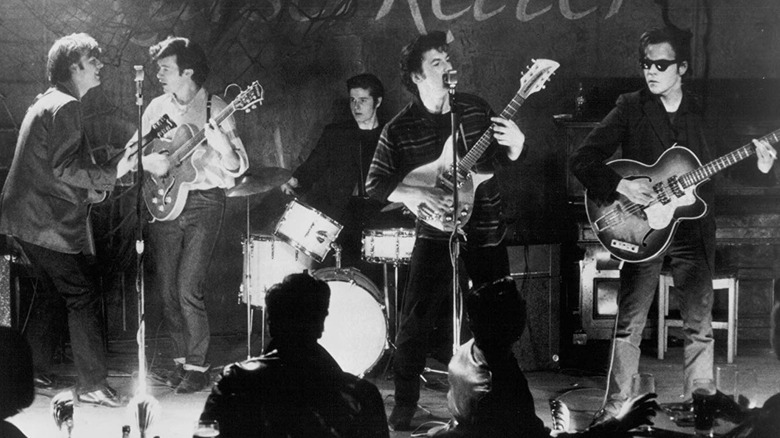
On the whole, 1994's "Backbeat" is a fairly accurate portrayal of a period in the Beatles' history that doesn't get much of a spotlight: their early days woodshedding in Hamburg's red light district, with an emphasis on the relationship between John Lennon (Ian Hart), original bassist Stuart Sutcliffe (Stephen Dorff) and Astrid Kirchherr (Sheryl Lee). But there's one moment in particular that made hardcore Beatles fans cringe.
In "Backbeat," when Klaus Voormann tells Lennon that their show was "fun," Lennon goes off, telling him about how exhausted they are and calling it a "hard f*ckin' day's night." It's well-known that the phrase (minus the obscenity), which was used as the name for their first film and its title song, was coined by Ringo Starr, who was still two years away from joining the band. It's minor, but it wouldn't have been difficult to get it right.
Paul McCartney was also upset with how he came off in the movie. "One of my annoyances about the film 'Backbeat' is that they've actually taken my rock'n'rollness off me," he said (via The Guardian). "They give John the song 'Long Tall Sally' to sing, and he never sang it in his life." The Beatles recorded the Little Richard song in 1964.
Night and Day had to drop anything controversial, which was a lot
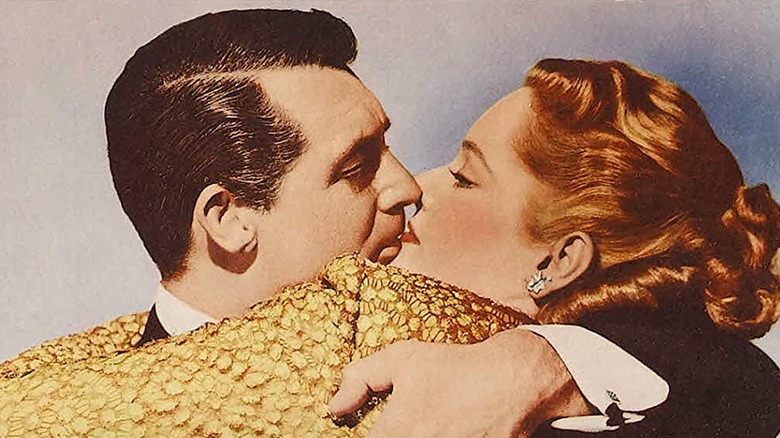
The true story of songwriter Cole Porter was criminally scrubbed in 1946's "Night and Day." Because of the Motion Picture Production Code, which governed what was deemed appropriate for Hollywood movies from 1930 to 1968, Porter's homosexuality could not be shown onscreen. Instead, his real-life marriage of convenience to Linda Lee Porter, who was several years his senior and had left her first husband (another societal taboo of the day) because he had abused her, was depicted as a traditional one. Ironically, the lead role was played by the similarly closeted Cary Grant.
While the 1937 horseback riding accident that crushed his legs is shown in the film, it doesn't take into account that he was in constant pain until his death. According to "Cole Porter: A Biography" by Charles Schwartz, even Porter declared, "None of it's true" after seeing it. Orson Welles, upon hearing that a movie about Porter was being made, said (via The New York Times), "What will they use for a climax? The only suspense is: will he or won't he accumulate $10 million?" "De-Lovely," a Porter biopic made in 2004, with Kevin Kline in the starring role, was a more accurate portrayal.
Walk the Line boiled everything down to a love triangle
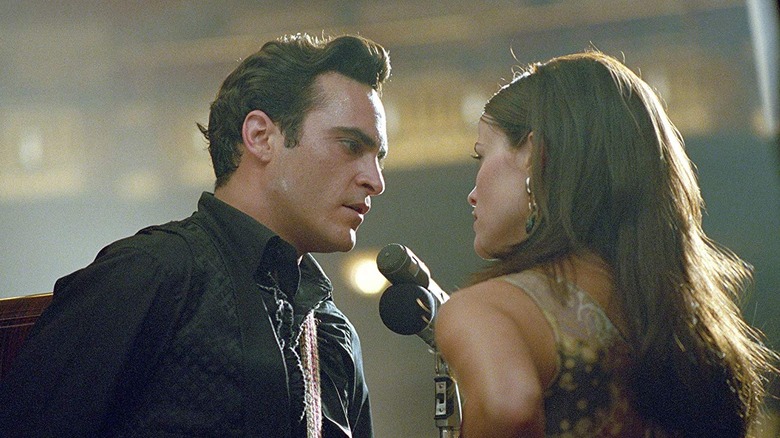
The Johnny Cash biopic "Walk the Line" was a popular, award-winning movie about an American music icon. It focused largely on his drug use and how he was redeemed by the love of June Carter, whom he would subsequently marry. But Kathy Cash, one of the American music legend's daughters with his first wife, Vivian, didn't like how her mother was depicted in "Walk the Line."
"My mom was basically a nonentity in the entire film except for the mad little psycho who hated his career," Kathy told The Tennessean (via Crosswalk). "That's not true. She loved his career and was proud of him until he started taking drugs and stopped coming home."
Another of Cash's daughters, Rosanne, broadened the scope, noting how the film reduced everything into a bland love triangle in an interview with The Guardian. "The movie was painful," she said. "The three of them [in the film] were not recognizable to me as my parents in any way ... It's a Hollywood movie — very complex lives reduced to two hours — so how can it possibly show the depths of truth?"
The Runaways was pretty one-sided
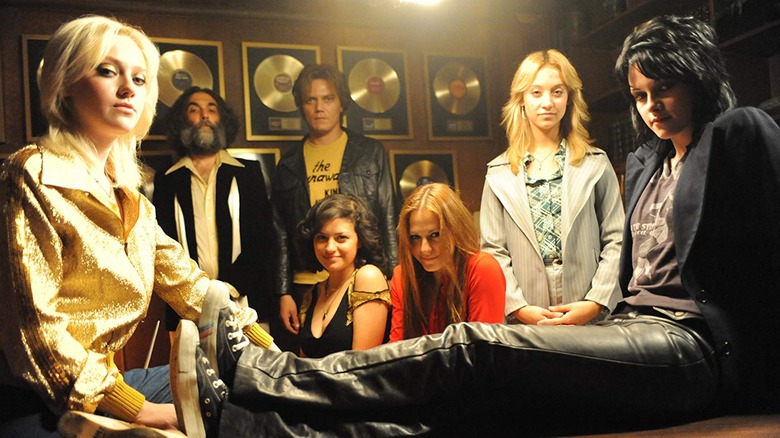
"The Runaways," Floria Sigismondi's 2010 movie about the titular band, was based on singer Cherie Currie's 1989 biography, "Neon Angel: A Memoir of a Runaway," although Jackie Fox wouldn't sign over her rights, and so a fictional bassist, Robin Robins, was written into the script. Currie told the AV Club that she was happy with the movie, especially Dakota Fanning's portrayal of her, but she admitted that Sigismondi took license with some of the band's history. Notably, she said the depiction of manager Kim Fowley, whose behavior Currie alleged to be abusive (including Fox's later assertion that Fowley raped her in front of Joan Jett), was toned down for "The Runaways."
"My book is the real story," Currie said. "This is just a lighter kind of flash of what the Runaways were for a specific amount of time. How do you possibly take two and a half years and make it a film that's an hour and a half, and make it even closely touch what was truly going on?"
Speaking to the Los Angeles Times, Fowley didn't dispute anything specific that took place in the film, but agreed it was Currie's side of the story with Sigismondi's perspective added. "Every movie needs a villain, and I'm a good one," he said, later adding, "The issue is whether or not this is a good movie, and the answer is yes. This is not a historical document."
The very gloomy Jimi: All Is By My Side
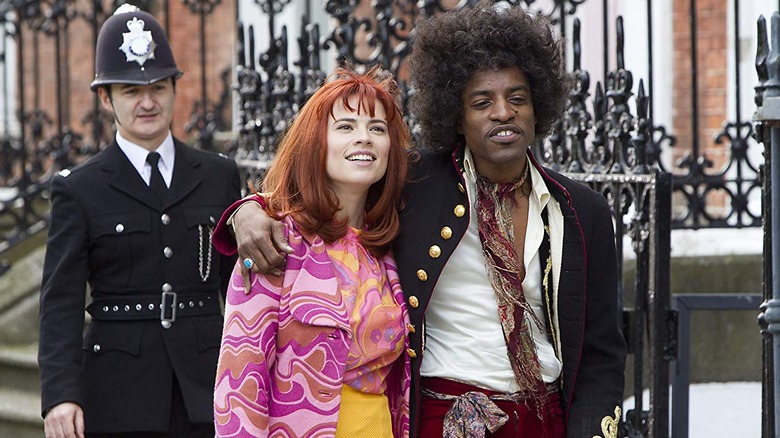
It took 43 years from the tragic 1970 death of Jimi Hendrix for a biopic to be made about him. 2013's "Jimi: All Is By My Side," which starred André 3000 of OutKast as the guitar legend, dealt with the period between his 1966 arrival in England and his guitar-burning U.S. breakthrough at the Monterey Pop Festival a year later. However, Kathy Etchingham, a former girlfriend of his, wrote a lengthy post on her website denying some of the accounts shown in the movie.
Most importantly, Etchingham said one scene in particular, in which Hendrix beat her with a telephone, never happened, and that when she complained that it was fictional, the filmmakers told her that they had heard from a different source that it was true. She also criticized how the love triangle between herself, Hendrix, and Linda Keith was portrayed, as well as the costumes and the music. Indeed, Hendrix's estate wouldn't authorize the use of his music in the movie, so they had to rely on a trio of session musicians.
Etchingham also didn't like its characterization of Hendrix. "The biggest disappointment of this film was that after expecting at least some kind of depiction of Jimi's humor and creativity and the amusing and creative times that were happening in London," she wrote, "instead we were shown a gloomy and depressing dark tale that pictured Jimi as some sort of moronic mumbling mystic."
The Doors missed the point
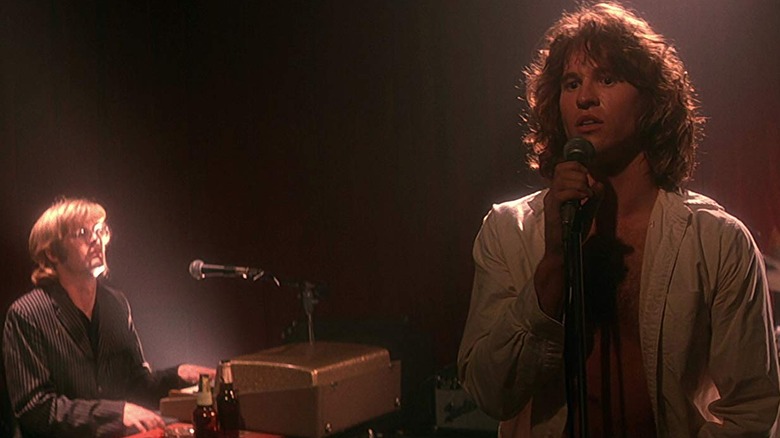
Speaking to the Los Angeles Times in 1991, The Doors keyboardist Ray Manzarek was furious at how "The Doors," Oliver Stone's biopic about his band, came out. Although he admitted that Val Kilmer managed "a nice attempt" at playing Jim Morrison and liked the re-creation of their concerts, he said that he walked out of the film and was most upset by Stone's interpretation of the singer.
"All you see is Jim as a drunken hedonist," Manzarek said. "The tragedy is that fame consumed him. But that wasn't Jim's message. He was intelligent. He was loving. He was a good man who believed in freedom and in questioning authority. But you'd never know that from seeing this film."
Manzarek also rattled off a handful of mistakes that Stone put in the film. "Jim didn't light [Pamela Courson's] closet on fire. He didn't throw a TV set at me. His student film didn't have images from 'Triumph of the Will.' That was totally made up. And Jim never quit film school. He graduated from UCLA."
CBGB was farcical
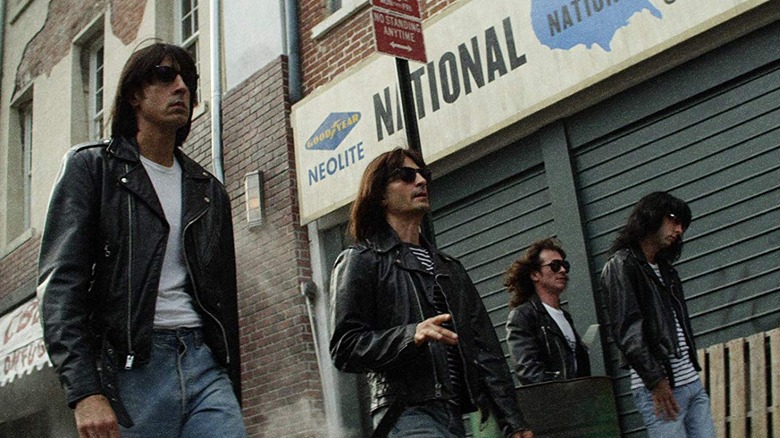
"CBGB" wasn't really a biopic but rather a movie about the famed New York club that saw the birth of punk rock, with the musicians that made up the scene, like the Ramones and Blondie, portrayed by actors. But it still wound up being widely panned for its mistakes.
In addition to a lack of people of color, even though plenty of bands that played the club had black members, the club's walls are littered with band stickers before it had even opened, and of bands that had yet to form in 1973. Patti Smith is also shown singing her hit "Because the Night" — complete with a piano part, even though there's no piano on stage — long before it had been written by her and Bruce Springsteen in the late '70s. Other criticisms of the movie included how Iggy Pop was portrayed as being bland and uncharismatic — a far cry from the truth.
A major aspect of Amadeus was largely made up
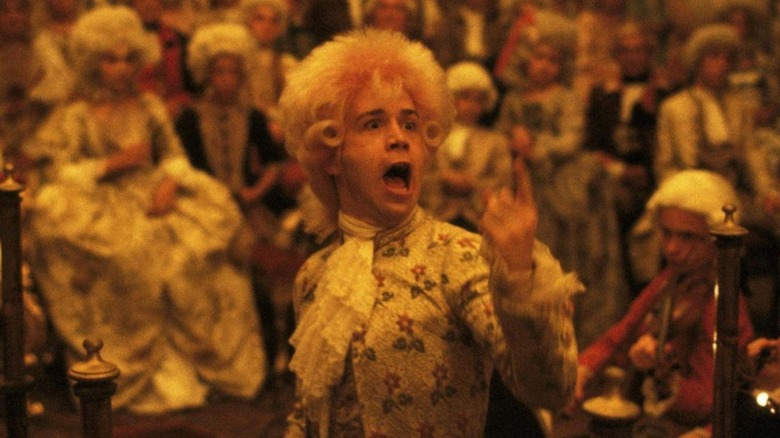
An idea that traces its roots to an 1830 work by Russian playwright Alexander Pushkin, the supposedly intense rivalry between composers Antonio Salieri and Wolfgang Amadeus Mozart serves as the emotional core of the 1984 film "Amadeus." If the movie is to be believed, the animosity between Mozart and Salieri (portrayed by Tom Hulce and F. Murray Abraham, respectively) reached a murderous crescendo, to the point where, even after his death, the former's laughter haunted the tortured mind of the latter. However, there is little evidence that this was the case. In fact, it's far more plausible that, aside from perfectly normal professional competition between them, the two musicians likely respected each other's talents.
Given that "Amadeus" is an adaptation of a 1979 play that heavily dramatized the lives of two revered and near-mythologized figures in classical music, it is unsurprising that the film takes many creative liberties for the sake of weaving a compelling tale. The opening scene, for instance, features a deeply disturbed Salieri covered in his own blood — a heart-stopping moment that almost certainly didn't happen in real life. "Amadeus" also inaccurately depicts Salieri as a bachelor when, in reality, he had a wife, kids, and even an extramarital lover. Additionally, the film depicted some of Mozart's operas ("The Marriage of Figaro" and "Don Giovanni") as flops, which couldn't be further from the truth.
Hysteria: The Def Leppard Story did not do the band justice at all
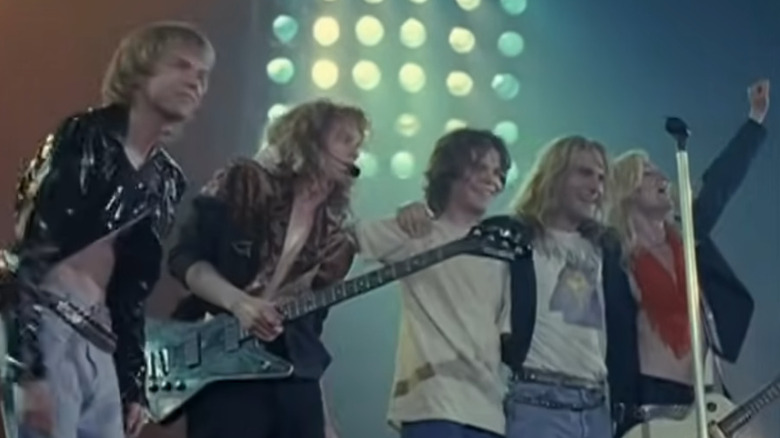
In a 2019 interview with Rolling Stone, Joe Elliott, lead singer of Def Leppard, revealed how he felt no one would be interested in making a new film about the band, and that an earlier attempt by VH1 dropped the ball completely. 2001's "Hysteria: The Def Leppard Story" (which Elliott bluntly described as "the biggest pile of s*** ever made") features some rather questionable choices in its depiction of the legendary rock band's early years, ranging from anachronistic discrepancies to flat-out inaccuracies.
"Hysteria: The Def Leppard Story" gets the timeline wrong with several important milestones in Def Leppard's history. It shows the band recruiting Phil Collen (Esteban Powell) because they were impressed after watching him perform, whereas in reality, he was already friends with the band when asked to help with 1983's "Pyromania." The movie also incorrectly depicts the firing of the guitarist that Collen replaced, Pete Willis (Nick Bagnall): it was during a recording session for "Pyromania," not during a live performance. Mutt Lange (Anthony Michael Hall) returned as Def Leppard's producer before the band recorded the song "Pour Some Sugar on Me" for the titular album (1987's "Hysteria"), not after, and the real-life Lange also doesn't have an American accent (he's South African).
But perhaps the most egregious of the biopic's departures from truth was its rather serious implication that right before the 1984 car accident that cost him his left arm, drummer Rick Allen (Tat Whalley) engaged in substance misuse, which no reputable account supports.
Stoned tried too hard to make a murder theory believable
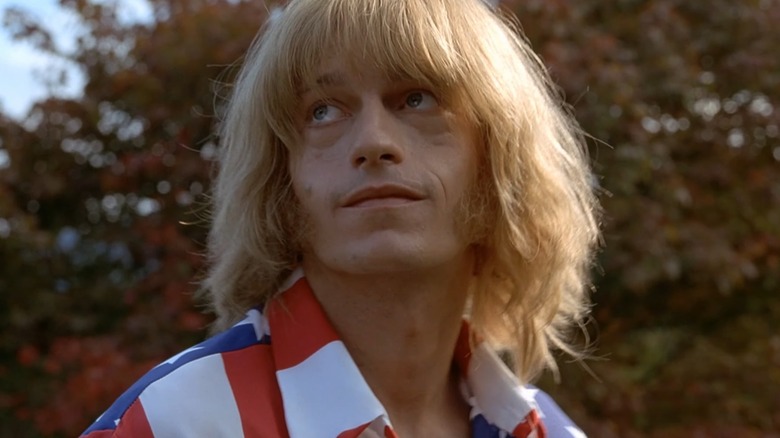
The tragic death of Brian Jones, co-founder of the Rolling Stones, in July 1969 was officially declared a "death by misadventure" by authorities. Jones had a known history of substance misuse, which likely contributed to the cause of death specified in the coroner's report. However, an alternative theory proposed that the musician didn't accidentally drown in the swimming pool at Cotchford Farm in England — he was murdered. This idea became the basis for "Stoned," a 2005 film depicting a fictionalized version of Jones' death at the hands of his alleged killer, a builder named Frank Thorogood.
Over the decades, there has been scant evidence pointing to this idea being true, save for an alleged deathbed confession that Thorogood made to the Rolling Stones' chauffeur, Tom Keylock. However, if one were to watch "Stoned," the fictionalized way it portrays Jones (Leo Gregory) and Thorogood (Paddy Considine) would make the theory seem both believable and plausible.
In "Stoned," Thorogood is falsely portrayed as a disgruntled worker with the capacity to slip people drugs and commit sexual assault, on top of his angry obsession with Jones — in other words, a convincing murder suspect. The film also does Jones no favors, highlighting the musician's unpleasant characteristics to the point where being offed seems like an inevitable conclusion. Then again, as director Stephen Woolley explained to The Telegraph, "Stoned" isn't a documentary, but a drama.
Beyond the Sea went beyond the truth
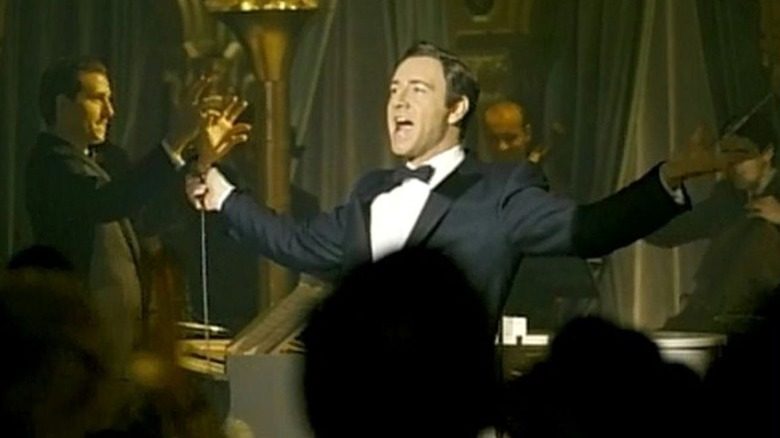
In a Q&A session (via BigFanBoy) during the promotional tour for the 2004 biopic "Beyond the Sea," Kevin Spacey, who co-wrote, co-produced, directed, and starred as singer Bobby Darin in the film, explained that he didn't intend to make a "conventional biopic" about Darin, and that his focus was more on "creating almost a fantasy" around the life of the entertainer. This approach likely explains why "Beyond the Sea" glossed over some aspects of Darin's life and made major changes in others.
Arguably, the most glaring creative choice was Spacey himself. At 44 years of age, the actor took it upon himself to portray Darin from his young adult years until his death at age 37. Aside from that, "Beyond the Sea" is riddled with errors, as detailed by Film Journal. For example, it makes zero mention of Darin's second wife, who was with him at the hospital when he died; in the film's continuity, it was his first wife who was beside him on his deathbed, when she was actually at home and heavily intoxicated at the time. The movie also glamorizes Darin's relationships with both his adoptive and his real mother, which were far less ideal in real life. Lastly, Darin's health issues — which drove him to work hard on his career – were downplayed and only became a major factor at the end of the film.
The central character of England Is Mine barely captured the real deal's essence
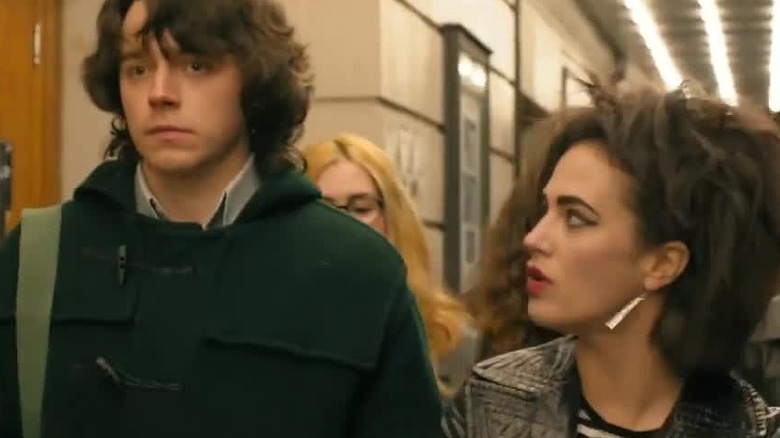
Released in 2017, "England is Mine" is an unauthorized biopic focused on the early life of Steven Patrick Morrissey, the controversial singer of the Smiths. According to director Mark Gill, the production team made multiple attempts to reach out to the infamously private (albeit rather unspoken) performer, not to seek out his blessing, but "to show him the greatest deal of respect" (per Big Issue). When the film came out, critics panned it for being bland and focusing too much on teenage relationship troubles, while doing a poor job of showing Morrissey's journey toward becoming a musician.
But there is perhaps no bigger critic of "England is Mine" than Morrissey's childhood friend and fellow musician, James Maker, who slammed the film for its "insulting" inaccuracies in a now-deleted Facebook post (via the forum Morrissey-solo). Maker took particular offense at the way Morrissey was portrayed (an "autistic, retiring creature" that "had to be physically pushed" into a musical career), saying that it was far from the real Morrissey that Maker knew: "The premise that if Morrissey could be a singer, then anybody could, is disingenuous, and rather insulting to his original talent as an artist."
Maker also called out the filmmakers for inventing characters, while choosing to downplay their significance in the narrative (like Morrissey's mother) or even simply erasing others (like Maker himself, though he felt "relieved" by this).
Nina was plagued with more problems than just casting
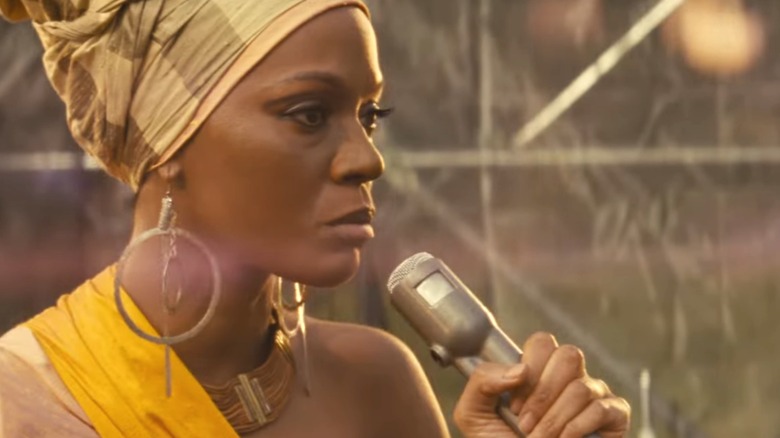
The 2016 biopic "Nina" was already mired in controversy even before it hit theaters, largely due to the casting of Zoe Saldaña as Nina Simone. Jeff L. Lieberman, who directed a documentary about the singer, wrote in The Hollywood Reporter: "Recognizing and admitting themselves that [Saldaña] did not look the part ... they dressed her up (poorly) in blackface makeup and prosthetics, ignoring the horrible history of this type of portrayal." Beyond that, however, the movie also received significant backlash — including from Simone's estate — for its inaccuracies. Or, as Lieberman put it, "Where there wasn't truth, they invented it."
For at least a decade prior to the biopic's release, Simone's daughter, Lisa Simone Kelly, has maintained that the production team did not work with the family when creating the film. Simone Kelly described the movie as "tainted from the very beginning," and criticized "Nina" for the implication that Clifton Henderson, a gay man, was her mother's romantic partner. "Clearly, it is not the truth about my mother's life and everyone now knows that," Simone Kelly told Time magazine. "This is not how you want your loved ones remembered." Lieberman also called out the filmmakers for portraying the singer as slender and middle-aged, even though the film covered a period of Simone's life when she was in her 60s and had put on "significant weight."
The film even ends with a made-up scenario just so it would conclude on a positive note: The free Central Park concert that marked her recovery from cancer surgery simply didn't happen.
Back to Black made small but significant changes to the singer's story
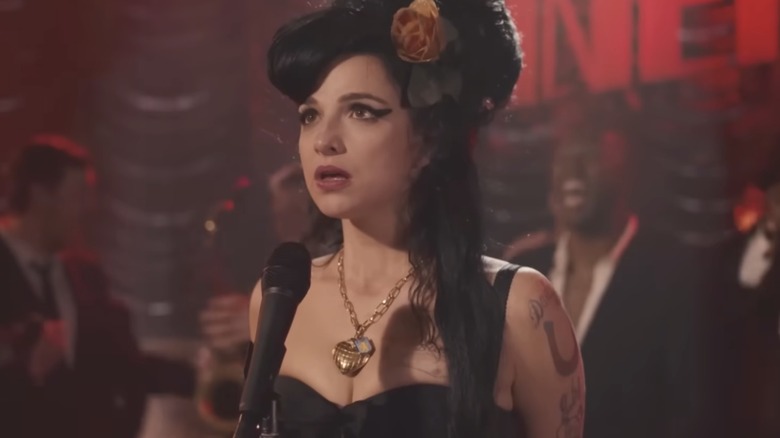
2024's "Back to Black" offered a glimpse at the tragic life of singer Amy Winehouse, covering the period from the start of her musical career to the peak of her success. But small but significant changes to the late performer's story contributed to arguably the biopic's two biggest flaws: the oversimplification of a complicated figure's serious life challenges, and the downplaying of the media's role in them.
Some of the minor ways "Back to Black" deviates from Winehouse's true story include attributing her iconic beehive hairstyle to her jazz musician grandmother, when it was actually her co-creation with stylist Tracey Cahoon, and Winehouse's ex-husband Blake Fielder-Civil introducing her to the music of The Shangri-Las, which reportedly never happened. Then there are the creative tweaks to the timeline of certain milestones in Winehouse's life, such as her 2008 Grammy win, which took place before her infamously chaotic Glastonbury show, but the movie switched the sequence so that it could end on a high note.
"Back to Black"'s depiction of Winehouse and Fielder-Civil's doomed romance had greater consequences on the overall narrative. Because the film mostly skipped over Winehouse's other relationships, it (perhaps unintentionally) framed her as someone whose entire world revolved around Fielder-Civil. Most notably, Winehouse was hardly hounded or bullied by paparazzi throughout "Back to Black" — a far cry from the truth and a rather dreadful omission, considering the impact the paparazzi's viciousness had on the singer near the end of her life.
Rocketman changed key aspects of the musician's life
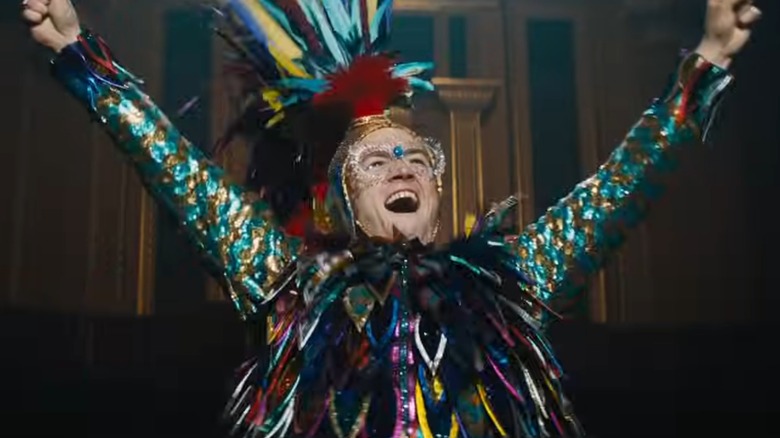
In a 2018 interview with Collider, Taron Egerton, who was cast as Sir Elton John in the then-in-production "Rocketman," clarified that the movie wasn't meant to be a factual dramatization of the legendary musician's life. "Everyone thinks it's a biopic. It isn't. It's a fantasy musical ... It's going to be fun." Indeed, the film, which was released a year later, played fast and loose with many details of John's life.
Arguably the least consequential changes in "Rocketman" involve the debut dates of John's songs. For example, a sequence set in 1967 shows him playing two songs from 1973 and 1983 ("Daniel" and "I Guess That's Why They Call It the Blues," respectively), and he performs the 1972 song "Crocodile Rock" in a scene at a 1970 concert. Then there's his 1983 song "I'm Still Standing," which was retconned to being his post-rehab 1990 release, for obvious thematic reasons.
"Rocketman" also put its own spin on some important details about John's personal life. First was the inspiration for his stage name (real name Reginald Kenneth Dwight), which came from influential '60s rocker Long John Baldry, but was changed in the movie to John Lennon. Then there's the matter of John's father, Stanley: While his portrayal in "Rocketman" tracks with what the musician has said over the years, both his half-brother Geoff and his stepmother Edna have publicly attested that Stanley was actually much gentler and more loving than John made him out to be.
All Eyez on Me did not live up to its marketing promises
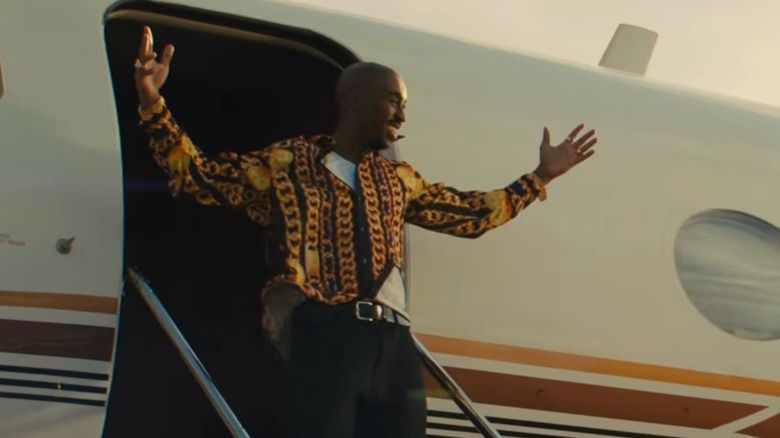
Fans of the late rapper Tupac Shakur (aka 2Pac) were eagerly anticipating the release of his biopic, which was marketed with the tagline "the truth behind the headlines." But when "All Eyez on Me" was released in 2017, all eyes — including some high-profile ones — couldn't help but notice its numerous fabrications, ranging from surface-level slip-ups to substantially fictionalized sequences.
Some changes in "All Eyez on Me" involved certain 2Pac songs being introduced or performed at chronologically incorrect moments in the rapper's timeline. For example, the scene featuring his last live performance in 1996 at the House of Blues had 2Pac performing "Hail Mary," a song that he never performed live, since it was released posthumously.
Hollywood star Jada Pinkett Smith had some particularly strong reactions to portions of "All Eyez on Me" that involved her relationship with the deceased musician. On X (then called Twitter), Pinkett-Smith stated that "the reimagining of [her] relationship to Pac has been deeply hurtful." She singled out three key scenes that were fabricated: 2Pac reading her a poem he wrote for her (she only became aware of the poem's existence after his death), the rapper bidding her farewell before departing for LA (he left in a rush and didn't get to say goodbye), and a backstage argument that never happened.
Immortal Beloved got some important things wrong
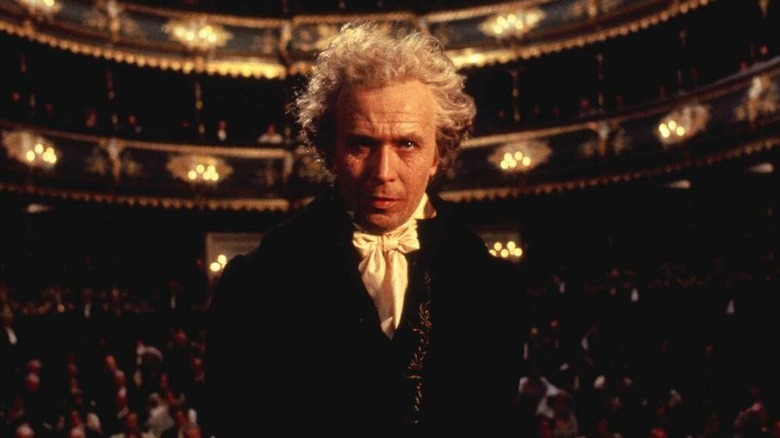
Released in 1994, "Immortal Beloved" shines the spotlight on classical music prodigy Ludwig van Beethoven (played by Gary Oldman) while attempting to provide an answer to the longstanding titular mystery: the true name of Beethoven's secret love, the subject of unmailed letters found in his private files. It proposed that the identity of his so-called "immortal beloved" was actually his sister-in-law, Johanna Reiss (portrayed by Johanna ter Steege), a claim that was not based on any scholarly finding or biography (and a peculiar one, considering the composer's well-documented disdain for her).
Aside from this bold conclusion, "Immortal Beloved" also alters the story of the composer in at least two significant ways. First, it shows Beethoven's deafness as a condition that he had as a young adult; in reality, his hearing began to gradually diminish in his mid-20s, and he only went totally deaf well into his mid-40s. Additionally, "Immortal Beloved" depicts Beethoven granting custody of his nephew Karl van Beethoven (Marco Hofschneider) to Johanna, the boy's mother, which never happened in real life; in fact, the bitter custody battle between the in-laws ended with the composer getting full legal guardianship of Karl.
Over 20 years after the release of "Immortal Beloved," director Bernard Rose defended some of the creative choices he made (via The American Cinematheque), stating, "[Beethoven scholars] attack the film on historical inaccuracies, but that's inaccurate in itself because everything about Beethoven is disputed ... Beethoven was so famous and difficult as a man that there were so many conflicting attempts to try and sabotage his reputation because he was this giant in music."
If you or anyone you know needs help with addiction issues, is dealing with domestic abuse, needs help with mental health, or has been a victim of sexual assault, contact the relevant resources below:
-
The Substance Abuse and Mental Health Services Administration website or contact SAMHSA's National Helpline at 1-800-662-HELP (4357).
-
The National Domestic Violence Hotline at 1−800−799−7233. You can also find more information, resources, and support at their website.
-
The Crisis Text Line by texting HOME to 741741, call the National Alliance on Mental Illness helpline at 1-800-950-NAMI (6264), or visit the National Institute of Mental Health website.
-
The Rape, Abuse & Incest National Network website or contact RAINN's National Helpline at 1-800-656-HOPE (4673).