

5 Classic Rock Songs From The '70s That Don't Sound 50 Years Old
It's strange to think that in the 1970s — arguably when the genre was at its commercial high point — rock music was still in its relative infancy. At the start of the decade, just 19 years had passed since Ike Turner and Jackie Brenston released "Rocket 88," widely considered the first rock 'n' roll record, after which the genre was cemented in the public's consciousness by artists such as "godmother of rock 'n' roll" Sister Rosetta Tharpe, Chuck Berry, and Bill Haley. Less time had passed between the dawn of rock music and the start of the 1970s than has passed between the release of Gwen Stefani's "Hollaback Girl" and today.
Recording techniques had notably advanced since the early days of rock 'n' roll, but the technology that was available to musicians, producers, and engineers in the studio was a shadow of what it is today. While innovators such as Beatles producer George Martin pushed the bounds of what could be achieved in the studio throughout the 1960s, artists were still mainly restricted to 4-track recording machines, with no digital workstations, plug-ins, or other modern assistance.
Nevertheless, there are some songs from the 1970s that sound uncannily modern considering they were recorded half a century ago. Here are five tracks that must have sounded especially ahead of their time when they were released, whether thanks to their incredible production values, the artists themselves pushing the boundaries of the rock genre, or because they later became famous in a non-rock context, making them appear to belong to another era altogether.
Fleetwood Mac – The Chain
Fleetwood Mac's 1977 masterpiece "Rumours" has proven to have a remarkably long shelf life; it climbed into the top 20 of the Billboard 200 as recently as 2025, suggesting its flawless songwriting and shimmering production values continue to chime with the listening habits of the Taylor Swift generation. "Rumours" is an album so consistent it doesn't work to describe it in terms of highlights. But when it comes to modern-sounding tracks, it would take a lot to beat "The Chain."
The song was the first the band worked on during the "Rumours" sessions, and since it emerged organically through jams, it is credited to all members of the band — the only song on the album to be so. All the performances on the record are immaculate, but special praise goes to the stunning bassline devised and performed by John McVie, which gives the song a timeless groove. The stereo mix is incredibly wide, with Lindsey Buckingham's guitar and Christine McVie's keyboards creating a lush backdrop for the perfectly harmonized vocals. The song builds slowly and feels like a journey rich with emotional drama.
Brian Eno – Third Uncle
Brian Eno is a musical pioneer who worked with some of the biggest rock acts of the 1970s. A founding member of Roxy Music and a producer for David Bowie and Talking Heads, Eno future-proofed each project he became involved with thanks to his calculated embrace of avant garde ideas. These techniques helped create music that sounded like it came from an age that was yet to arrive.
Eno's solo music also demonstrated his innovation and ambition. His 1974 album "Taking Tiger Mountain (By Strategy)" is perhaps his most notable release of the decade, featuring the track "Third Uncle," which is truly unlike anything else that existed in the musical landscape at the time.
Whereas other acts such as the Stooges and Dr. Feelgood presaged the arrival of punk rock, "Third Uncle" seemed to go a step further, anticipating the sound of many post-punk groups that were to follow in its wake. With a driving, thrumming, relentless bassline that underpins the song as a cacophony of discordant guitar shreds builds around it, it's an angsty record that seemingly creates its own sonic emotional palette. Eno's intentionally restrained vocal, which remains flat despite the lyrical complexity of the song, also prefigures the style many lead singers would adopt later in the decade. A sure inspiration for post-punk bands such as Wire and Joy Division and covered nearly a decade later by goth pioneers Bauhaus, "Third Uncle" sounds as fresh today as at any time since its release.
Blondie – Hanging on the Telephone
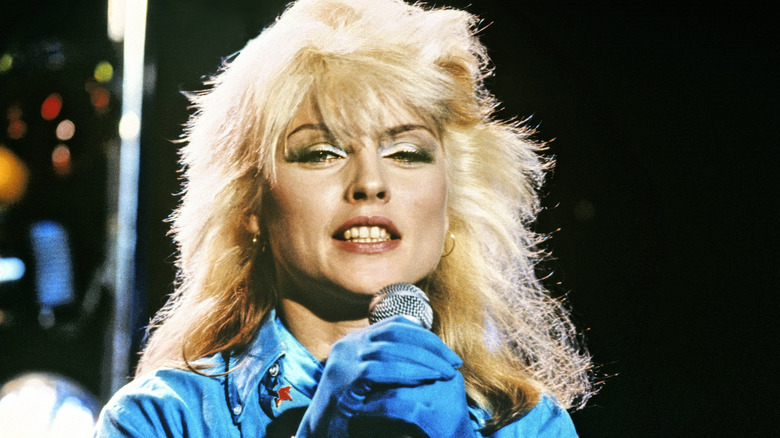
"Hanging on the Telephone" was Blondie's commercial breakthrough in the U.K. in 1978, earning the New York new wave band its first Top 10 hit before it proceeded to crack the U.S. with "Heart of Glass." Though one of Blondie's signature songs, "Hanging on the Telephone" was in fact a cover. The band that originally recorded it, the Nerves, was short-lived but managed to share a bill with Blondie, whose members obviously took a liking to the lesser band's work.
Thematically the song has a lot in common with many songs from the mid-'60s garage rock era: It's an edgy paean of a frustrated lover, whose anxious state of mind is reflected in the tumbling lyrical arrangement. Blondie's "Hanging on the Telephone" was the result of intense rehearsals prior to recording. Vocalist Debbie Harry was put through her paces, which resulted in the flawless performance you hear on record. The band behind her is equally well drilled, and the result is a dazzling, high-energy, radio-friendly hit that could have been recorded decades later than it actually was.
Steely Dan – Peg
Steely Dan is remembered as one of the most accomplished jazz rock acts of the 1970s. Despite the unfair "yacht rock" label Steely Dan attracted, the duo made up of songwriters Donald Fagan and Walter Becker was notably ambitious in the quality of the records they were willing to put out, working with the best session musicians in the business to release albums loaded with top-class performances that explored the whole palette of popular music.
The 1977 album "Aja" contains some of Steely Dan's most accomplished work as well as its most accessible. "Peg" was a huge radio hit at the time of its release, and continues to enthrall thanks to its lushness and comparative simplicity. Underneath its production sheen, "Peg" is actually a 12-bar blues number, elevated by some stunning performances by the musicians recruited for the track.
Though Fagan is the lead vocalist on "Peg" as he is on the vast majority of Steely Dan's output, the hook is dominated by the power of backing vocalist Michael McDonald, whose pitch-perfect bellowing of the song's title sounds as pristine as anything you could achieve with modern vocal effects. The rhythm section is equally uncanny in terms of performance, while the guitar and sax solos are perfectly placed in the arrangement and performed with aplomb. But while describing the track in such terms may suggest "Peg" is simply an indulgent display of virtuosity, it is instead the song's infectiousness that first hits you. An utterly irresistible track and an ideal entry point to Steely Dan's discography.
Babe Ruth – The Mexican
Sometimes a rock classic doesn't quite get the attention it deserves at the time of release. That was certainly the case with Babe Ruth's "The Mexican," a relatively obscure track by a British progressive rock outfit that only existed for a few years in the 1970s before splitting among numerous line-up changes.
Perhaps back in 1972, when Babe Ruth released its debut album "First Base," "The Mexican" indeed sounded like progressive rock. But it's almost impossible to think of the song like that now, as half a decade later it became a foundational track in the emergent breakbeat genre of hip-hop, which saw DJs cutting up its outrageous drum-and-guitar break for b-boys and -girls to breakdance to.
"The Mexican" has been sampled around 40 times on commercial tracks over the last half century, notably by Afrika Bambaataa and Soulsonic Force on their seminal track "Planet Rock" in 1982, while as recently as 2025, it made an appearance in the song "VCRs" by JID, featuring Vince Staples. Its timelessness is never in doubt, and you simply have to go back to the original to see why.