

This Iconic Love Song Was A Smash Hit In 1971
Al Green's breakthrough hit "Let's Stay Together," which remains one of the most iconic singles of 1971, is a love song the likes of which many people say they don't make anymore. But is that true?
On the visual essay website The Pudding, researchers David Mora and Michelle Jia analyzed all the Top 10 singles in the charts since 1958, for evidence that the classic love song is on its way out. What they found instead is that it remains as popular as ever; it has just evolved to include a greater number of songs celebrating sexual freedom, self-empowerment, and other aspects of love. Indeed, while heartache and explorations of the more complicated aspects of romantic relationships have always been a huge part of pop music's subject matter, they found that "sexual confidence" themed songs have overtaken the straightforward "serenade" — a purely devotional song delivered earnestly toward or about the object of one's affection — as the dominant subject matter of the modern love song.
"Let's Stay Together" is undoubtedly a serenade — one of the sweetest, most seductive songs straightforwardly celebrating love ever recorded. And while it might not be fashionable to write love songs so directly nowadays, it has lost little of its power in the half-century since its release. Here's how it came about and made Al Green a soul music megastar.
The road to Let's Stay Together
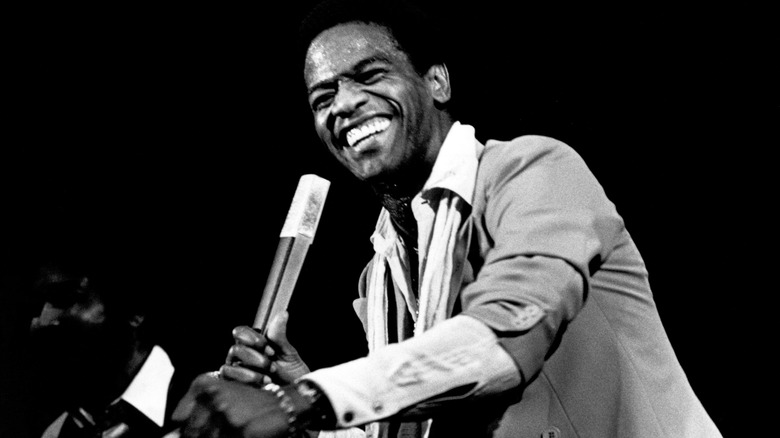
Al Green had emerged as one of the most promising soul and R&B singers of his generation in the late 1960s. Though he demonstrated his innate musical talent at an early age, his career wasn't immediately a smooth one. As part of The Green Brothers, Grand Rapids, Michigan-based family gospel band, he found himself ejected by his own father for the gross offense of being caught listening to the music of R&B legend Jackie Wilson. However, Green now found himself free to embrace the music that most compelled him.
His first attempt at a group, Al Green & The Creations, later known as the Soul Mates, had an R&B hit with the single "Back Up Train" in 1968, but later releases faltered. The following year, Green was signed to a solo deal, releasing "Green Is Blues" in 1970. The album announced Green as the next major soul star, and he certainly fulfilled his potential over the next two years. Continuing to partner with Hi Records vice-president Willie Mitchell, in late 1970, he released the album "Al Green Gets Next To You," which contained the hit single "Tired of Being Alone." "Let's Stay Together" arrived the next year.
The making of a soul legend
During the sessions for "Let's Stay Together," perfectionist producer Willie Mitchell assiduously coached Green to cultivate his signature intimate vocal style, largely abandoning the harsher tones that he regularly used in his earlier records, allowing his voice to melt more smoothly with the horns and strings tastefully deployed throughout the record.
According to the book "Soul Survivor: A Biography of Al Green," Green wasn't immediately taken with the changes Mitchell demanded; on one occasion, he absconded from the studio to clear his head, but later returned and caved in to his producer's demands. But it wasn't all hard going; Green wrote the lyrics to the song in the studio in just 15 minutes.
The title track of his fourth solo album, "Let's Stay Together," made its chart debut in December 1971. It gradually made its way to the top spot, hitting No. 1 on February 12, 1972, and maintained its position for nine weeks. It remained the biggest hit of his career.
In the 1980s, Green moved away from soul music, turning toward gospel music that better reflected his religious beliefs. However, he returned to the genre that made his name in the following decade, returning to the charts with a cover of Jackie DeShannon's "Put a Little Love in Your Heart," a duet with Eurythmics vocalist Annie Lennox, in 1988. He continued to release secular music until 2008. He was inducted into the Rock & Roll Hall of Fame in 1995.