

Here's Why 1971 Was The Best Year For Music Ever

We may receive a commission on purchases made from links.
Throughout the decades since rock 'n' roll entered the culture at large, no single year has been more musically memorable than 1971. Author David Hepworth explored that in his book, "Never a Dull Moment: 1971: The Year Rock Exploded," while an Apple TV docuseries, "1971: The Year That Music Changed Everything," examined the extraordinary array of music — much of which is still regarded as classic — that was released during that single 12-month period.
It's fair to say that dozens — if not hundreds — of songs released during that extraordinary year have remained part of the fabric of pop culture, more than 50 years later. Truly, 1971 saw what were arguably the most popular releases from iconic rock bands, along with enduring best-sellers from various genres, from soulful folk to singer-songwriter pop, to funk, to glam-rock, and beyond.
Yet all of this stunningly spectacular music was not created in a vacuum. There was an array of social, cultural, and political forces that combined to propel pivotal artists to produce albums that remain their masterworks. Looking back, it's clear that music fans have never again experienced that incredible breadth and depth of music, and here's why 1971 was the best year for music ever.
1971 was a watershed year for rock music
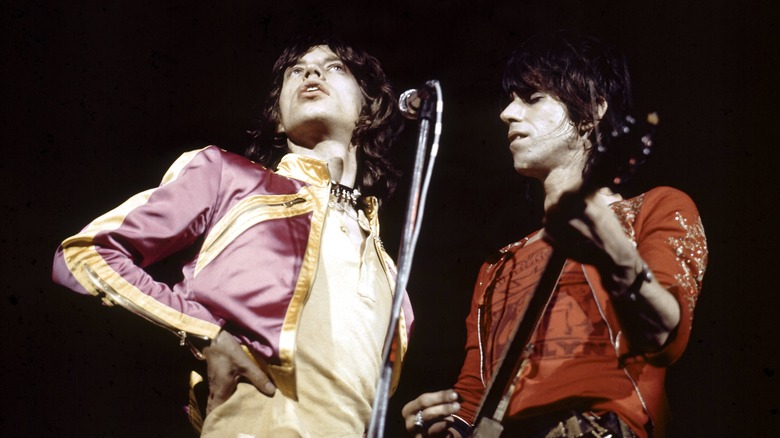
The list of classic rock albums released during 1971 is seemingly endless, and encompasses releases that some of the most powerful rock acts in history were never able to top. Imagine being a pimply-faced teenager during that year, popping into your neighborhood record store with your weekly allowance and being forced to choose from the likes of "Led Zeppelin IV," The Rolling Stones' "Sticky Fingers," The Who's "Who's Next," and Janis Joplin's "Pearl."
Scratch the surface, and the same was true of rock's various sub-genres. Fans of prog-rock, for example, were met with two albums from Yes (both "The Yes Album" and "Fragile" came out in 1971), while Jethro Tull unleashed the classic "Aqualung," and Genesis unveiled "Nursery Cryme." Meanwhile, the emerging glam-rock trend was evident in such releases as T-Rex's "Electric Warrior," Alice Cooper's "Love It to Death," and David Bowie's "Hunky Dory," which paved the way for the full-on glam he would embrace in his 1972 breakthrough album, "Ziggy Stardust and the Spiders from Mars." Then, of course, there was Black Sabbath's "Master of Reality," in which rock legend Ozzy Osbourne and the band set the template for what would become heavy metal.
Yet dig even deeper, and more now-iconic gems emerge: Van Morrison's "Tupelo Honey," Traffic's "The Low Spark of High-Heeled Boys," Paul McCartney's "Ram," John Lennon's "Imagine," and so many more. Rock ruled in 1971, and the choices were as spectacular as they were seemingly endless.
The iconic music released in 1971 spanned numerous genres
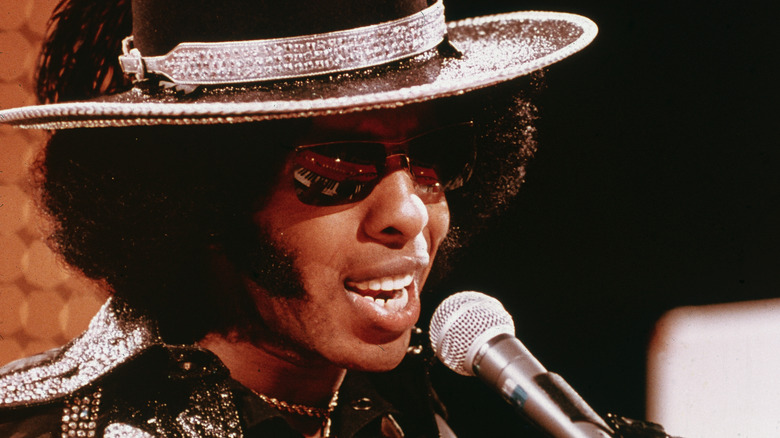
Beyond mainstream rock, 1971 also proved to be a time of great inspiration for artists from other musical genres. Singer-songwriters were producing albums that would come to define them, such as Elton John's "Madman Across the Water," "Teaser and the Firecat" from British phenom Cat Stevens, John Prine's self-titled debut, and Don McLean's epic "American Pie." As for female singer-songwriters, two albums pretty much say it all: Joni Mitchell's "Blue" and Carole King's "Tapestry" are both albums that continue to stand the test of time.
Black artists also released some career-defining music. For Sly and the Family Stone, it was the boldly inventive "There's a Riot Going On," while James Brown released both "Hot Pants," and Funkadelic produced the funk-meets-psychedelia classic "Maggot Brain." Other artistic peaks in the soul and funk genres included Al Green's "Al Green Gets Next to You," Bill Withers' "Just As I Am," Isaac Hayes' "Shaft" soundtrack, Curtis Mayfield's "Roots," and "Aretha Franklin Live from the Filmore West," to highlight just a few. At the top of the heap, however, was Marvin Gaye's extraordinary masterpiece "What's Going On," an enduring classic that remains as potent now as it was a half-century ago.
Was it the political turmoil and social upheaval of the era, or simply a creative cross-pollination unlike anything seen either before or after? That's a matter of continuing debate, yet whatever the reason, there's no denying 1971 was a uniquely special year in musical history.