

Music Wasn't Better In The 'Good Ole Days' — And Our Case Is Airtight
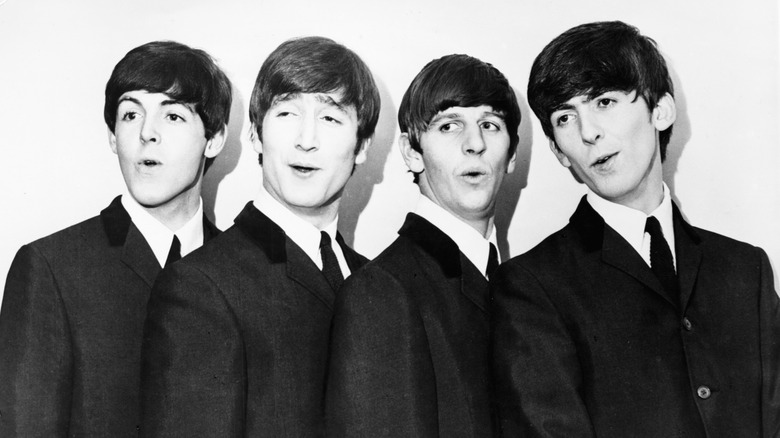
It is often said that popular music, whether rock, soul, hip-hop, and so on, was better in the past. But was it? We've been thinking, and frankly, we're not too sure that the adage "music was better in the good old days" really adds up.
Whether you're a fan of rock, soul, or jazz, it is tempting to look back to the classics of a particular genre, compare them to the music that's currently in the charts, and come to the obvious conclusion that they just don't make music like they used to back in the day. Musicians were more innately talented, their musicianship was better than you can find nowadays, the old way of recording things sounded better, they simply don't write songs like they used to, and so on.
There are several reasons why you should treat these ideas with suspicion. To begin with, most people are inherently nostalgic about music. Studies have repeatedly shown that the average listener's interest in uncovering fresh music generally wanes as they enter their 30s, when responsibilities tend to encroach on time that would otherwise be spent seeking out new experiences. Instead, we generally reach a point where music becomes a device through which we reminisce about a more carefree time; our favorite music as we reach middle age tends to be that released during our youth, and thus entwined with our memories of being young. But that's not the only set of musical blinders we tend to wear.
Old does not necessarily equal classic
It's natural to equate music from decades ago with legendary acts that were classic by any definition, such as '60s to '80s rock bands The Eagles, Led Zeppelin, and Aerosmith, but not all songs from those bygone eras were created equal. Indeed, there was a large amount of music that was truly awful, but nevertheless managed to top the charts back in the day. Bobby Goldsboro's saccharine "Honey" from 1968, Paul Anka's cringeworthy "(You're) Having My Baby" from 1974, and Rick Dees' infuriating "Disco Duck" from 1977 (featured in the above video, if you dare) come to mind.
A brief survey of the charts from any week in history will reveal a great many tunes which, if not unlistenable to the modern ear, are utterly unremarkable. The truth is that there has always been plenty of dross in the charts, but only the good stuff is remembered, and that remains the case with the Billboard charts today. Time will tell which modern music will be remembered as classic, at least in terms of quality, but there will certainly be a great deal of it; just look at the 2000s revivalism in the mid-2020s to see how relatively modern music inspires new artists.
There is also the fact that popular music exists as a set of reference points; pop songs exist within subgenres that often require the listener to be familiar with the tropes of that musical style. Ever feel like you don't understand the music today's youth is listening to, that it's just a bunch of noise? If so, you have something in common with many of the parents of kids who listened to Elvis Presley and Buddy Holly in the 1950s, and indeed every generation of parents since.
Today's musicians are exceptionally talented -- but likely not in the charts
Despite what some music fans would have you believe, there is as much musical talent today as there ever was in the past. In fact, when you think about it, we are more likely have a higher level of virtuosity than in previous generations, thanks to the wealth of information that is available at our fingertips to learn the intricacies of any musical practice.
Similarly, today's musicians have pretty much the whole history of popular music to draw upon thanks to streaming. This makes it even easier to draw inspiration from a wide variety of sources, allowing musicians to add to what went before and blend musical styles in new and unexpected ways. Meanwhile, genres as diverse as punk and soul still boast legions of purists and revivalists, all capable of reproducing the sound of these genres when they first came to public consciousness.
But the same technology that has opened up access to music has also fragmented audiences. This means that musicians working in genres outside of mainstream pop may struggle to get into the charts — but that doesn't mean the talent isn't out there. Indeed, many now find their audiences through social media, such as acclaimed English jazz drummer Yussef Dayes (featured above), whose concert films are uploaded directly to YouTube. Dayes' videos have amassed millions of views, while at the time of writing, his albums have only spent a combined three weeks on the U.K. mainstream album chart and have failed to chart at all in the U.S.
Music was arguably more important back in the day
While popular music is no worse today than it was back in the day, we should probably concede that the music created in the early decades of popular music is arguably more important, for both musicians and listeners. For a start, modern-day musicians still draw a great deal from the work of the early innovators of rock, soul, jazz, and so on, which set the template for what came after. Though the work of these early innovators may be technically "bettered," any serious musician working in these genres will continue to return to the work of past masters, such as Jimi Hendrix, James Brown, and John Coltrane, to see how these genres were pushed forward.
Furthermore, the role of music in the lives of young people decades ago was far greater than it is today. While it is still the case that young people continue to see popular music as a rite of passage that helps them form a sense of identity, today there is also a huge range of other entertainment avenues to choose from, whether it be immersive video games or simply scrolling on your phone.
Indeed, there is now a cornucopia of media specifically made for young people, which wasn't the case back in the mid-20th century, when rock music, for example, represented for many teenagers a subversive escape from the buttoned-down adult world they saw around them. For most young people today, music just isn't the matter of life and death it was for their grandparents' generation. Will today's generation of music listeners feel the same intense nostalgia for the music of their youth that older listeners do? Possibly not.