

The Most Controversial Toys Ever Sold In Stores
Toys, above all, are supposed to be fun. It's kind of nice if they're educational, it's absolutely spectacular if they're safe, and it's wonderful if a given toy has high-enough production numbers to avoid a stampede at the mall, but to be recognizably a toy, an object must be something children can play with, and that at least some of those children seem to enjoy. Within this broad definition, wide enough to encompass everything from a button on a string to complicated doll sets with scads of accessories, toy designers have ample room to play when it comes to conceptualizing and building new creations.
But if there are many paths to success, there are even more to failure. Some toys have become notable not because of the delight they've brought children but because of the consternation or bewilderment they've brought parents: "Really, this is for children?" Comprising both well-meaning experiments and obvious misfires, the below are some of the most conversation-generating products ever to appear under a Christmas tree.
Down Syndrome Barbie
In 2023, Mattel began making official Barbies with the distinctive features of those with Down syndrome. The dolls are part of a broader drive to diversify the product line to represent a wider array of demographics and bodies, including various dolls with visible disabilities. The dolls with Down syndrome were embraced by the nonprofit National Down Syndrome Society; after pushback, later development processes went further to include feedback from people with Down syndrome themselves.
Much of the press reaction was positive, with news reports noting Easter eggs in the doll's design like a pendant incorporating colors and symbols used among people with Down syndrome and those who love them. Ellie Goldstein, a model who herself has Down syndrome, served as a face of the launch. But not all reactions were positive: An editorial in the Miami Herald, written by the mother of a child with the syndrome, took the project to task for promoting a narrow version of inclusion. The author argued that the Barbie-fication of Down syndrome wouldn't give her daughter better access to opportunities or acceptance in the real world and further critiqued the doll for an "idealized" depiction of a pretty, blond person with Down syndrome. (In Mattel's defense, the first doll was followed up with a Black peer.)
Golliwogs
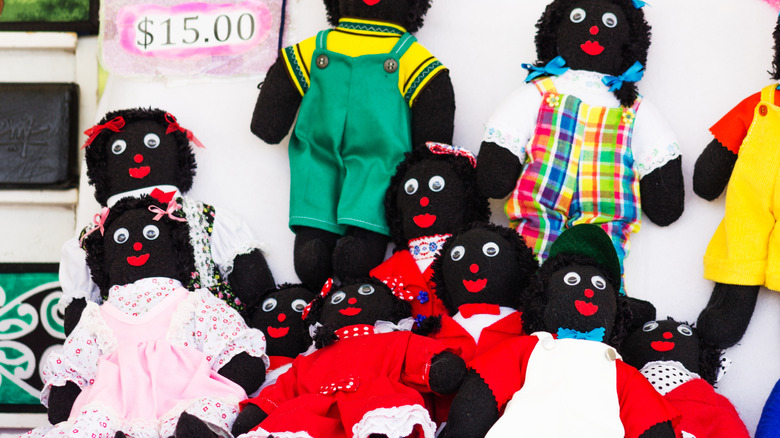
Golliwogs have a relatively interesting history as racist caricatures go. They come from a character in a children's book written shortly after the Civil War by a woman who apparently based it on a blackface doll she had played with (and treated roughly) as a girl. The original author depicted the Golliwog (it's not his name, he's "a" Golliwog) as only pseudohuman, sometimes with paws — and she failed to copyright him-slash-it, so anyone who wanted could and did write books about Golliwogs and make their own versions of the popular entity for sale. These not-quite-bootleg versions could be even uglier and meaner than the original.
Golliwogs didn't take off as well in the United States, which had plenty of racialized images to work with, as they did in Europe, where they were a favorite toy of many children with the poor fortune to be born in the early 20th century. (They also made an appearance as mascots for a brand of marmalade.) The inevitable happened as Black people, especially from the Caribbean, migrated to the United Kingdom after World War II: Both "golliwog" and "wog" became repurposed as racial slurs for whichever dark-skinned person or group the speaker wished to offend. A backlash against the toys began, and they are now rare though prized by certain collectors who, unconvincingly, claim the toys aren't racist.
Little Miss No-Name
Teaching children about empathy is an important part of raising children and one of the most difficult. When and how, exactly, do you tell children that the world is frequently dangerous and that they were lucky to be born indoors? Fortunately, mid-1960s parents would be all set to talk about the coming Vietnam War and the crushing of the Prague Spring with the help of Little Miss No-Name, a neglected and apparently homeless doll put out by toy giant Hasbro.
Little Miss No-Name (children were presumably free to name her after purchase) came with large, wet eyes (with a huge, detachable blue tear); an outstretched, supplicating hand; and a patched burlap sack for a dress. Her matted hair was, of course, blond, since in the 1960s as now, it was easier to gin up sympathy for people with a certain look, shall we say. Despite their matching complexions, Little Miss No-Name had been designed as the anti-Barbie, a doll with no glamour or polish, as a reaction to the theoretically hip and empathetic '60s.
Hasbro absolutely biffed it with the grim little doll despite a heavy marketing campaign that even included hot chocolate crossovers; several commercials for the doll now haunt YouTube. Little Miss No-Name was only briefly on shelves, but today resale prices of the doll designed to teach children about want regularly hit the triple digits — more if the specimen still has her tear.
Earring Magic Ken
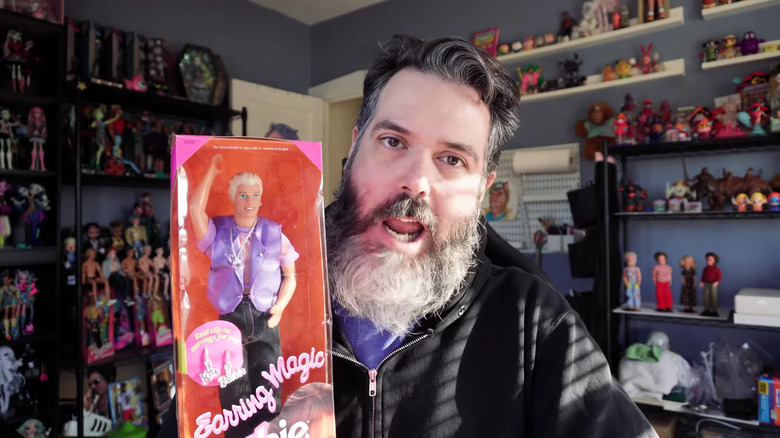
There's nothing wrong with being gay, but don't tell that to the toy-buying public of the early 1990s. With AIDS still killing and the Clinton administration winding up for the Defense of Marriage Act, gay men were not seen as fully part of American society when Earring Magic Ken made his debut. Now, Earring Magic Ken, part of a wider range of Earring Magic Barbies, wasn't canonically gay ... but he did have an earring, a pendant that some interpreted as an adult toy, a lavender leatherette vest over a lavender mesh shirt, and a certain, shall we say, open-minded vibe.
Mattel had based the doll on what a panel of little girls had thought would be a cool update for Ken's dated, late-Eisenhower style, and while the girls were correct about what was cool, a panicked Mattel was no more ready for a gay-coded doll than Midwestern parents. Mattel recalled the doll even as it flew off the shelves and into the collections of adult buyers tickled by a mass-market doll that so clearly seemed to be "family." Nevertheless, Earring Magic Ken may be the most profitable iteration of Ken in the company's history — and he's certainly among the most memorable.
Lufsig
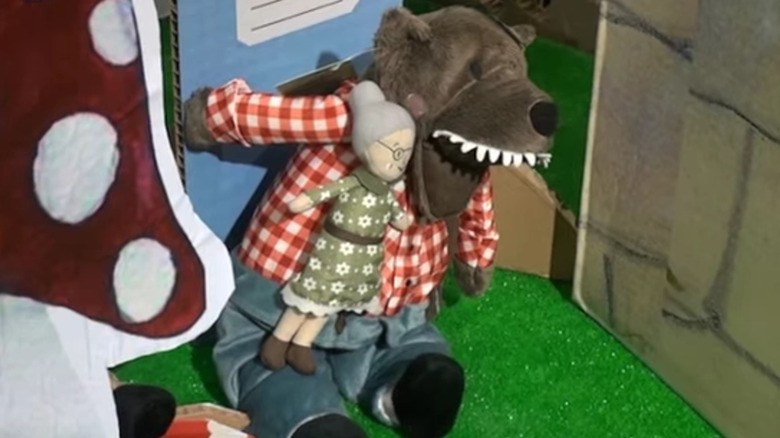
Ikea is more notorious for private controversy, in the form of marriage-wrecking arguments about particle board, than its participation in big political disputes, but an iffy translation landed the Swedish flat-pack furniture juggernaut right in the middle of Hong Kong's struggle to avoid full absorption by the Chinese state. In 2013, Ikea made a "Big Bad Wolf" doll, complete with Grandma accessory. The wolf, in checked shirt and jeans, was named "Lufsig," which in Swedish means something like "lumberer" but in certain accents of Cantonese sounds like an unprintable insult.
Combine this crass reading with the fact that in 2013, Hong Kong was being run by the very unpopular CY Leung, a Chinese-imposed politico nicknamed "The Wolf," and you've got the recipe for an unlikely and cuddly protest symbol. A protestor threw a Lufsig doll at Leung during a public appearance, and from there Hong Kongers raced to snap one up before the government clamped down. Ikea remained mum on the political fate of Lufsig, but it continued to make the doll, a portion of whose sales went to children's charities.
Sea Monkeys
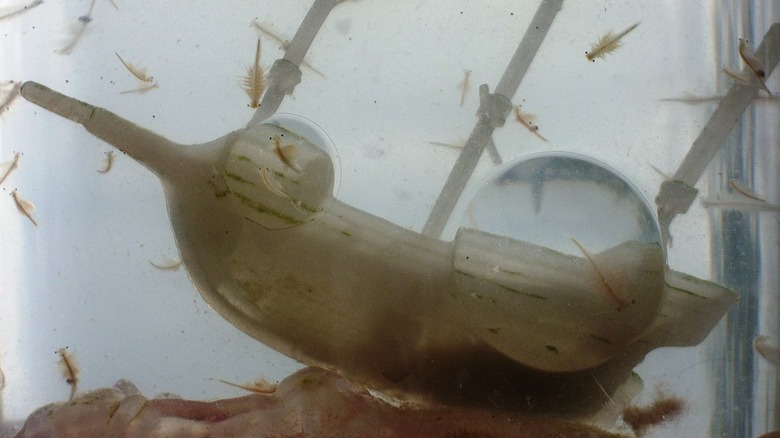
Kids in the '60s and '70s sometimes ran across ads for Sea Monkeys, an allegedly exciting pet that came in the mail. Despite ads depicting vibrant humanoid societies, the Sea Monkeys were in fact dried brine shrimp eggs. Brine shrimp are small, abundant crustaceans in the genus Artemia, with populations of various species in saline bodies of water worldwide. These creatures have an important role in the food chain, supporting populations of larger animals and especially migratory birds, and are often farmed as fish food. Unfortunately for expectant children who'd saved up to order a packet of just-add-water playmates, brine shrimp are incapable of forming complex social structures or playing with a human child in any recognizable way.
Sea Monkeys will, however, mate right in front of you, making them at least minimally educational. They attach to one another's tails in strings several individuals long, in a display that would be obscene in a species with genitals visible to the naked eye. The bigger concern though, was the deceptive marketing: The ads clearly portrayed animals more relatable, peppy, and engaging than an actual tiny shrimp.
An additional, if late-breaking controversy about Sea Monkeys was their popularizer Harold von Braunhut's Nazi sympathies, an unusual stance for mid-century American Jews. The Sea Monkey money, as well as the take from von Braunhut's other "cleverly" marketed toys and novelties such as X-Ray Spex, make him rich enough to arm KKK chapters and print an anti-Israel newsletter.
Labubu
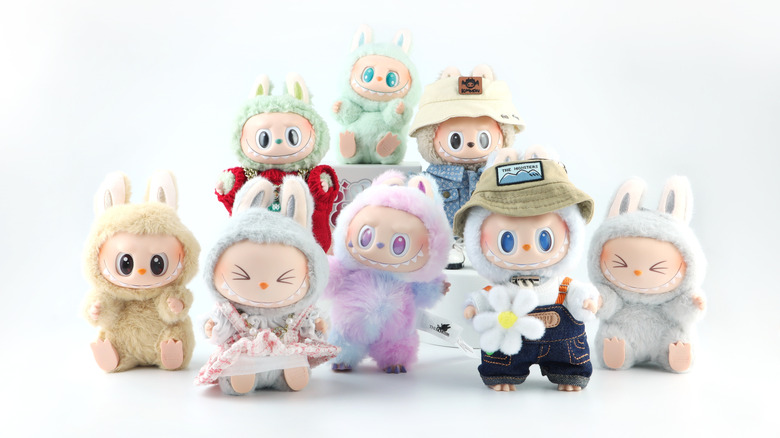
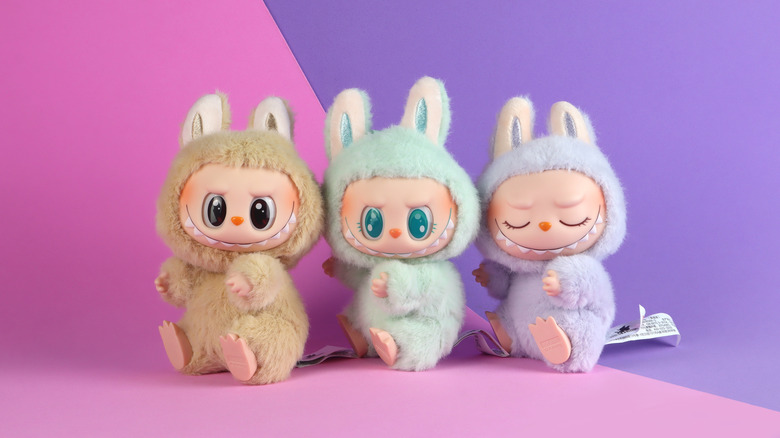
Trendy Labubus circled the world in 2025. The human-animal-monster doll-accessory-decorations are, strictly speaking, closer to elves than anything else, at least per their creator, but their toddler-like bodies, rabbitlike ears, fur, and chompy teeth have make the critters hard to assign to real or imaginary species. Sold in closed boxes that don't reveal what specimen of Labubu is inside, the toys drove a collecting spree in 2025, with rare versions fetching dizzying prices at auction and the more commonplace riding along on the bags of trendy young people throughout the world's cities.
Some people thought the ugly-cute trinkets were a ploy of the Devil. Not figuratively: Their critiques weren't about capitalism or plastic waste or anything else rooted in the material world. They thought Labubus were the work of the actual Devil, Old Scratch, Satan, the Adversary, or, in other versions, the demon Pazuzu of "The Exorcist" fame. Leaving aside the arguably important question of whether a movie from 1973 is an accurate demonology text, the origin of the "Labubu demon connection" seems to be the fact that the dolls have teeth, the names are broadly similar, and some TikToks of the dolls "doing demon stuff." Given the self-reinforcing nature of internet weirdness and some people's willingness to incorporate whatever they've last seen into their belief systems, an urban legend was born, made stronger by manufacturer Pop Mart's joking notice recalling any Labubu that moved on its own or whispered.
Garbage Pail Kids
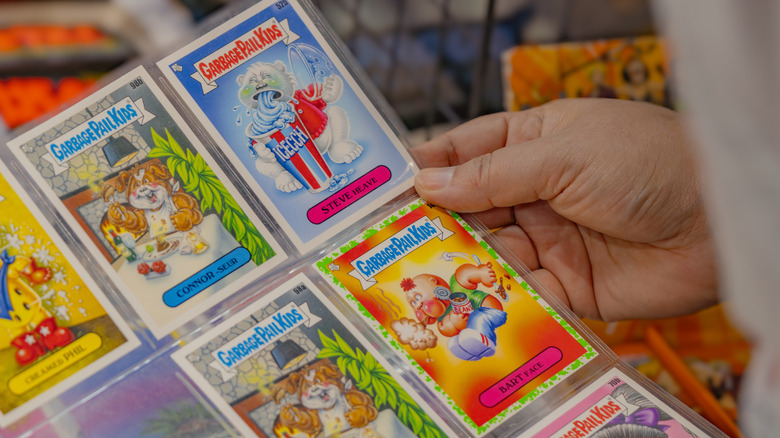
Kids love gross stuff. Bodily functions are still relatively new to them, and stuff coming out of the body — sometimes without enough warning! — has an ability to delight and amuse that only fades in adulthood, as the mortal nature of all our cherished valves becomes clear. Baseball card company Topps capitalized on this, spoofing the then-popular Cabbage Patch Kids with the Garbage Pail Kids, a collectible series of apple-cheeked figures who belched, farted, and at times dismembered their way into the heart of a certain kind of American child. The trading cards were joined by more merchandise, because in the 1980s, a toy wasn't a toy without plastic.
Parents, or at least parents with a certain amount of free time and mental energy, were appalled. Parents complained and legislators fussed, but pesky free speech kept the cards on shelves until Topps was sued by the makers of the Cabbage Patch Kids, who alleged that the "parody" versions were effectively just vomiting Cabbage Patch Kids. A compromise involving a degree of redesign was reached between the parties, but the revamp corresponded with a broader decline in the gimmick's popularity. The Garbage Pail Kids have popped up intermittently since in special releases and limitied editions to nauseate new generations.
Cabbage Patch Kids
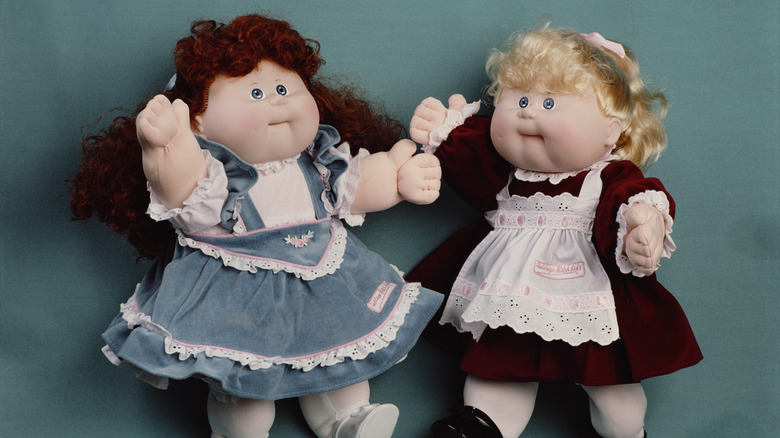
Cabbage Patch Kids, the chubby collectors' items that were ubiquitous in the '80s, saw their share of rumors: According to some, the dumpling faces were based on the features of actual children with congenital problems, or designed by the Reagan administration to get people used to the appearance of mutants after a nuclear war with the USSR, or were eligible for death certificates if returned to the factory. These are all false, though you might argue that the suspicion of a sinister origin made the dolls even more intriguing to the buying public.
The dolls were at the center of some of the first toy-buying frenzies in the United States. At $31 in 1983 currency, the dolls were pricy, but that didn't stop American holiday shoppers from stripping shelves bare and, occasionally, injuring one another in their attempts to obtain dolls for their children or themselves. This nationwide sales-floor scuffle was matched by a lawsuit alleging that credited inventor Xavier Roberts had ripped off the work of a folk artist named Martha Nelson Thomas; the parties settled out of court for a sum that was never revealed.
The dolls also inspired some eccentric behavior in people who enjoyed hanging out in the uncanny valley. They came with birth certificates, and those willing to head to the company's headquarters in Georgia could, if they wished, adopt their dolls in a formal ceremony (for a fee, natch).
Lego
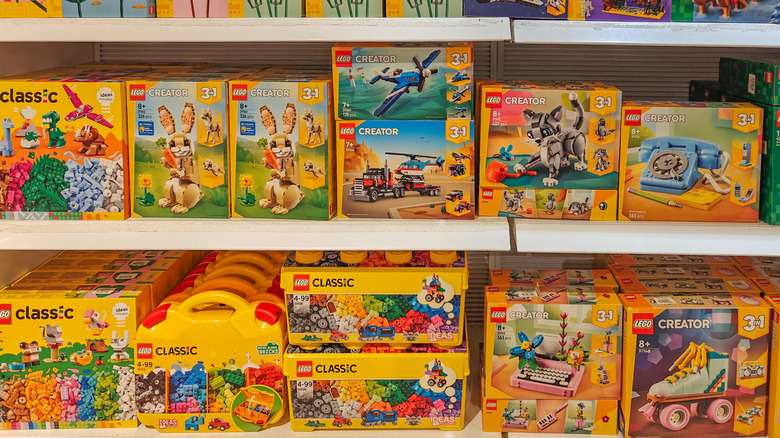
Legos are a classic for a reason. They're simple, but you can do complex things with them; they're cool; they last a long time; they will absolutely ruin an adult's foot if stepped on in the night. They encourage creativity and a sort of general engineering spirit without the dry instructiveness of some educational toys. They're from Denmark, like butter cookies, which seems safe. But even these instep-puncturing Nordic building blocks have generated a degree of controversy.
If you want to sell things to Americans, you've got to have guns in there somewhere — at least, that's the logic. In the Lego worlds, they're generally not really guns but laser blasters, and Lego hasn't put out explicitly military toys (though there are lookalike products), but commentators have nonetheless noted a rise in violent or potentially violent scenarios in Lego sets. This has displeased parents who liked the idea of their children building castles and farms and learning cooperative play, rather than knocking down the castles and burning the farms and learning warcraft.
Additionally, in an attempt to attract more girls, Lego recently started putting out sets designed explicitly to appeal to girls, gendering what had been one of the world's few toys that wasn't tailored to a particular gender. Do girls need pink Lego sets to care about building a fantasy world?
Girls' Toys
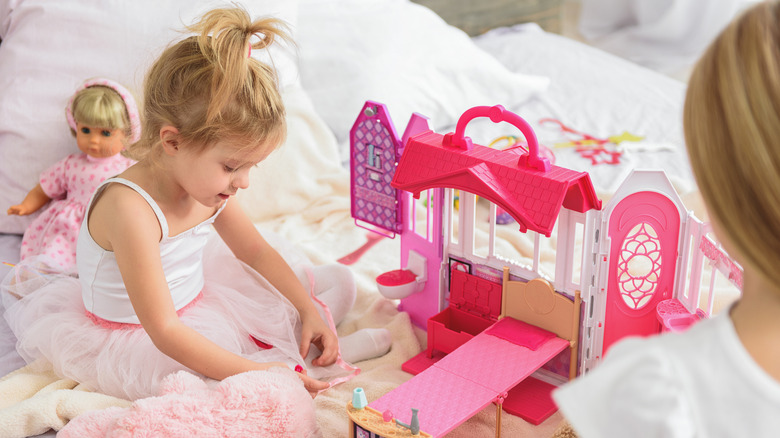
You know what girls are like. They love pink stuff, and girly stuff, and glitter and pink and sparkle and pink and tulle. Girls really need toys that are for girls, lest the femininity of a 4-year-old be doubted as she rolls around in the mud. (Boys, on the other hand, want guns.)
If this sounds absurd to you, you're not alone: At least two public action groups have formed in recent years to argue that children should be allowed to play with the toys they like, with the delights of pink expensive things for women and meat-scented 7-in-1 shower gel for men waiting for them on the other side of puberty. Pinkstinks, in the United Kingdom, successfully lobbied a London toy store to do away with its pink and blue sections. The larger, also UK-based Let Toys Be Toys effort argues that dividing toys, and therefore opportunities for play, by gender limits children's opportunities to grow and explore their interests. To present more toys as available to any children, they offer a seal of best practices to manufacturers and retailers who have dropped pink-vs.-blue divisions.
Entertech Water Guns
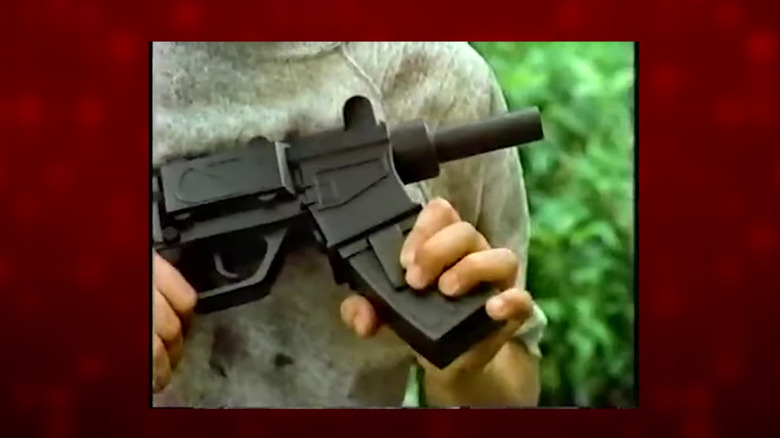
In 1987, a company called Entertech put out a line of incredibly realistic waterguns. "Fully automatic" and with a detachable clip that you filled with water, the gun would keep squirting as long as it held water and you kept your finger on the trigger. The main model looked a lot like an Uzi, a line of Israeli-made submachine guns widely used by other military and security forces. If you think it's disturbing and possibly dangerous for a child to be running around with a toy that looks like something you'd take with you on an invasion of the Sinai Peninsula, congratulations: You have a degree of common sense.
The Entertech guns were so realistic that a crank was able to take a television consumer reporter hostage with one, forcing him to read a statement about space aliens and the CIA. More disturbingly, they were implicated in a series of confrontations and shootings when the police mistook them for real weapons (though it was not an Entertech product in all cases). State and federal legislation required the guns to look less real, but the real killer here was the 1990 advent of the Super Soaker, which blasted its rivals through the wall.
Cayla
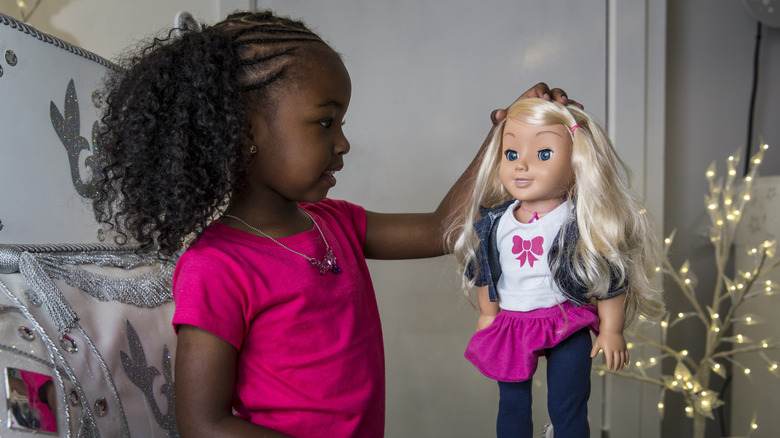
Cayla, a doll released in the 2010s, had an excellent new gimmick. Via Bluetooth, she could access the internet and answer questions posed to her by children, as sort of a cute but extremely inefficient Google for people who don't need to be using the computer just yet. Unfortunately, Cayla was hackable, and the charming little know-it-all was deemed a security risk.
The fear was that bad actors could access the Bluetooth connection in a given Cayla doll and listen to a child nearby, which raised obvious questions of security: All it would take for a terrible outcome might be a child casually telling Cayla that Mommy and Daddy would be home in an hour. More alarmingly, it would theoretically have been possible for people to use the connection to speak directly to children through the doll, which is of course the premise of several horror movies. Cayla's parent company downplayed the fears, but governments and consumer groups didn't. Germany, in the wake of the Nazi era and East German state surveillance, has particularly strict rules on listening devices that made Cayla not only dangerous but illegal, and German authorities eventually issued instructions that parents should destroy the dolls.