

Iconic '80s Love Songs That Went Platinum
Even though the 1980s maintain a reputation in the collective consciousness as a decade of frivolity, superficiality, and artificiality, the era also produced some of the most popular and intense love songs ever etched into a vinyl record or loaded into a cassette. Love is a deep, complicated, and tough-to- express feeling, let alone define properly. That's why it doesn't seem like the '80s could stake a viable claim to the title of one of the best love song decades ever. Its music is defined by surface-level stuff and manufacturing — this is the age of keyboard-driven rock, synthesizer-based and overproduced pop music, and all those famous '80s hair bands.
And yet the music of the '80s isn't entirely just flash and no substance. Beneath the shiny and glitzy facades, both physical and aural, many '80s musicians wrote and recorded some wonderful love songs, ones that the public so conclusively agreed with and felt heard by that they bought lots of copies. Only a relative handful of the love songs of the '80s sold at least a million copies, garnering recognition from the Recording Industry Association of America (RIAA) in the form of a "platinum" sales designation. Here are five songs of love in the '80s that moved millions.
Faithfully — Journey
Journey is one of the most important rock bands of the '80s, finding millions of lifelong fans for both its fist-pumping, hard-charging arena rock anthems and soaring ballads featuring the empathetic vocal stylings of Steve Perry. It sold millions of records, but it never had a No. 1 hit. For example: "Faithfully" peaked at No. 12 in the summer of 1983, but it never really disappeared. The song has been so consistently purchased, downloaded, and streamed that in 2024, it was certified platinum six times over.
Keyboardist and guitarist Jonathan Cain wrote the lyrics of "Faithfully." It's specifically about the downside of the rock star life, particularly the pain both people in a relationship experience when one of them is a touring musician, often out on the road. "Faithfully" just nails the anguished longing, and the clarity and power of love feelings that can happen to couples who endure distance of any kind. This is the kind of song that long-together couples call "their" song, perhaps because they slow-danced to it at some school dance decades in the past, or maybe at their wedding. It lays bare, and with great vulnerability, the ups and downs of a lengthy relationship.
Islands in the Stream — Kenny Rogers and Dolly Parton
By 1983, Kenny Rogers and Dolly Parton had become such mega-stars in country music that the mainstream had to grow to accommodate them. That year, the solo acts teamed up to record "Islands in the Stream." The pop/country hit was written by the Bee Gees, and it went to No. 1 on the country, pop, and adult contemporary charts. That's because the chemistry between Rogers and Parton was just so infectious to so many people.
Unlike so many melodramatic and ultra-serious love songs out there, "Islands in the Stream" is sweet and fun, as giddy and bubbly as the early days of a romance. That angle must have hit a nerve with listeners of all kinds of music in the '80s, showing that the song cut across genres to deliver an honest and earnest message of love. Rogers and Parton, as they sing to each other, are like a couple of solid bodies in water. That's an easy to understand and elegant metaphor: The two lovers in this song remain steadfast in their rock-solid solidarity and companionship, enjoying one another's company as the world swirls around them like flowing water. It's no surprise that a song that expresses lyrical affection in such an unabashed way became a karaoke favorite for couples and went triple-platinum for sales of 3 million copies.
Total Eclipse of the Heart — Bonnie Tyler
Sometimes love can be a lot — it's overwhelming to feel those feelings for someone for the first time or the best time. And if just being with that someone who has burrowed into your heart, mind, and soul is too much to take, the mere thought of being without them is absolutely unbearable. These are the big emotions at the heart of "Total Eclipse of the Heart," a song that sounds as bombastic, dramatic, and just plain massive as its lyrical themes require.
"Total Eclipse of the Heart" exploded from the mind of Jim Steinman, a composer of flashy stage musicals and the creative voice behind Meat Loaf's signature histrionic recordings in the 1970s. In 1983, pop singer Bonnie Tyler recruited Steinman to produce a couple of tracks for her, seeking a huge and emotional sound. Steinman delivered, packing "Total Eclipse of the Heart" with loud drums, eerie keyboard riffs, power chords, and the raspy and pleading to the point of exhaustion vocals of Tyler, who converts what could be hammy and over the top into what was apparently relatable material. A No. 1 in both the U.S. and the U.K., more than a million 1980s listeners appreciated the sentiment and the story of an individual who desperately needs a lover to make things right, and who then desperately needs that lover to come back and put the pieces of a shattered life back together.
Time After Time — Cyndi Lauper
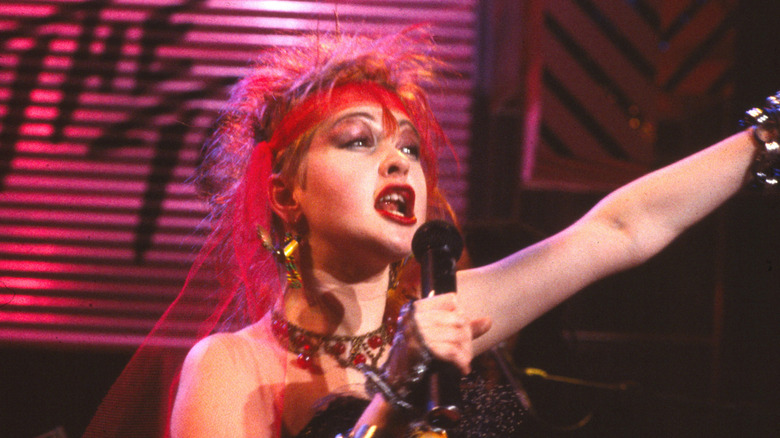
Following the success of the exuberant "Girls Just Want to Have Fun" and a quirky persona that made her an MTV favorite, Cyndi Lauper switched it up for the follow-up single, 1984's "Time After Time." Meditative, gentle, and a showcase for Lauper's captivating voice, it's very '80s with its layers of synths and production additions, but it's such a pretty and affecting song underneath that listeners keep coming back to it time after time.
Love songs work best when they express the things that the average listener wants to hear from a romantic partner, or they articulate things people don't know how to tell the person they love. Lauper, co-writer of "Time After Time," put into words expressions of unconditional love, undying support, and the promise to always be around for whatever the object of the song may need, and that's for as long as they both shall live. "Time After Time" is a precise love song in that it says exactly what needs to be said, but it's also attractively vague and amorphous. It's a love song whose sentiments can feasibly be felt about lots of different people — a romantic partner, close friend, child, or relative. With sales figures numbering in the five-times platinum range, Lauper's song is truly timeless.