

The Biggest Mysteries In '80s Music Still Unsolved Today

Just how many mysteries are there when it comes to the music of the 1980s? Admittedly, not a whole lot, or at least not compared to some other eras. Thanks to the information-sharing power of the internet, some long-standing quandaries from the time have been solved. For instance, the so-called '80s-tinged "lostwave" song that gripped online sleuths for about 15 years, long referred to as "Everyone Knows That," was finally identified in 2024. The real track: "Subways of the Mind" by German New Wave band Fex.
Yet, mystery-lovers who like vintage sound shouldn't give up hope, as there are still a few queries lingering from the synth-tinged era of New Wave, punk, funk, pop, and more. Musicians' motivations, for instance, may still be subject to quite a lot of interpretation, especially when an artist decides to abruptly leave the scene and refuses to answer questions for decades afterward. Likewise, tragic deaths and sudden disappearances of musicians can still linger unresolved, as do a good conspiracy theory or two.
Who really sang Spelling on the Stone and why?
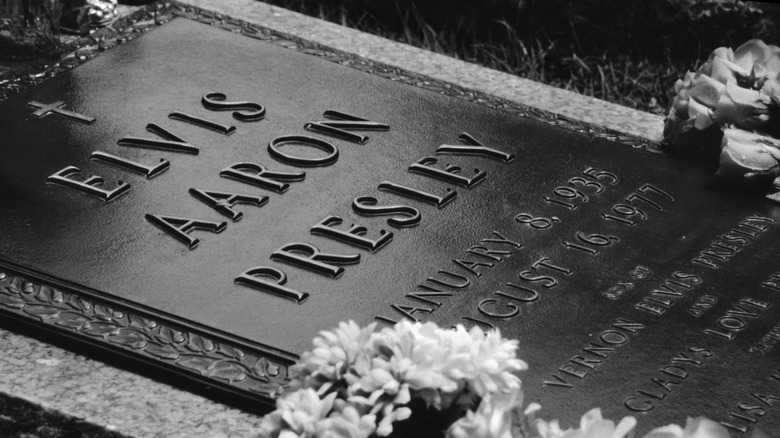
Officially, Elvis Presley died in 1977 of heart failure brought about in part by his long-term use of many, many prescription drugs. Yet, there's been a persistent rumor that Elvis faked his death because he wanted to flee fame (or the Mafia — he did have some interesting notes in his FBI files, after all). Most people, including Elvis' ex-wife Priscilla Presley, say it's nonsense, but, in the 1980s, there emerged a mysterious song that added fuel to the conspiracy fire. Known as "Spelling on the Stone," the track was reportedly delivered to the offices of LS Records by a mysterious man in a limo ... or was that a pink Cadillac? The title references Elvis' tombstone, in which his middle name is spelled as "Aaron" though at birth it was "Aron." This was allegedly a secret signal that Elvis was still out there (though Elvis himself used both versions and wanted it changed to the double-a spelling).
By 1988, "Spelling on the Stone" was released without an artist's credit and generated a minor frenzy, yet allegedly no one claimed the royalties. But if it wasn't really Elvis, who was it? Some sources pin Jimmy Ellis, a singer who went by "Orion" and bore a passing resemblance to Presley; he often wore a mask onstage to capitalize on the mystery. Others claim the singer was another tribute singer, Dan Willis, with some noting distinct similarities between his voice and that on the track. However, as it stands, the singer of "Spelling on the Stone" remains unidentified.
What happened to Peter Ivers?
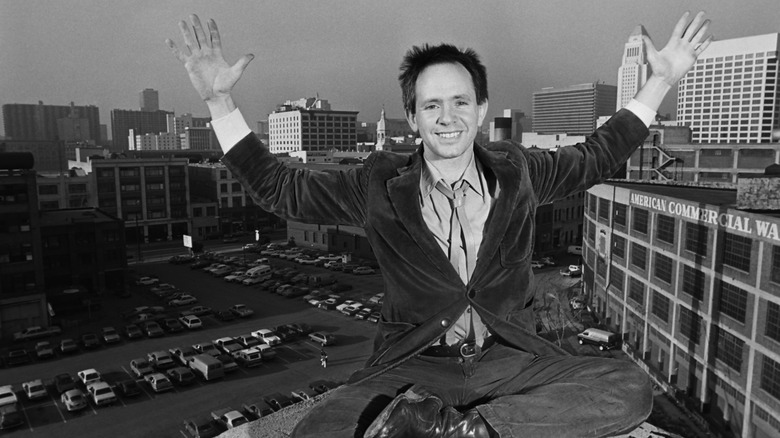
He may not be the biggest name in '80s music, but Peter Ivers was definitely someone you would have come across in the edgier New Wave and punk scene. He worked as a TV host, a songwriter on David Lynch's "Eraserhead," a soundtrack artist, and even opened for Fleetwood Mac at a 1976 L.A. concert — though the crowd turned sour when the more conceptual Ivers took the stage.
Clearly, Ivers' work wasn't always well-received, and he had spotty initial success. By the '80s, however, things were looking up. Ivers was hosting the nationally-broadcast New Wave Theater show and had moved to a new apartment-rehearsal space, selecting a rather sketchy LA neighborhood that alarmed some of his friends. Then, on March 3, 1983, Ivers was tragically found dead in his apartment, apparently the victim of a hammer attack. The crime scene yielded little good information, especially since investigators allowed people to contaminate the scene. A missing stereo, combined with the ease of entering the apartment via a poorly secured door, led many to conclude that it was a burglary gone wrong.
But others in Ivers' circle claimed that David Jove, a Canadian director of underground music films and a co-worker on New Wave Theater, could have been responsible. Drummer Russell Buddy Helm told Entertainment Weekly that not only did Jove have a scary reputation, but that "Peter was really kind of sick of doing David's scene [...] David himself could be violent." Yet no evidence emerged to definitively link Jove or anyone with the crime, and so Ivers' brutal murder remains unsolved.
William Onyeabor stepped away for mysterious reasons
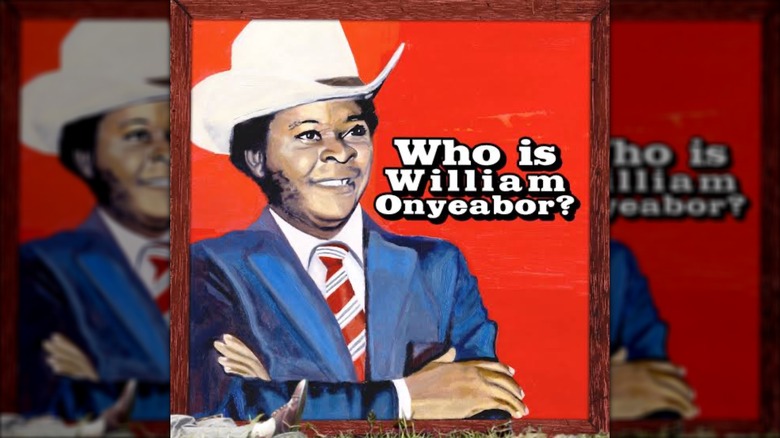
If you haven't heard of William Onyeabor, here's the breakdown: Onyeabor was a Nigerian musician who set up his own cutting-edge studio in Enugu and self-produced eight albums of his own music, beginning in 1977. The music was, in short, ahead of its time, and was admired by musicians like Talking Heads' David Byrne.
Onyeabor produced an innovative New Wave-style sound that was unlike anything coming out of the capital of Lagos (or anywhere else, for that matter). Careful listeners can pick up on themes and motifs from his travels and homegrown Nkanu culture, as well as the persistent threat of the Cold War that loomed over Africa as much as anywhere else. Plus, Onyeabor really knew how to style himself, with snappy suits and a signature cowboy hat. He began to gain more and more attention ... then abruptly quit in 1985.
What gives? Onyeabor, who died in 2017, offered up little information for the rest of his life, sometimes even hanging up on nosy reporters. He reportedly became more devoted to his Christian faith; perhaps that, along with the desire to support his family and maintain his growing business and social standing in Enugu, had something to do with the abrupt withdrawal. He may have also had a rather dim view of fame, especially if it interfered with his artistic integrity. His son, Charles, said that his father "wasn't doing his music for the money. He was trying to tell the world how he felt and what he thinks" (via The New York Times).