

5 Rock Songs From 1973 That Sound Even Cooler Today
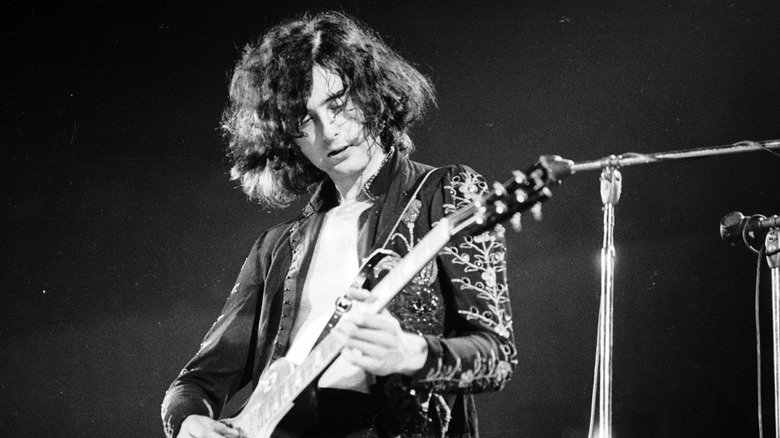
For many listeners, the early 1970s remains one of the high points of popular music as we know it. It was an era in which rock especially made leaps and bounds. Many musicians diversified their sounds to incorporate a wide array of new genres, including reggae, funk, and soul. At the same time, rock continued to serve its purists, with hard rock and blues rock continuing to find an audience. And when it comes to looking back to see which tracks have fared the best down the decades, the truth is that there are timeless songs in both categories.
Some tracks that still have the power to thrill listeners today pushed the boundaries back in the day. Others stuck to tried and tested formulas. Regardless, such songs often show a side of a familiar artist that you may not have seen before, are a cool track that has been overshadowed by more commercial releases, or simply just still rock as hard as ever. Here are five rock songs from 1973 that were huge hits upon their release and still command our attention in the 21st century.
David Bowie — Lady Grinning Soul
David Bowie's 1973 album "Aladdin Sane" is probably more famous for its iconic sleeve art than its musical content. The album is noticeably more caustic than its predecessor, the groundbreaking "The Rise and Fall of Ziggy Stardust and the Spiders from Mars," with tracks like "Cracked Actor" and "Time" tempering glam with music hall influences to reflect Bowie's growing personal angst. But while these tracks all sound recognizably Ziggy-ish, "Aladdin Sane" also contains one of Bowie's most singular tracks: "Lady Grinning Soul," a glimmering finale that concludes the album on a uniquely intimate note.
Many fans compare the song to classic James Bond themes, and it opens with a twinkling piano passage provided by pianist Mike Garson (whose playing features throughout the album, most notably on the title track and "Time"). The track also features one of Bowie's most tender vocal performances to that point and is said to be a paean to his friend and erstwhile lover Claudia Lennear (who was also reportedly the subject of The Rolling Stones' "Brown Sugar").
The song is both literary and theatrical. Its lyrics paint a portrait of two lovers in a room strewn with discarded clothes and encourage the seemingly male character to embrace the intimacy and not to shrink away from the scene, assuring them that the Lady Grinning Soul will "be your living end." Bowie would not sound as romantic again until 1976's cover of Dimitri Tiomkin and Ned Washington's "Wild is the Wind," and the song remains unique in his catalog.
Wings — Nineteen Hundred and Eighty-Five
Wings' seminal 1973 album "Band on the Run" was the moment that bandleader Paul McCartney finally escaped the shadow of his former group. As fans often say, this was the moment the ex-Beatle could honestly say he had been in one of the biggest bands in the world ... twice (here's how he really feels about Wings). The album contains some huge hits, including the huge arena rocker "Jet" and the catchy title track, and the group also released the Bond theme "Live and Let Die" earlier in the year. But perhaps the 1973 McCartney offering from "Band on the Run" that sounds freshest today is the closing track, "Nineteen Hundred and Eighty-Five."
"The idea behind the song is that this is a relationship that was always meant to be," McCartney wrote in "The Lyrics: 1956 to Present." "No one in the distant future is ever going to get my attention, because I've got you. But when this was written, 1985 was only 12 years away; it wasn't the very distant future — only the future in this song. So, this is basically a love song about the future." Fittingly, the tune is a relentless stomp that is hard to tie to any particular era. Built around a poppy piano riff and featuring admittedly nonsensical lyrics that are nevertheless pleasing to the ear thanks to their internal rhymes, you're liable to have it swirling around in your head hours after the album ends.
Lynyrd Skynyrd — Free Bird
Lynyrd Skynyrd's "Free Bird" was one of the defining rock songs of 1973. Since then, it has remained hugely popular as a radio track, competing with Led Zeppelin's "Stairway to Heaven" as one of the most requested rock songs of the FM era. With such exposure, it's arguable that the track is less impactful due to being overplayed. Indeed, the band's other major hit, "Sweet Home Alabama," also remains incredibly popular and has arguably lost much of its power down the years.
But "Free Bird" is a different beast, thanks almost entirely to its exceptional guitar solo, provided by guitarist Allen Collins. Following many bars of subdued slide guitar, it provides a rousing counterpoint to the song's somber lyrics. Opening with a mournful organ part and the line, "If I should leave here tomorrow, will you still remember me," the track seems to prefigure the tragic plane crash that decimated the band in 1977. Despite becoming something of a meme (generations of gig-goers have made a joke of shouting for "Free Bird" during lulls at dull gigs), the song remains a thrilling melancholic Southern rocker.
Aerosmith — Dream On
The early 1970s really was the zenith of big rock ballads, many of which have aged better than those released a decade later by '80s hair metal bands. And alongside tracks like "Stairway to Heaven" and "Free Bird," Aerosmith's "Dream On" ranks among the best and most listenable today. The 1973 track was central to the Boston rock group's self-titled debut album, which, looking back, is somewhat surprising. Early Aerosmith is generally heavy and uptempo, but "Dream On" is something else entirely: A slow, grinding, dirge-ish track influenced by classical composers, underpinned by a prominent piano part. That part builds, if not in grandeur, then in a kind of epic raggedness — signaled by frontman Steven Tyler's increasingly barked vocal — that would become a hallmark of the band's work.
"Dream On" has had an interesting afterlife. Though it failed to land high on the charts on its first release, it cracked the Billboard Top 10 after receiving radio distribution in 1976. More recently, it was sampled on Eminem's 2002 track "Sing For The Moment," which again brought "Dream On" to the Top 10 of the Billboard Hot 100. It may also be familiar to gamers as the song used in the popular "Kratos falling" meme (which, well, we really don't have the space to explain here).
Led Zeppelin — The Crunge
Led Zeppelin wasn't a band that liked to release singles. Instead, its members preferred to let the songs on an album stand together, an approach that gave tracklists equal billing and encouraged fans to seek out the highlights themselves. In 1973, the group released its fifth studio album, "Houses of the Holy," a release that felt light and airy after the epicness of Zeppelin's fourth self-titled album, released two years earlier. In this instance, Zeppelin's label decided to support it with the lead single "Over the Hills and Far Away," which was accompanied by the popular B-side "Dancing Days" ... which utterly fails to capture the spirit of the album it was taken from. So much for taking a new approach.
"Houses of the Holy" is an eclectic record — some might say uneven. Ultimately, which tracks sound best today will vary among today's rock fans based on their appreciation of other genres such as funk and reggae and their willingness to indulge the band's sometimes goofy playfulness. To our ear, the album's must-hear track is "The Crunge," an utterly silly James Brown parody that famously draws attention to the fact it doesn't have a bridge. "Houses" contains a number of tracks held to be classics, such as the emotionally charged "Rain Song" and the coldly epic "No Quarter." But nowhere else in the band's discography does Zeppelin's humor shine through as brightly as on "The Crunge," despite dividing the fanbase. For that reason alone, it's a must-listen.