

'70s & '80s Bands That Have Gone Through The Most Lead Singers
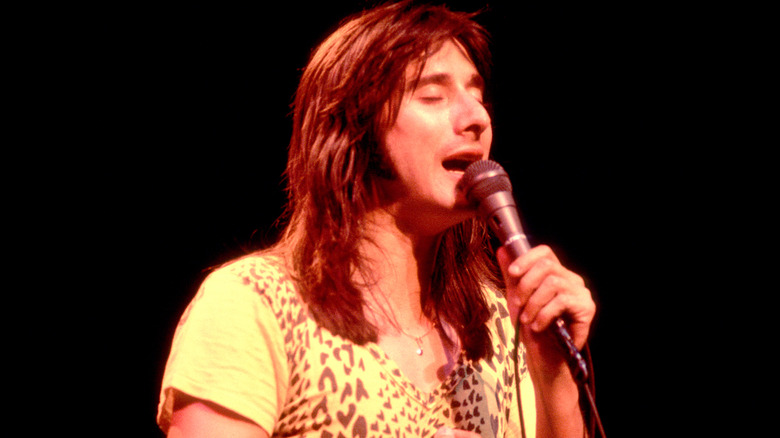
Some of the most popular and notable bands of the 1970s and 1980s only lasted into later decades and longer because they weren't afraid to bring in new personnel — and as often as was deemed necessary. The rock 'n' roll revolving door has resulted in the most successful band member replacements ever and the most unfortunate musician replacements in rock history, but bringing in a new singer always helped a band continue to tour, record, and generally exist, while new skills and perspectives can herald new creative eras.
Many bands have always operated with multiple lead singers at any given time in their long histories, such as the Beatles, Eagles, Beach Boys, Chicago, and Fleetwood Mac, all of which have included several members who can handle vocal duties. Other groups, particularly those that enjoyed their heyday in the '70s and '80s, only allowed one lead singer, and they weathered the proverbial storm of a frontperson change — over and over again, almost to a point of absurdity. Here are some of the classic rock era's best-known bands that have churned through lead singers, hiring (and firing) anywhere from five to 10 vocalists.
Iron Maiden
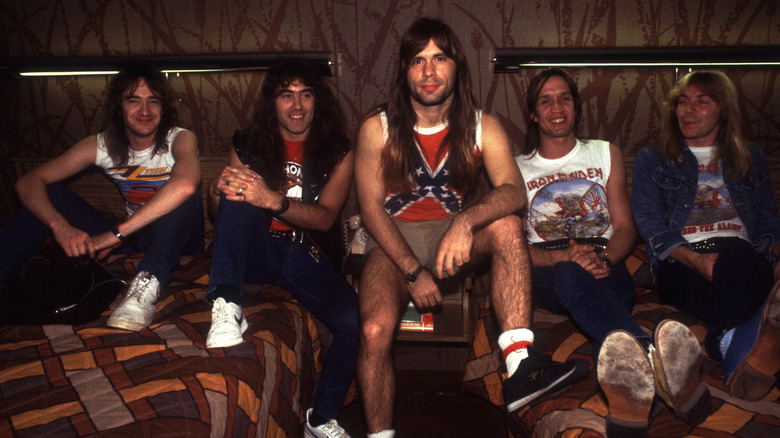
Iron Maiden is regarded as a formative presence in British heavy metal, as is its original singer, Paul Day. Brought into the group at the end of 1975 by its creator, bassist Steve Harris, Day sang with the band for less than a year before he was fired for lackluster showmanship. Next up was Dennis Wilcock, who performed with the group and claimed to have co-written several of the songs that would appear on Iron Maiden's first albums in the early 1980s (according to a 2018 lawsuit), although he parted ways in 1978. The band then welcomed singer Paul Di'Anno, who sang on the first Iron Maiden demos and two major-label studio albums. His prodigious cocaine use rendered him so volatile and unreliable that it got him fired from Iron Maiden in 1981.
That's when the band found its most famous and definitive front man: Bruce Dickinson, who led the group throughout its '80s peak era until 1993, when he left to pursue a solo career. Six years later, and after two albums with fifth singer Blaze Bayley, Dickinson went back to Iron Maiden.
Deep Purple
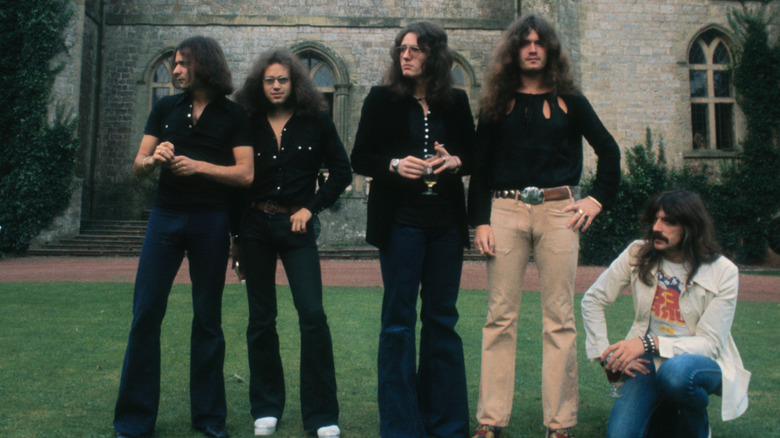
Deep Purple has lasted through so many different sounds and personnel changes that the bluesy, heavy, and progressive rock band tracks the passage of time and its evolution by labeling each era a different "Mark," covering a total of nine lineups since its formation in 1968. Rod Evans sang lead on "Hush," the band's smash No. 4 hit, but he wouldn't last past the band's third and self-titled album. Deep Purple then entered the 1970s with a new sound, thanks in part to a raspy belter of a fresh vocalist in Ian Gillan, who can be heard on the popular "Woman from Tokyo," but was forced out by bandleader and guitarist Ritchie Blackmore by the end of 1973. David Coverdale — best known for the '80s band Whitesnake — quickly joined, and took on singing duties until Deep Purple officially split following a 1976 farewell tour.
By 1984, Deep Purple revived its Mark II configuration when Gillan (and Blackmore) returned, but so did old disagreements. Blackmore dismissed Gillan and brought in a cohort from his other band, Rainbow: Joe Lynn Turner. Ticket sales for an early '90s tour were so poor that Blackmore gave in to fan demand and rehired Gillan, who, as of 2025, is still a member of Deep Purple — technically its third and fifth front man.
Rainbow
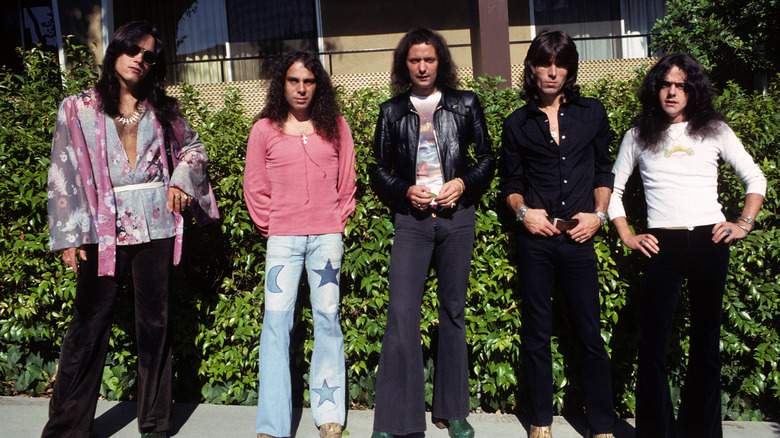
During a break from Deep Purple in 1974, guitarist Ritchie Blackmore embarked on recording a couple of songs under his own name. Seeking to meld classical and medieval elements with heavy rock sounds, Blackmore got the bombastically voiced Ronnie James Dio of the band Elf to sing.
The sessions went so well that Blackmore, who was in the process of disbanding Deep Purple, expanded the project from a solo gig to a full band. After three studio albums, Dio left Rainbow in 1979 to join up with the more high-profile Black Sabbath, and session music and ad jingle writer Graham Bonnet became the band's vocalist, as heard on perhaps its best-known single, "Since You Been Gone." Despite that, Bonnet was out of Rainbow by 1980, and in came Joe Lynn Turner.
Rainbow made three albums with Turner, then broke up in 1984 when Blackmore wanted to restart Deep Purple. The guitarist revamped Rainbow in 1994 with new musicians, including singer Doogie White. Once again, Blackmore tired of Rainbow and ended the group in 1997, but when he went back to the project again in 2016, Ronnie Romero, veteran of many heavy bands, was named its fifth singer.
Journey
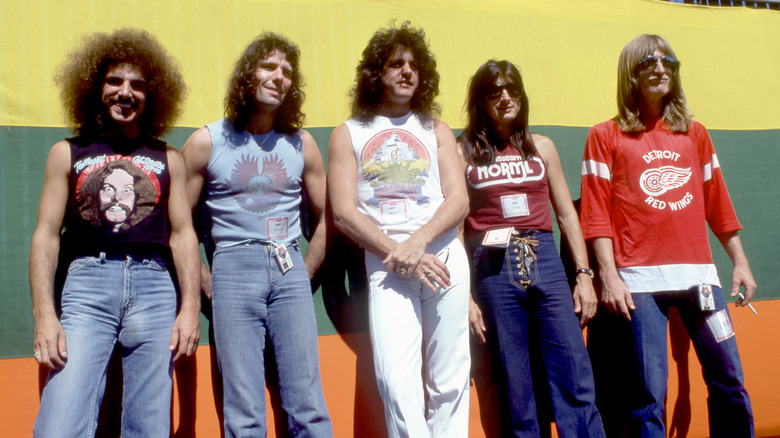
In 1973, guitarist Neal Schon left Santana to form Journey, a jazz-rock fusion band. Schon brought in another ex-Santana player, keyboardist Gregg Rolie, to add vocals when absolutely necessary. Schon sang a little on the band's third album, "Next," but then returned to guitar full-time when the band decided to explore a pop-friendly, arena rock sound in 1977.
The first singer in Journey's second era was Robert Fleischman, who fronted the group on one tour (and co-wrote the future Journey hit "Wheel in the Sky") until the rest of the band discovered the powerfully piped Steve Perry. The voice and face of Journey throughout its commercially successful period of the late '70s and early 1980s, Perry eventually needed a lengthy break to rest his voice and to mourn his mother after the "Raised on Radio" album and tour in 1986, and went into self-imposed seclusion the following year. Journey subsequently disbanded.
In 1996, the '80s-era Journey lineup reunited for the album "Trial by Fire," but Perry didn't want to tour it, so soundalike Steve Augeri got the front man job, which he held for a decade until he was sidelined by a throat issue in 2006. About a year after hiring singer Jeff Scott Soto, Journey ditched him and rallied behind Arnel Pineda. Schon found a video of Pineda singing a Journey song on YouTube and was so impressed that he gave him the gig as Journey's sixth official lead singer.
Black Sabbath
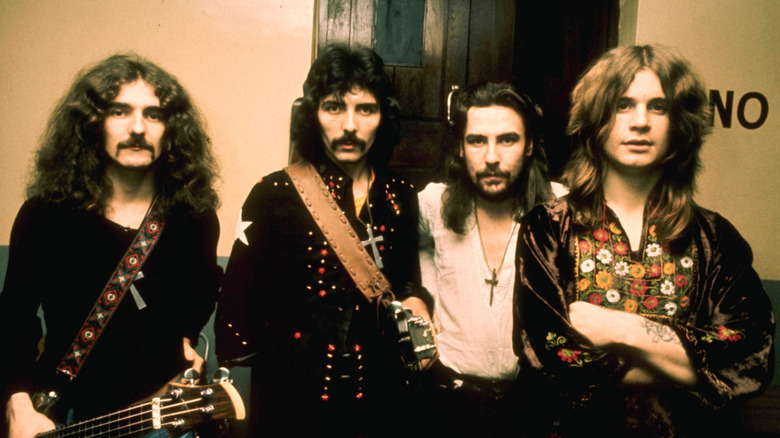
Black Sabbath spent most of the '70s defining and popularizing heavy metal with front man Ozzy Osbourne. When he quit in 1977, the band brought in singer Dave Walker. Osbourne came back in 1978 but was fired in 1979, making room for Ronnie James Dio. He sang on two albums before quitting in 1982, replaced with former Deep Purple member Ian Gillan, who left after 1983's "Born Again" LP.
Ron Keel of the hair-metal band Keel spent half a week in 1984 with Black Sabbath as its publicly announced new singer, only for the band to recruit LA metal scenester David Donato, who only recorded some demos before Iommi put the band on hiatus. When Black Sabbath geared up to make 1986's "Seventh Star," it employed the services of Broadway singer Jeff Fenholt, whose stint appeared to consist of recording demos. The vocals of another ex-Deep Purple singer, Glenn Hughes, actually appeared on "Seventh Star," and midway through a tour, he was fired in favor of Ray Gillen, who sang on the 1987 album "The Eternal Idol" before quitting.
Black Sabbath deleted Gillen's contributions and re-recorded the vocals with Tony Martin, who kept the job until Iommi rehired Dio in 1992. That didn't work out, and in 1994, Martin was back, only to be dismissed again because of an original lineup reunion with Osbourne in the late '90s. That's 10 total Black Sabbath singers. Phew.