

5 Songs From 1970 That Nail The Meaning Of Life
The year 1970 was unlike any other. Those 12 months saw the spread of the Vietnam War and accompanying anti-war protests, the Apollo 13 mission, and the first-ever Earth Day. In the music world, 1970 was the year Janis Joplin died, and the Beatles broke up. With all this rapid change, it's no surprise that so many musicians were feeling introspective and writing songs that exposed our core humanity.
When pondering life's biggest questions, some musicians looked outwards to the political and cultural changes happening around them, while others looked closer to home, finding hope and comfort in personal relationships. Our choices reflect both types of songs, such as Edwin Starr's powerful anti-war anthem, "War," which was directly inspired by the Vietnam War and the protests against it, and Simon & Garfunkel's "Bridge Over Troubled Water," which resonates with anyone who's ever had a loved one support them through a rough time.
In a similar vein to our list of five songs from the '60s that nail the meaning of life, we wanted this list to reflect a variety of messages, perspectives, and artists. Although some of these artists have very different sounds, their songs all reflect on the meaning of life.
Crosby, Stills, Nash, & Young — Teach Your Children
Folk rock supergroup Crosby, Stills, Nash, & Young begins "Teach Your Children" by telling listeners that an important message is coming: "You, who are on the road/ Must have a code that you can live by." That code? It's simple: "Teach your children well." Further verses add that children should do the same thing: "Teach your parents well." In his 2013 autobiography, "Wild Life," Graham Nash explained that he was inspired by a famous Diane Arbus photograph of a scowling child in Central Park holding a toy grenade. "I thought, 'If we don't start teaching our kids a better way of dealing with each other, humanity will never succeed," he wrote.
Listeners can take Nash's advice to heart and remember that the meaning of life comes from sharing your hard-won wisdom with others, particularly your loved ones. Whether you're a child, a parent, or both, everyone can benefit from a reminder to practice love, not hate or violence.
Joni Mitchell — Big Yellow Taxi
Released on her 1970 album "Ladies of the Canyon," Joni Mitchell's "Big Yellow Taxi" has a message of environmentalism summed up in the memorable opening line: "They paved paradise and put up a parking lot." Further verses describe more harm committed against the planet, including the destruction of trees and the use of harmful pesticides — issues that environmentalists are still fighting today. At the end of the song, Mitchell turns inward and compares the destruction of the planet to the end of a romantic relationship, asking, "Don't it always seem to go/ That you don't know what you've got 'til it's gone?"
While many people can relate to the sentiment of missing a lost love, the song is also a powerful reminder that we need to take care of our planet. It was a timely one, too: The environmentalist movement was in full swing by 1970, and the first Earth Day was held that year.
Edwin Starr — War
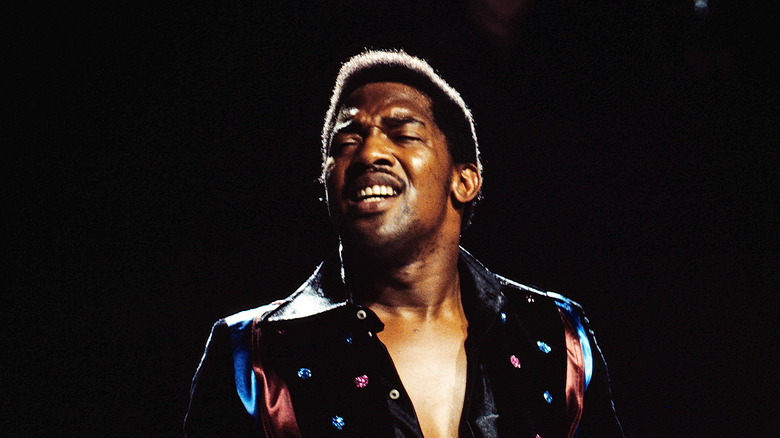
Edwin Starr didn't write "War," but he made it a hit. The Temptations included it as a track on their 1970 album "Psychedelic Shack," but Motown founder Berry Gordy didn't want to release the song as a single, worried that the overtly political song would damage the Temptations' image. Another Motown artist, Edwin Starr, volunteered to record the song with his own spin on it, adding interjections like "Good God, y'all!" to his version, which was released as a single later in 1970. The interjections make the song sound even more urgent. "I made the stipulation that I must record it with the feeling that I thought was right for it," Starr told Palace FM.
Starr's version was controversial, but it also became a No. 1 hit. It resonated with protesters and sympathizers with the anti-war movement, particularly college students. No matter what specific conflict is being discussed, "War" is a reminder of the high costs. The lyrics describe the death of both soldiers and innocent civilians, mothers mourning their children killed in battle, and the physical disabilities and mental illnesses that affect veterans. Starr urges listeners to focus on "peace, love and understanding" instead of the destruction of war.
Simon & Garfunkel — Bridge Over Troubled Water
The title track for Simon & Garfunkel's final album, "Bridge Over Troubled Water" is a sentimental ode to helping a friend, with lyrics like, "When tears are in your eyes/ I will dry them all/ I'm on your side." In a 2015 interview with Goldmine magazine, Paul Simon explained that the song came to him all at once. "It was one of those songs that people describe it as coming through you," he said.
The lyrics, combined with Art Garfunkel's angelic voice and sweeping instrumentation, make the song sound like a message from above. It's a vow to be there for a loved one, no matter what — like a platonic version of the "for richer or poorer" used in wedding vows (and in fact, the song is sometimes played at weddings). The content is even more powerful when you realize how at odds Simon and Garfunkel were when recording it. Their musical partnership was on the verge of ending, and they often argued, but they still managed to record this stunning song together.
The Beatles — Let It Be
The second single from the Beatles' final studio album of the same name, "Let It Be" features a reassuring message of comfort, including: "And when the night is cloudy/ There is still a light that shines on me/ Shine until tomorrow/ Let it be." Although some listeners take the song's mention of "Mother Mary" to refer to the Virgin Mary, Paul McCartney has said he was inspired by a dream about his late mother, Mary, who died when McCartney was 14 years old. Such loss is an inescapable part of life, and McCartney channelled his inspiration into a simple, cathartic way for anyone to cope with it.
McCartney was going through a singular difficulty — dealing with the looming breakup of the Beatles — when he wrote the song. In his 2021 book "The Lyrics: 1956 to the Present," McCartney detailed that dream. "I immediately felt at ease, and loved and protected," he wrote, adding, "She seemed to realize I was worried about what was going on in my life and what would happen, and she said to me, 'Everything will be all right. Let it be." Anyone who listens to the song can draw from its healing, encouraging lines, and the need to sometimes accept that there's little we can do to change life's harsher twists and turns.