

5 Flop Songs From The '70s We Can't Help But Love
There's something almost charming about a good old-fashioned failure. Something mediocre, something kind of okay, doesn't really stick in the mind, but a flop is memorable. A flop indicates a swing taken, an effort made. Plus, in order to put out a flop, you have to have a certain degree of existing success or at least notoriety. If you're just some guy and no one likes your work, that's just how it is sometimes. If Cher puts out a stinker, that's a flop. All that said, a flop isn't always bad: sometimes a song is in the wrong place at the wrong time. Something that divides or underwhelms audiences isn't necessarily bad, and it might just be the off-kilter treat we love to hear.
It was not an easy task to define a flop for our purposes, since the truest bombs have sunk into near-oblivion, remembered only by the bands themselves and their most eccentric, die-hard, "well-actually" spouting fans. Here, we've gathered two songs that failed in their original versions before a later recording took off, two songs by huge stars that underperformed compared to their past and future successes, and one song emblematic of a whole career that never quite stuck the landing.
Muskrat Candlelight — Willis Alan Ramsey
"Muskrat Love" is perhaps the absolute champion of novelty songs. Its most famous version, released by Captain and Tennille in 1976, reached No. 4 on the Billboard charts and was performed by the duo for the late Queen Elizabeth II, who reportedly dozed off. But this gentle tune about two wetland rodents falling for one another wasn't a Captain & Tennille original; it had been written and initially recorded by an enigmatic figure named Willis Alan Ramsey, called "Muskrat Candlelight."
In 1972, 21-year-old Ramsey released his to-date single album, titled "Willis Alan Ramsey" and featuring his own, somehow even more tender rendition of the song under the title "Muskrat Candlelight." The album sold well and so charmed Lyle Lovett that over 20 years later, he would work with Ramsey on songs, but "Muskrat Candlelight" got no outside notice until it was covered by America and then Captain & Tennille. It's a sweet song, and Ramsey is a strong musician with the voice to sell this bizarre romantic parable about water voles. Perhaps it was never about the fame for Ramsey, but just about two young muskrats, exploring love for the first time by candlelight.
I Want You to Want Me — Cheap Trick
It would be unfair to call Cheap Trick a one-hit wonder, but it does have one song that outperforms the rest of its catalogue by a solid margin. That is, of course, "I Want You to Want Me," the power-pop anthem to really, really wanting your crush reciprocated. The live version recorded during its performance at the Budokan arena in Tokyo took off, headlining the live album that buoyed the band's sales in the U.S. (it was already big in Japan, hence the Tokyo show), but that was its third bite at the apple on that particular tune.
Cheap Trick had recorded the song twice before the Budokan show, once in a punky version that got shelved for decades and again in an oddly tranquil version with calmer vocals and a fiddle intro for the album "In Color." The "In Color" version isn't bad at all, but it's so different from the famous version — the one that feels like the "real" version — as well as from the average Cheap Trick song that it feels like a winking novelty cover. But some people like novelty covers, and the fiddle intro is pretty good once you wrap your mind around the concept. That recording didn't have any legs in the States, but then "At Budokan" was released in the U.S. and exposed Americans to the live, energetic possibilities of the song — and that's the one that made Cheap Trick rich.
You Got It — Diana Ross
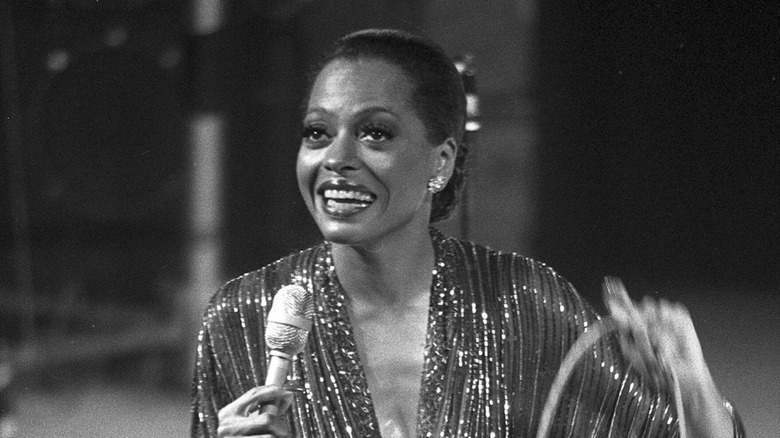
In 1970, Diana Ross took a big risk: The singer who had gotten famous as the front woman for the Supremes — later rebranded Diana Ross and the Supremes — would strike out as a solo artist. She succeeded, but not without some missteps, and in the late 1970s it looked like the famously mercurial Ross was in for a rough landing. On screen, she starred in the critical duds "Mahogany" and "The Wiz," and her singles weren't doing much better. An example is 1978's "You Got It," whose apex at No. 49 on the U.S. charts is "respectable" but a complete airball for someone like Diana Ross. But while "You Got It" is not quite a showstopper, it's flirty and sexy, and shows off Ross's control in high registers and soft deliveries. It builds well, too, ending as a much bigger jam than the intimate track it begins as.
The album "Baby It's Me," on which "You Got It" was released, epitomized Ross's Carter-era doldrums. The album sold fine and charted a few singles — someone of Ross's fame would always have die-hards who bought her work — but if you don't know her huge success with "Diana" in 1980 is coming, the mediocre performance of "Baby, It's Me" looks like a career going into a tailspin. "You Got It" could have done better in a different year, maybe.
I'd Rather Believe in You — Cher
Cher, she of the single name, chaotic social media presence, and decades of fantastic costuming, hit the late '70s like a brick wall. Divorced from Sonny Bono, who apparently thought he was the one carrying her, Cher was broke by Hollywood standards, and her music career was sputtering so badly that two of her albums – 1976's "I'd Rather Believe in You" and 1977's "Cherished" — failed to chart at all. The title track from "I'd Rather Believe in You" wasn't even released as a single, which is a shame. The backup singers on the track get in Cher's way a little, but the song slaps. Cher sings a little higher than she usually does and it pays off, while the song's lyrics, about believing a lover instead of the rumors about him, speak to a situation rarely explored in music — it's sort of a "Stand By Your Man" for more assertive personalities.
As we all know, Cher wasn't on her way out. She pivoted to acting for a while, scooping up an Oscar for "Moonstruck," and went on to rack up a subsequent five top-10 Billboard hits after her '70s slump. And Sonny? His showbiz career went so far downhill that he wound up running for Congress and going to Washington, the axiomatic "Hollywood for ugly people."
Morning Star Ship — Jobriath
Jobriath was supposed to be huge. The very pretty, openly gay singer was tapped by a studio exec to be a huge popstar, but the glam rocker never rose to the level that the hype (and the colossal initial contract) would suggest. The plan was, in part, to make Jobriath's homosexuality open and part of the appeal, but by the time his self-titled debut album came out, Jobriath had been so overexposed (and so encouraged to camp it up when the world was still leery of openly queer performers) that anything short of true excellence would be disappointing. The album landed with a thud, and some of the songs were simply bad, but "Morning Star Ship" is one of the good ones.
"Morning Star Ship" is a gently trippy, well-crafted little pop song ... about a girl, but even so, it sounds like its era without sounding derivative. Had Jobriath leaned into his strengths here, with manageable vocals and a clear, engaging tune, he might have had more success. Tragically, Jobriath wouldn't live to get a Cher-like comeback. One of the first relatively big names to die of AIDS, he became ill in 1981, as the disease was first coming to scientific attention, and died in the summer of 1983. This did not stop Morrissey, a Jobriath fan but not an observant man, from trying to hire the late musician to join him on a 1992 tour.