

'90s Alternative Rockers Who Blew Our Socks Off With A No. 1 Hit Only To Disappear
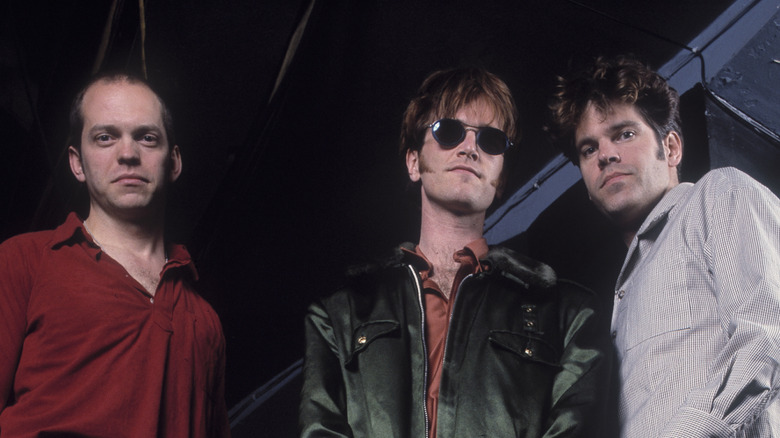
The rock scene of the '90s was a liminal space in musical history, where hair metal gave way to alt rock, a mix of everything from crunchy grunge to dreamy shoegaze tunes. Garage-band spirit came roaring back with a vengeance and a collection of new voices — there was talent aplenty, with eager bands that had the goods and were poised to deliver. Among the '90s musicians we completely forgot about resides a rogue's gallery of one-hit wonders who watched their star streak to the top of the charts only to have it fizzle immediately afterward.
The way we see it, a real socks-knocker-offer of an alt-rock tune captures the subversive spirit of the music scene in the '90s. To us, if an alt-rock song spirits us back to the decade in which it became popular, it's a keeper, no matter what happened to the band afterward. It has to capture the edgy sensibility of a scene that eschewed standard rock for a bold new version of the genre's format. And of course, these songs had to be chart-toppers with no equal follow-up success in order to qualify the bands as one-hit wonders.
The triumph of songs like "Sex and Candy," the hit that wouldn't quit by Marcy Playground, and everyone's favorite last-call sing-along, "Closing Time" by Semisonic, was undeniable. So much so that we really thought these acts were destined to make more hits. They may still be playing music somewhere, but they essentially vanished after breaking big.
Marcy Playground — Sex and Candy
One of the biggest alternative rock songs of not just the decade but maybe all of the genre's history, "Sex and Candy" by Marcy Playground became a ubiquitous radio track that you couldn't get away from. It was greasy and suggestive enough to be an unlikely hit but melodic and catchy enough to break through in a major way. The creepy, leering lyrics leading to the icky chorus ("I smell sex and candy here") were, and still are, as morally questionable as it gets. Somehow, the alt-rock audience vibed with the lurid imagery and kept listening. The song also added the phrase "disco lemonade" to the jargon of the '90s, which isn't a terrible thing.
Sometimes the so-called success of a one-hit wonder can be a bit arguable, especially if it doesn't top the chart but still ends up being accused of overplay. But Marcy Playground set up camp at the top of the Billboard Alternative Airplay charts in 1998 and didn't leave for a whopping 15 weeks. That's more than a full season of success, a feat few established bands achieve, let alone relative newcomers. By all accounts, a run like that should be the start of a long-lasting career with more success to come. But despite releasing several more albums and touring regularly, Marcy Playground never got back into the super-successful swing of things — the group's most recent album was released in 2009.
Concrete Blonde — Joey
There was a moment in 1990 when LA rockers Concrete Blonde broke through to the mainstream with a melodic love song called "Joey." You couldn't turn on the radio or fire up MTV without hearing the sing-along-worthy track chiming through the speakers. It was a pinnacle achievement for a massively talented unit that had more than paid its dues through the '80s, percolating under the surface with gritty guitar-driven works like "True" and "God Is a Bullet."
When the band dropped its goth-rock masterpiece "Bloodletting" in 1990, it seemed like the stars had finally aligned. "Joey" became a mainstay and turned into a No. 1 smash on Billboard's Modern Rock chart for four golden weeks. It was an unconventional love song in which singer and bassist Johnette Napolitano speaks to her absent paramour, the titular Joey, and lets them know that whatever had happened to them in the past, she had "the money," and she wasn't angry anymore. It was tuneful codependency, and it hit a messy, loving nerve with rock fans.
Concrete Blonde in its '90s form released two more major label albums, each with a modestly successful single supporting it. The truth about Johnette Napolitano is that she was hungry to explore other projects, leading the band to a breakup in the mid-'90s. There have been a few reunions in the ensuing years, but nothing like the wonder that was "Joey."
Belly — Feed the Tree
Tanya Donelly stepped away from her '80s all-female rock foursome Throwing Muses to launch Belly, which rose to melodic visibility with the 1993 charmer "Feed The Tree." The song was filled with equal parts deep philosophical thoughts and bright pop song energy, giving it incredible crossover potential. It was a fantastic representative of a musical movement that craved depth and artistry but could drop a sweet hook with the best of them. "Feed the Tree" stole the No. 1 spot on the Modern Rock charts and held tightly for three weeks in March 1993 — not the worst way to introduce a new band to the world.
"Feed the Tree" didn't clinch the top spot for no reason: It's as solid a rock song as anything from the decade. The structure is surprisingly complex, with a fleeting time signature change in the verses that makes your ear think the musicians may have skipped a beat before the off-kilter beat resolves as the pre-chorus comes around. And the refrain "Take your hat off when you're talking to me / And be there when I feed the tree" may be the chipperest confrontation of one's mortality ever set to music. The band came back together in 2016 for a tour and released a crowdsourced album in 2017, but it never recaptured the musical lightning in a bottle of "Feed the Tree."
Semisonic — Closing Time
You don't find a lot of songs that talk about what happens after the drinks stop pouring and the club gets ready to shut down. Maybe that's why the Grammy-nominated tune "Closing Time," Semisonic's song with a hidden meaning, struck such a chord with alt-rock lovers in the late '90s. Rather than retread the same worn-out territory as other bands, this trio sang about the feeling that comes at the end of the night when the big decision has to be made: Who are you going to go home with?
To be fair, the band never answers the question, posing the possibilities in the line "I know who I want to take me home," which captures a feeling pretty much everyone can relate to. It was resonant enough to become a pop culture reference that spoke to the hearts of Gen X-ers and Millennials of all stripes. There's also the little issue of that unforgettable phrase, "You don't have to go home, but you can't stay here," which entered the contemporary vernacular and stuck around long after the song fell from its perch at the top of the Alternative Songs chart. Semisonic kept going into the new millennium before taking a long hiatus, returning with an EP in 2020 and a full-length in 2023, but the group never achieved the same success as it did with "Closing Time."
Lit — My Own Worst Enemy
There's so much crunchy guitar in this alt-rock whopper, you might think the band spent its whole budget on pedals. Lit cranked up the energy on "My Own Worst Enemy" and scored a scorching 1999 chart-topper that defined the group's entire career, staying at the top of Billboard's alternative ranking for an incredible 11 weeks. The single even came close to reaching the middle of the Hot 100, settling at No. 51 before sliding back down the Billboard musical scale.
The video was uproarious, capturing the Lebowski-like spirit of competitive bowlers facing off at a local alley. "Can we forget about the things I said when I was drunk? / I didn't mean to call you that," sings frontman A. Jay Popoff. It was a joyous admission of self-destructive behavior in which he seems to celebrate his poor decisions even as he realizes he's undermining his own well-being. Who doesn't love a lout who knows just how much of a lout he is and beats himself up on the regular for his questionable ways?
Lit experienced a new wave of success with this song when it reached double-platinum status in 2020 before becoming an anthem for the 2023-2024 NHL hockey season. Sure, these milestones didn't expand the band's catalog or even extend its career with refreshed chart success. But it did demonstrate the lasting impact this alt-rock blaster has on music fans and hockey lovers.