

These 5 Songs Capture What '60s Surf Rock Was All About
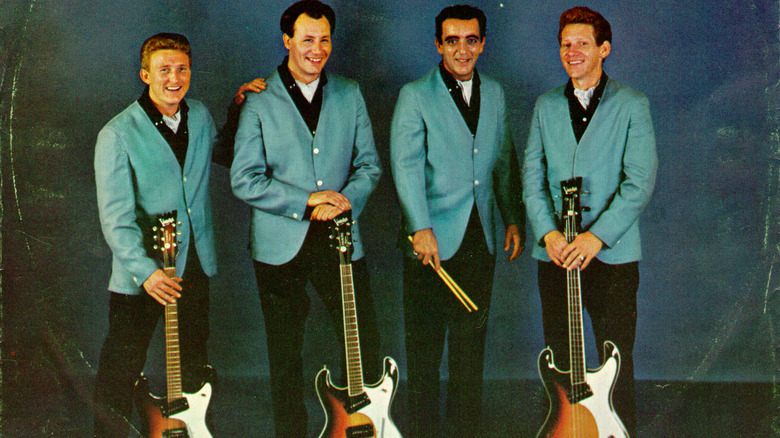
To learn what surf rock in the 1960s was all about, just find the songs that established the formula. That distinctive surf rock concept was inspired by and romanticized the California surf culture of the early '60s. Until groups like the Beach Boys came around and started singing about how surfing is neat, surf rock bands were usually instrumental outfits. They didn't need words to convey what it was like to ride a wave until it hit the shore — they could do that with their guitars.
An analysis of dozens of old surf rock records revealed something: The most insightful and inventive recordings aimed to replicate the sounds and sensations of surfing. We think that goal is achieved through particular techniques and approaches. To us, the best surf rock songs are uptempo, pushed along by persistent, insistent drumming and rapidly picked electric guitar with a dreamy tone obtained by applying reverb and vibrato and bending some strings. Good surf songs, we suggest, become classic surf songs if the bands can re-create both crashing waves and adrenaline rushes. It's a soundtrack for surfing or thinking about surfing — these songs all rock hard but with palpable restraint, not unlike a surfer navigating monster waves with skill and unflappability.
Here are five such songs by bands that caught the right wave and helped originate and perfect '60s instrumental surf rock.
Pipeline – The Chantays
The synthetic sounds of waves arrive early in "Pipeline," a No. 4 hit in the spring of 1963 by the Chantays, a band made up of Southern California teenagers. The song starts out with an ominous two-note riff before Bob Spickard's precise and crisp lead guitar work kicks in, delivering a rhythmically low-key but bold and lyrical melody that pushes through the rest of the song the way a surfer works their way through waves and walls of water.
"Pipeline" already sounded like a surf rock song, or a guitar-based simulation of surfing, before the Chantays got the idea to name the song after a surfing term. The song was originally titled ".44 Magnum" and then "Liberty's Whip," until Spickard and a bandmate — novice surfers themselves — saw a surfing documentary by filmmaker Bruce Brown in which a surfer challenged himself to take on Hawaii's Banzai Pipeline, renowned for its sharp, devastating, and powerful waves. Like a surfer remaining on his board and not giving in to the agitated sea, the Chantays create a wash of noise that never quite wipes out and descends into chaos. Not only do the effects-laden guitar and charging drums make "Pipeline" a definitive surf rock song, but so do the regular sounds of waves of motion.
Walk, Don't Run – The Ventures
One of the most important rock bands of the 1960s, the Ventures were among the first surf groups to break out, and one of the most successful instrumental acts of the rock era. They're the only lyrics-eschewing surf band enshrined in the Rock & Roll Hall of Fame, and that's in part because songs like "Walk, Don't Run" so captured the sounds and culture of the '60s surf scene.
It's a bit reductive, but to a non-surfer, surfing appears to have two speeds: fast, choppy, and dangerous, or zippy and meandering as one successfully tames and negotiates the waves with precision. Both of those sensations are represented in the Ventures' "Walk, Don't Run," a No. 2 hit in the summer of 1960.
It alternates back and forth between two instrumental motifs, in lieu of verses and a chorus. "Walk, Don't Run" opens with a propulsive drum beat and a slightly menacing descending chord riff. That captures the fast and uneasy part of surfing, and it gives way to a more meandering and exploratory melody. Those guitar notes come from all over the fretboard the way a surfer moves about the waves. And so it goes throughout the song, as if each repetition is another surfing attempt — daunting at first, and then it chills out and enjoys the ride.
Wipe Out – The Surfaris
There are many songs about surfing that are as chilled out and laid-back as a day at the beach, and many others that dramatize a successful attempt to catch a wave and precariously ride it back to the coast. That's not a complete portrait of the surfing experience, and blissed-out, acrobatic guitar-based tunes don't represent the entirety of surf rock, either.
The Surfaris, so motivated to make only rock 'n' roll about surfing that it took its name seemingly by mashing up the title of the Beach Boys' 1962 hit "Surfin' Safari," took "Wipe Out" to the upper reaches of the pop chart twice, to No. 2 in the summer of 1963 and to No. 16 in the summer of 1966. Kicking off with an abrasive, obnoxious, and mocking laugh, like the kind a real-life wipeout may elicit from a surfer's chops-busting friends, "Wipe Out" pays attention to the awkward and painful parts of the sport.
"Wipe Out" is a song so frenetic that it's almost too fast for dancing. The drummer and the lead guitarist play as fast as they can, and they sound like they're in a neck-and-neck race to the finish. That's what the material requires, because "Wipe Out" is about the zany, foolhardy, and even careless world of surfing. Those instrumentalists in the Surfaris thrillingly barrel through the track, doing with music what brave surfers do in the ocean.
Mr. Moto – The Bel-Airs
The Bel-Airs helped kick off surf rock and presented many elements that would become standard for the style. In 1961, the Southern California-based group released "Mr. Moto," credited as the first surf rock record to be a hit — at least regionally, on the West Coast, where surf culture resided. The Bel-Airs catered to their audience, creating a song that feels like an attempt to surf. It builds up slowly and picks up speed — like a surfer paddling out and waiting for a wave — and then it rips along at a rapid clip as our theoretical surfer becomes one with their board and the water.
Traces of "Mr. Moto" can be found in a lot of significant surf rock that followed in its wake. That one-two pluck at the start inspired a similar technique in the Chantays' "Pipeline," while the soaring, expressive riffs and hand-picking are heard in the Ventures' "Walk, Don't Run." The piano and saxophone interludes add some mid-century grit and a sense of danger, like what might come while doing something fun but potentially fatal, like surfing.
Bustin' Surfboards – The Tornadoes
The Tornadoes formed in England, far away from the California surfing scene, but the instrumental band had a knack for making music that seemed to evoke the vibes of alien environments. In 1962, the Tornadoes hit No. 1 with the eerie and electronic "Telstar," a song about satellites, and also recorded "Bustin' Surfboards," a near-perfect track about surfing, or cheating death in the uncaring and overwhelming ocean. Less polished and not as crisp as other surf rock songs but instantly recognizable as a surf song nevertheless, "Bustin' Surfboards" is a little grungy and ramshackle, perhaps to get across the point that surfing can be a bruising and risky pursuit. Still, wave sound effects add to the intoxicating mix of deliberate and ambitious slide guitar solos and enthusiastic drums.
The soundtrack to the 1994 cult classic "Pulp Fiction," which depicted a dark, seedy, and vaguely stuck-in-the-'60s Los Angeles, savvily utilized multiple California-loving surf songs from the real '60s, including "Bustin' Surfboards." The tune's sensibility aligns with that of "Pulp Fiction" — creepy, moody, atmospheric California noir. "Bustin' Surfboards" carries with it a threatening tone, which older squares in California may have felt during the rise of rock 'n' roll and youthful surf subculture.