

Strange Things About Star Trek You Never Knew
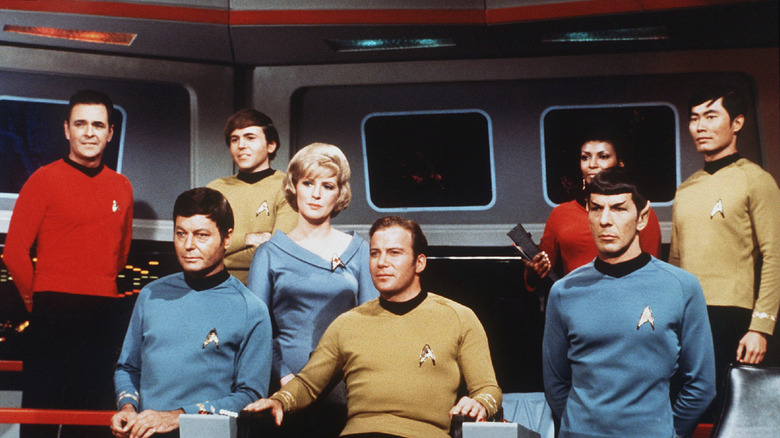
In 1966, the first season of "Star Trek" aired, introducing the Enterprise, its crew, and the many exotic-forehead-bearing alien species they encountered to TV audiences. It was the genesis of a franchise that, across a number of films, series, books, and other media, would become one of the most popular in the world. The original series only ran for three seasons and 79 episodes, seemingly making it an unlikely show to have grown into a huge cultural juggernaut, but "Star Trek" had that proverbial "it" that got fans hooked, making lifelong aficionados even of people too young to have been around for the original airing.
The Enterprise crew's onscreen adventures with green-skinned women and complex alien politics were exciting enough, but behind-the-scenes anecdotes have added another layer to Star Trek fan culture. With a connection to hereditary Jewish priesthood, a footnote in the American Civil Rights movement, and an illustrative example of how to let copyright law help make an unscrupulous lyricist a bit of cash, the Star Trek universe's strange trove of stories doesn't end with what's in the episodes.
It wouldn't have happened without Lucy
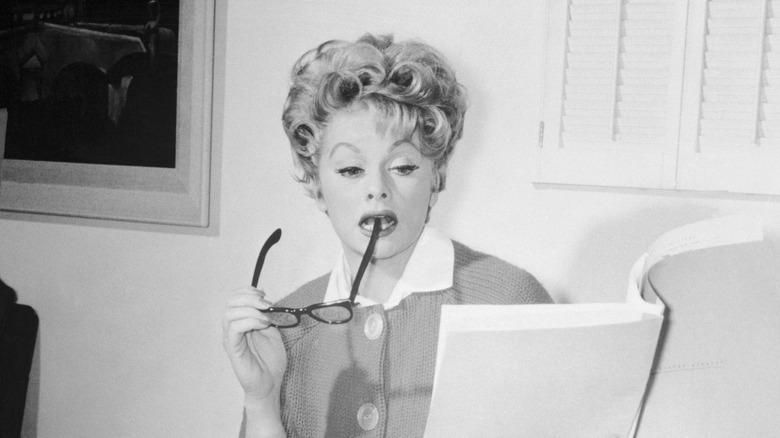
Lucy Ricardo may have been a ditz, but Lucille Ball was anything but. The success of "I Love Lucy" made Ball and husband-costar Desi Arnaz rich enough to establish their own production studio, Desilu Productions, and Ball took over the whole business after the couple divorced. Lucy was now a power broker. Ball's career as a B-movie actress and the hoops she'd jumped through to get "I Love Lucy" produced had honed her instincts, and so when Gene Roddenberry came to Desilu with "Star Trek," Ball pounced.
Later, someone had to explain to her that the show would be a "space Western," not the story of celebrities traveling to entertain troops, but Ball stuck to her guns through the failure of the first pilot and sold the second to NBC. Lucy could smell a hit even if she didn't quite get it, and so one of America's favorite goofballs became the first executive to champion "Star Trek."
The Vulcan salute had a Jewish origin
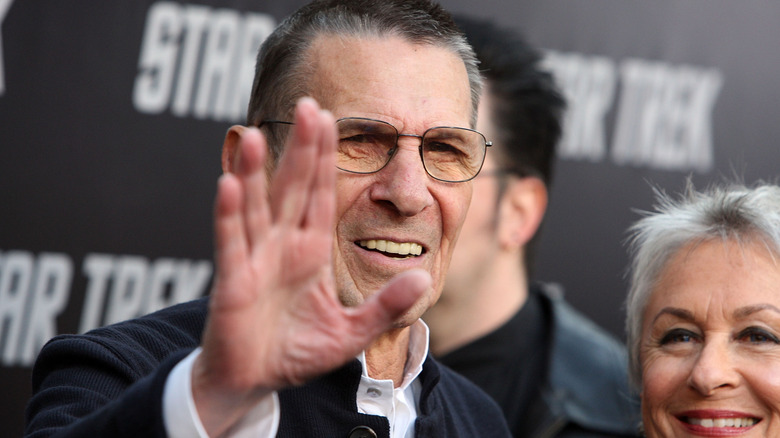
It's one of the most famous hand gestures in the world. The Vulcan salute, an open hand parted between the middle and ring fingers, even has its own emoji, but its origins go much further back than "Star Trek." Leonard Nimoy, who originated the role of Spock, was Jewish and had been raised Orthodox, meaning he had seen Jewish priests use this distinctive gesture in ritual blessings. (Strictly speaking, the young Nimoy wasn't supposed to be peeking during the blessing.) When Nimoy was building out his character, he remembered this unusual-to-gentiles hand position and brought it to space, albeit with some modifications. The Jewish gesture is done with two hands, thumbs touching; Vulcans get by with the one hand.
The gesture is notoriously difficult for some people to perform, and not every "Vulcan" has been able to give the salute unassisted, with some actors needing to practice or, in extremis, tape their outer fingers together. Nimoy's successor as Spock, Zachary Quinto, swears he didn't have to glue his fingers together but acknowledges having needed hand exercises. William Shatner, who is Jewish but played the human Captain Kirk, reportedly cannot do it.
Execs made Gene Roddenberry fire his girlfriend
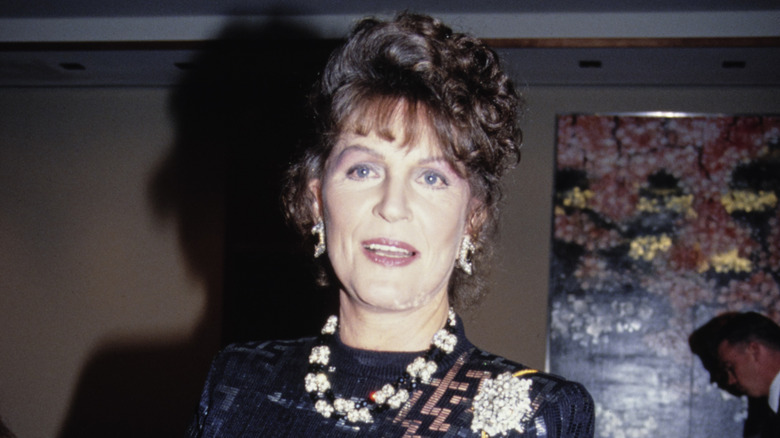
In the original conception of "Star Trek," the captain's right-hand man was a woman, a cool, cerebral character named Number One. This role was to be played by Majel Barrett, an attractive young actress who was also the still-married Gene Roddenberry's current girlfriend. When the first pilot of "Star Trek" was revised, one of the changes executives insisted on was the elimination of the Number One character: They wanted a man in the role. Barrett was axed from the core Enterprise crew, later appearing as the recurring character Nurse Christine Chapel.
Barrett wound up laughing last. Not only did she ultimately marry Roddenberry, she would also appear in effectively every subsequent Star Trek property up until her 2008 death and, via some archival recordings, even after. Her character Nurse Chapel ultimately became Doctor Chapel, and Barrett voiced the calm, authoritative ship's voice, as well as a variety of characters on the animated series. Best of all, she appeared in "The Next Generation" and "Deep Space Nine" as the brash and gregarious Lwaxana Troi, a diplomat and constant irritant to daughter Deanna. The official Star Trek website calls her "the first lady of Star Trek" — high praise, highly deserved.
The Klingons initially had smooth heads
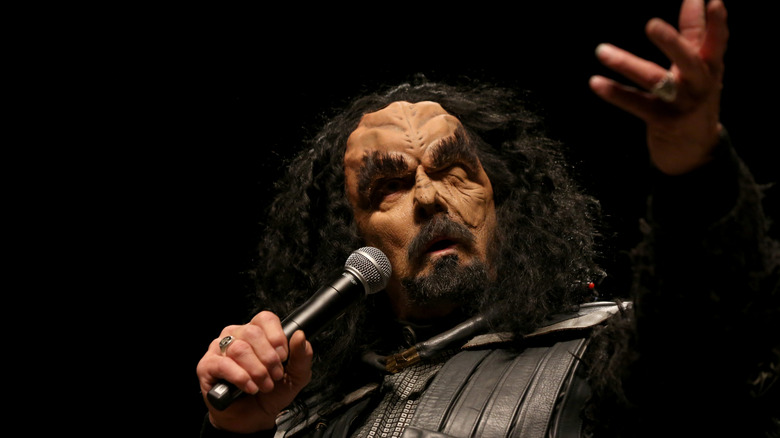
The original series of "Star Trek," for all its virtues, had a limited budget, and one of the places they had to skimp was costuming and makeup. The Klingons we know and love today, with their dramatic forehead crenellations, started their onscreen careers merely ... painted brown. (While this was an apparently innocent choice, especially given the anti-racist message of many "Star Trek" episodes, it's also a creative decision that would raise a number of eyebrows today.) Only by the time of the first motion picture in 1979, when the budget had swollen and makeup technology had apparently blossomed, did the glorious ridges and divots of the familiar Klingon skull appear on screen.
Writers subsequently worked to incorporate the smooth-headed Klingons into the show's canon. In an episode of "Deep Space Nine," Klingon character Lieutenant Worf brusquely informs his human drinking companions that the issue is not discussed with non-Klingons. Ultimately, a complex story emerged by which some Klingons had been genetically modified with human DNA, and these changes interacted with a virus to produce a more dangerous infection, the cure for which also drew from human DNA, and so those treated lost their ridges. And maybe the ridge loss is then heritable by affected Klingon children? It's complicated, but so is the galaxy.
The popular Tribbles episode was made with hundreds of prop aliens
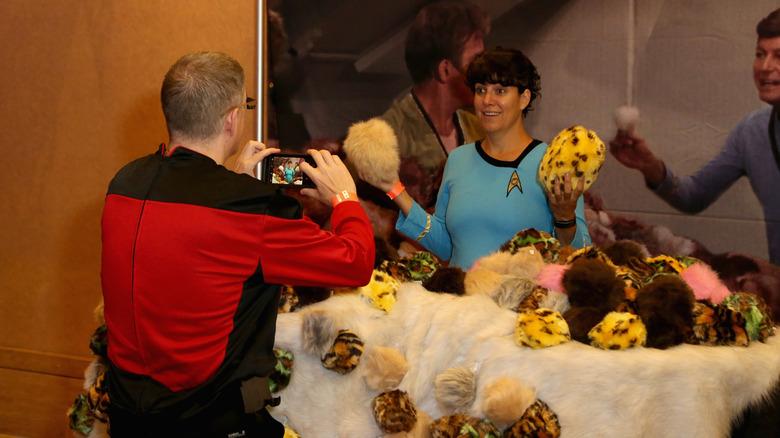
Harsh critics may accuse "Star Trek" of being occasionally corny or cheesy, but the show is rarely silly: Indeed, much of the franchise's charm lies in its commitment to its own universe and the norms within. A notable exception is the "Star Trek" original series episode "The Trouble with Tribbles," which allowed the cast to explore more comedy (taking advantage of Gene Roddenberry's temporary absence). The episode saw the Enterprise overrun by rapidly reproducing aliens, spherical little furballs called tribbles, who got into every conceivable cranny, including the cleavage of the lovely-but-dignified Captain Uhura.
The tribble props were handmade, with 500 constructed out of varying colors of artificial fur to really fill the starship to capacity and, in one memorable scene, bury William Shatner's Captain Kirk. (The episode's writer described the spotted fur that was used for most tribbles as "godawful" to Vanity Fair, but acknowledged it looked good on tape.) Roddenberry was furious, but fan letters revealed a delighted audience. Enthusiasm for the classic episode has even affected science here in the real world, with both a family of proteins and a species of snail being named after the once-fictional creatures.
The famous theme has lyrics
"Star Trek" has one of the great opening themes in television history. You start with Shatner's voiceover, explaining the concept of a fairly straightforward show: Nothing like explaining a field of stars by intoning "Space ..." He's followed by a wordless soprano ah-ooing over a jaunty, optimistic, and eminently hummable theme, courtesy of a composer named Alexander Courage. But that soprano warble was, in fact, standing in for lyrics that were effectively never used.
The lyrics emerged from a bit of underhanded dealing by Gene Roddenberry. Courage got a royalty payment every time an episode played his theme, but a proviso in his contract would split this payment with Roddenberry if the latter wrote lyrics. Roddenberry wrote some doggerel, had it registered, never used it, and helped himself to half the royalties for the theme song. Courage would later refuse to continue working on the show.
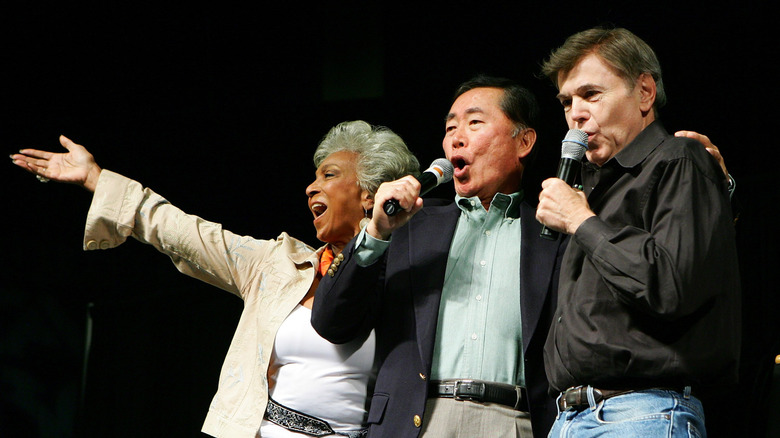
Complicating an already bizarre situation, Nichelle Nichols, the actress who originated Uhura, sang in one episode of the original series, with many fans misremembering her as having sung the theme song. Nichols did later record a disco track using the melody of the "Star Trek" theme, but with a separate set of lyrics. With all respect to the late, beloved Nichols, the track is only for her most ardent and forgiving fans.
Kirk and Uhura's kiss wasn't the first interracial kiss on TV
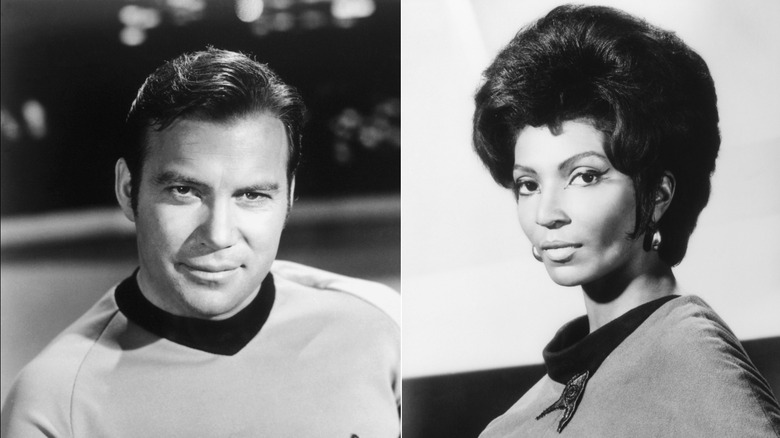
In the 1968 "Star Trek" episode "Plato's Stepchildren," William Shatner and Nichelle Nichols' characters kissed, shocking some viewers who were still opposed to such fraternization between white and Black characters. Granted, Kirk and Uhura were being controlled by telekinetic aliens, so they weren't kissing of their own free will, but it was still rare for interracial affection to be explicitly presented. While the kiss was an important development in what could be shown in terms of members of different races interacting on TV, it wasn't the first such kiss on American TV, as it's commonly misremembered.
Lucille Ball, who helped launch "Star Trek," kissed her Latin American husband and costar Desi Arnaz any number of times on "I Love Lucy" (and even had a baby with him), and the Black performer Sammy Davis Jr. had kissed white Nancy Sinatra in 1967 — though admittedly on the cheek. Regardless of who kissed first, Shatner and Nichols knew they were doing something groundbreaking. In order to placate segregationist broadcasters, the studio hoped to capture an alternative take in which the kiss was concealed, but Nichols and Shatner sabotaged every take from this angle, forcing them to use the shot that clearly showed the white captain kissing the Black communications officer.
Walter Koenig was hired because he looked like a Monkee
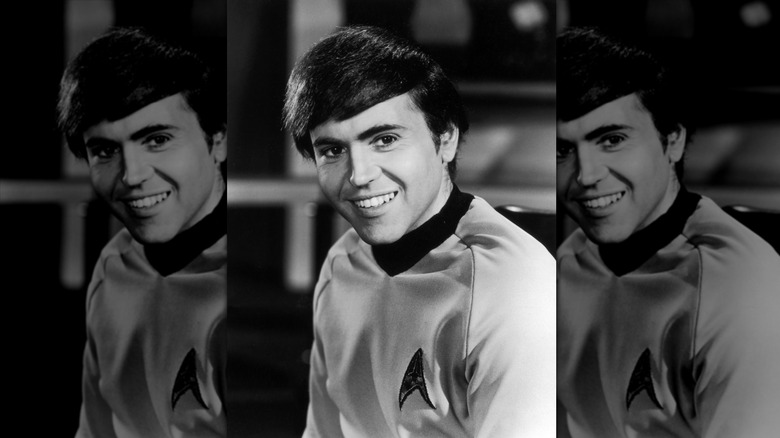
Rumor has it that Walter Koenig's character Chekov was written into "Star Trek" in response to an article in the Soviet paper "Pravda" huffing that there were no Russians in "Star Trek," despite their strong showing in the space race. This probably isn't true — who in the Soviet Union was watching "Star Trek?" — though there's some evidence that Roddenberry may have thought it was true. Koenig came on for a more prosaic, arguably more American reason: Executives wanted to add someone young and cool to appeal to younger cohorts, and Koenig kind of looked like one of the lead singers of the Monkees.
The Monkees were an American iteration of a Beatles-style floppy-haired rock band, complete with a transplanted Englishman, Davy Jones, as front man. Roddenberry and his team wanted to borrow a little of that glamor, so they hired young, cute Walter Koenig and put a good-enough wig on him until his hair grew into the requisite mop top. The original plan was for the character to be English, but at some point the ensign was baptised Pavel Chekov, and Koenig furnished an accent to match. Koenig, for his part, seems to have been amused by the whole thing, noting particularly that while the character may have been a cool young single, Koenig himself wasn't: He was in the first years of his long marriage to Judy Levie, which lasted the 57 years from 1965 to her 2022 passing.
Leonard Nimoy became an unlikely fan favorite
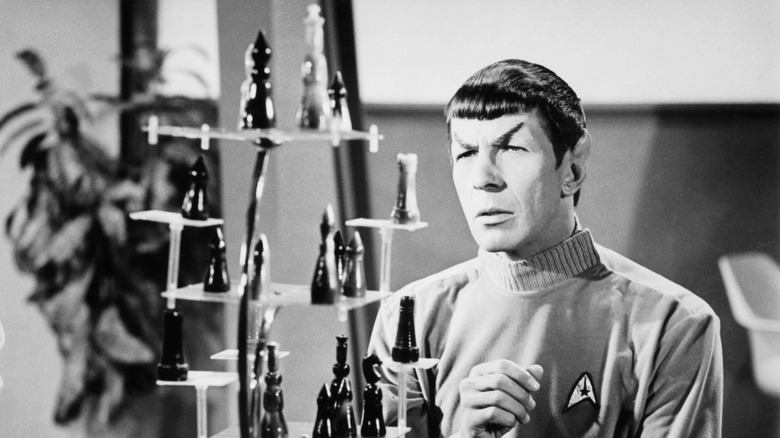
In a cast full of young, good-looking actors, Leonard Nimoy's Spock emerged as a dark-horse heartthrob for many fans. Nimoy's craggy features were dolled up with prosthetic ears and non-human eyebrows, with an unflattering microbang haircut completing the look, and this combination made a certain type of viewer hot under the collar. And it wasn't just folks at home who found themselves enraptured by the aloof and exotic Vulcan: Majel Barrett's character Nurse Chapel openly mooned over Spock in the original series.
Commentators have noted the (allegedly) masculine qualities of control and authority that are foregrounded in Spock's character, along with his intelligence and occasional vulnerability, as potential explanations for the character's hold on some fans. (An alternative explanation, of course, is simply that Nimoy was better-looking than people give him credit for.)
The seductive possibilities of Spock's character were amped up in the episode "Amok Time," which centers on the "courtship rituals" of Spock's species, the Vulcans. Specifically, they enter a period called "pon farr" in which they must mate or die, with their famed Vulcan control slipping as time passes without addressing the issue. This landmine of Vulcan endocrinology has come up again and again in subsequent iterations of the franchise and many, many fan-generated works, allowing admirers of Leonard Nimoy, his successor Zachary Quinto, and any other actor playing a Vulcan to let their imaginations run riot about the passions lurking just beneath their analytical facades.
One episode sees the Enterprise crew fight Jack the Ripper
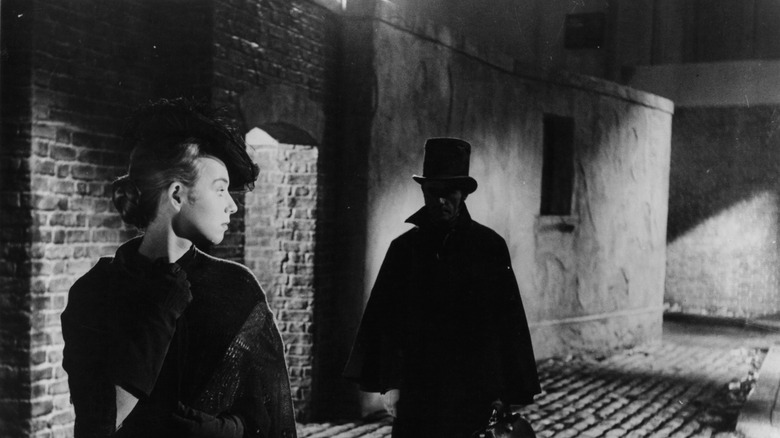
It's a big galaxy out there, and anything is possible — even a starship crew confronting a serial killer from Victorian London. The Enterprise gang ran into some compelling "Monsters of the Week" over their initial run, but perhaps the one that needed the most labored explanation was when they fought Jack the Ripper (in space, of course).
The episode "Wolf in the Fold," written by Robert Bloch of "Psycho" fame, opens with the un-woke premise that ship engineer Scotty needs to go to a gentlemen's club to interact with some women to get over his annoyance at women. So far, so 1967, but then a belly dancer whose performance he liked is found murdered. Scotty is placed on "trial" for the murder, which of course involves him being examined by a telepathic priestess. This priestess is then herself murdered, as is a female ensign beamed down from the Enterprise to help.
It turns out that the group has access to a lie-detecting computer and a database that allows them to look up murders of women (or at least humanoid females) in the galactic neighborhood. The culprit is revealed to be a sort of space demon that once masqueraded as Jack the Ripper, which jumps from the planet's administrator to the computer; via the usual hijinks, the sinister entity is ultimately blasted into deep space, avenging its victims from 1888 onward. We'll have to keep tuning in to see if the Enterprise crew ever catches up with the Zodiac killer.
George Takei lied about his fencing background to get to swordfight
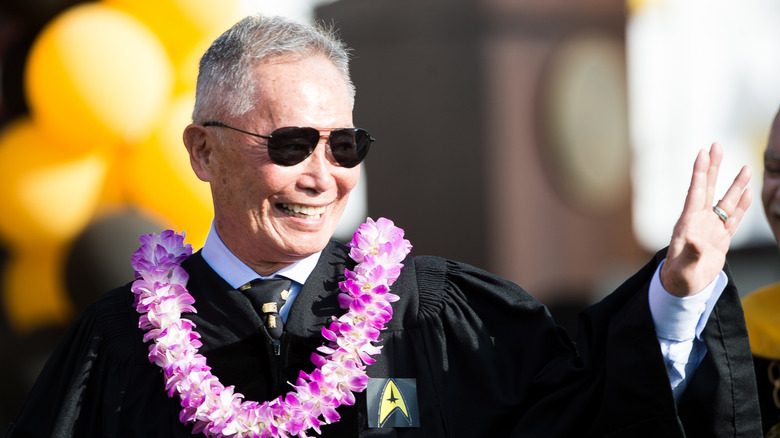
When George Takei was asked if he could fence, he did what any good actor would do: He lied and said he'd been fencing since he was a child, then signed up for fencing lessons with the same guy who had trained the most recent Robin Hood. So when it was time to film the episode "The Naked Time," in which a drug-like substance tracked in by a returning away team strips away Sulu's inhibitions, he was ready to give one of the best of the few openly comic performances of the original series.
The initial idea was to give Takei a katana to match his and his character's Japanese ancestry, but Takei successfully argued for a European-style rapier instead. Brandishing this weapon, Sulu strips off his shirt, glistens, and scampers around the Enterprise challenging his crewmates to duels (and trying to protect a nonplussed Uhura), before he's temporarily neutralized by the franchise's first-ever Vulcan nerve pinch. The humor and shirtlessness of the performance combined to make Takei a fan favorite, and for his part, Takei has told interviewers that the episode was his favorite of the original series.