

5 Chart-Topping Hits You Didn't Know '60s Crooner Neil Sedaka Wrote For Other Artists
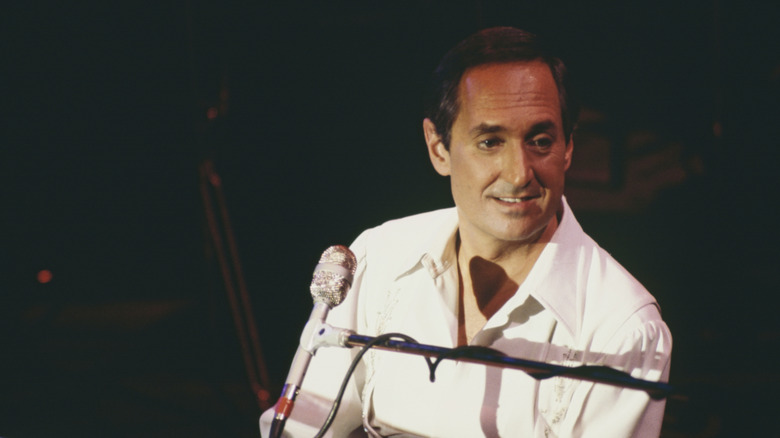
Neil Sedaka was a major pop star in his own right. He enjoyed peaks as a performer in the late 1950s and early 1960s, when he was a clean-cut teen icon, and later in the 1970s as a tasteful adult contemporary singer and pianist. Three hit singles released during Sedaka's long career — "Breaking Up Is Hard to Do," "Laughter in the Rain," and "Bad Blood" — topped the Billboard Hot 100, and he charted a total of 30 times.
But beyond his own hits, Sedaka was also a songwriter who proved time and again that he could craft songs that suited other artists perfectly. Even during quieter stretches in Sedaka's career when his own records weren't massive hits, he was often in the charts as a songwriter. Here are five tracks that Sedaka wrote or co-wrote that topped charts either in the U.S. or overseas, even if he wasn't the one performing them.
Love Will Keep Us Together – Captain & Tennille
Married couple "Captain" Daryl Dragon and Toni Tennille dominated the charts for four weeks in the spring of 1975 with this Hot 100 chart-topper, "Love Will Keep Us Together." In fact, this upbeat, optimistic love song held the No. 1 spot the longest that year. Neil Sedaka co-wrote the smash with his longtime lyricist Howard Greenfield, and he actually recorded the song himself first, releasing it as a track on the album "Tra-La Days Are Over" in 1973.
But it was in the hands of Captain & Tennille that the song truly flourished, with Dragon's new arrangement and the solid backing of drummer Hal Blaine giving a foot-tapping foundation to Tennille's charming vocals and the duo's bright, driving keyboard parts. The track has a light funk feel that makes it especially infectious and an obvious play for AM radio stations of the period. In its dying seconds, Tennille can be heard to sing "Sedaka's Back," a playful nod to Sedaka's album of the same name and a hint to the listener that "Love Will Keep Us Together" is his song, even if Captain & Tennille was the act to make it a success.
Lonely Night (Angel Face) — Captain & Tennille
"Love Will Keep Us Together" wasn't the only hit Captain & Tennille enjoyed that was written by Neil Sedaka. In January 1976, as the duo was looking to secure its spot as the go-to suppliers of radio-friendly easy listening hits, they turned to Sedaka again, this time recording "Lonely Night (Angel Face)." Though not as instantly catchy as "Love Will Keep Us Together," the track is underpinned by a disco rhythm and vocal passages that allowed Toni Tennille to show the full extent of her powers as a singer.
Despite part of Captain & Tennille's appeal resting on the fact that the duo appeared to be a sweet, devoted married couple, "Lonely Night" sees Tennille's character yearning for a long-lost love who used to call her "Angel Face" as a pet name. "I can't get you out of my mind," she repeats at the song's climactic ending. In live performances, Tennille playfully delivered this line to her husband. The track cemented Captain & Tennille as Billboard stars by hitting No. 3 on the Hot 100 chart and peaking at the top of the Adult Contemporary and Cashbox charts.
(Is This the Way to) Amarillo — Tony Christie feat. Peter Kay
Co-written with longtime collaborator Howard Greenfield, "(Is This the Way to) Amarillo" is one of the catchiest songs in Neil Sedaka's discography. It was recorded by British crooner Tony Christie and released as a single in 1971, peaking at No. 18 on the British singles chart the next year and topping the charts in Germany and Spain. Sedaka recorded his own version six years later, after which it made its way into his live set lists.
But the story doesn't end there. The much-loved song gained even more prominence in 2005 when Christie teamed up with British comedian Peter Kay to record a video of the song for the charity Comic Relief. Kay was a comedian at the height of his popularity, and the single became a phenomenon, hitting the top of the charts and staying there for seven weeks, selling 1.1 million copies in the process. Its enduring appeal comes from its singalong chorus, and "Amarillo" has remained a fixture of sports events, weddings, and karaoke in Britain ever since.
Ring Ring — ABBA
"Ring Ring" is the track that set ABBA on the road to pop stardom. Collaborators Benny Andersson, Björn Ulvaeus, and Stig Anderson had been invited to submit a song to the 1973 Eurovision Song Contest and began working on a track given the tentative Swedish title "Klocklåt" (or "Bell Song" in English). Featuring lyrics penned by Anderson, it eventually developed the title "Ring Ring" but needed a stronger set of English lyrics to bring it to a wider European audience.
The task fell to Sedaka, despite being better known for supplying melodies for others' lyrics. This time collaborating with writing partner Phil Cody, he improved the words supplied by Anderson, turning out a lighthearted track detailing the romantic desires of someone waiting by the phone for their lover to call. The song has a huge Phil Spector-influenced "wall of sound" production and was the first time that the partners of Andersson and Ulvaeus were given lead vocal duties: "Ring Ring" was originally credited to ABBA members Andersson, Ulvaeus, Agnetha Fältskog, and Anni-Frid "Frida" Lyngstad, setting the template for the group's later success. "Ring Ring" finished third in the Eurovision heat, but the Swedish version hit No. 1 in the band's home country, while the Sedaka-penned English version went to No. 2.
Solitaire — The Carpenters
The mournful song "Solitaire" was originally recorded by Neil Sedaka in 1972, but it was The Carpenters that scored a major hit with it the following year, with singer Karen Carpenter squeezing everything out of the lyrics, supplied by Phil Cody. "Neil encouraged me to make him cry," Cody told Songfacts. "So I went for that particular part of Neil's throat — I was trying to get a reaction out of Neil, and if I got a reaction out of Neil, I knew I'd done good."
Indeed, "Solitaire" is widely considered one of Sedaka's most emotive tracks, a heartbreaking account of a lost relationship and the loneliness that comes as a result. It is a slow, soulful performance, with the effectiveness of Karen's vocals making this the definitive version for many fans. The single peaked at No. 17 on the Billboard Hot 100, but it topped the Adult Contemporary chart.