

Why Listening To Music On The Original iPod Was Better Than Everything Before It
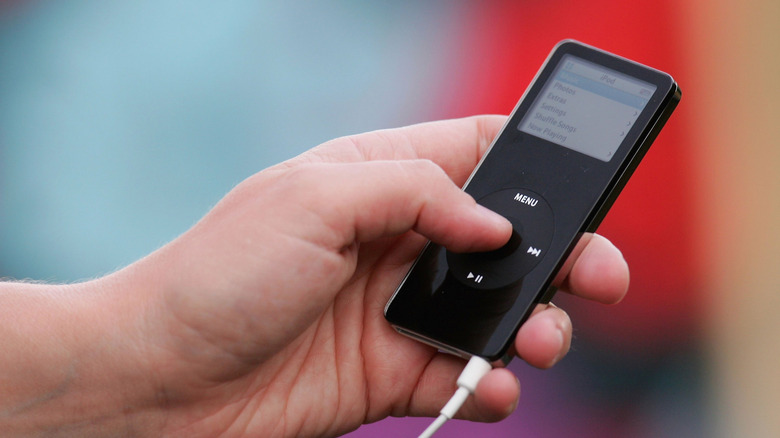
The iPod wasn't the first personal listening device, but Apple perfected the concept of listening to music on a compact device through headphones with its early 2000s innovation. Portable radios have been around since the 1950s, and it was nothing short of a musical and electronics revolution when Sony introduced the original cassette-based Walkman in 1979, an invention everyone hated at first, and CD players followed over the next decade or so, making the notion of listening to music privately and on the go both immensely popular and very common. However, all three methods came with some significant flaws. A personal radio offered little choice in the music dispensed, small tape decks were portable but lacked sound quality, and players like the Discman sounded great but were bulky and prone to skipping, scratching, and battery death. In one fell swoop, the iPod solved all those problems, while offering a whole lot more benefits.
Here's how the iPod started the digital music age and made history as the best music gadget ever made.
The iPod did everything that cassette and CD players couldn't
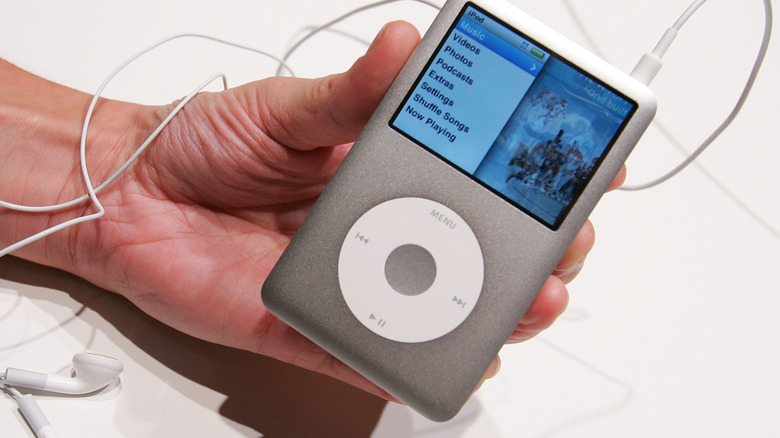
The iPod wasn't the first device that played songs converted to MP3 files (nor the last, if one considers Microsoft's failed Zune). They were just as inconvenient as CD players, had small hard drives, or proved tough to load with music. Such objects became obsolete in October 2001 when the first 5GB Apple iPods hit stores. About the size of a deck of cards, it offered storage and playback of about 1,000 songs; future models would offer either less or more capacity. And thanks to integration with Apple's music management software and an online download store, it took little time and effort to load an iPod.
This was the final evolution in musical tech. The iPod played crisp, high-quality digital recordings as a CD player could, and was even smaller than a cassette player, but it was truly a game-changer because of the storage capacity. Consumers no longer had to carry around a carefully curated cassette case or CD wallet when they had at least 1,000 songs instantly accessible in their pocket.
The novelty of the iPod has been forgotten over time because of the technology that succeeded it. This 2000s breakthrough, along with all other MP3 players and a few other things, was killed by the smartphone, which can access subscription music streaming services with nearly infinite choices. The idea of 1,000 tracks now seems downright quaint, but the iPod can stake a claim as the final and most perfect device that was purpose-built for music consumption.