

5 Songs From 1968 That Define Rock History
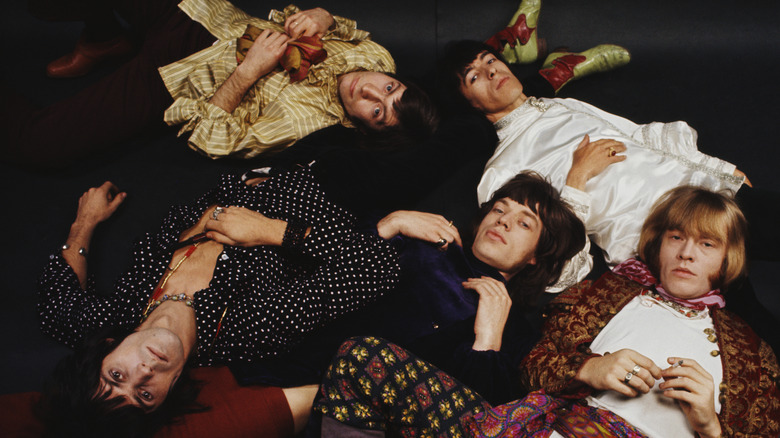
The five songs from 1968 that define rock history were shaped by that tumultuous year. Rock 'n' roll was transitioning to hard rock like Steppenwolf's charging "Born To Be Wild." Extravagant showmanship grew more extreme, with Arthur Brown performing "Fire" in a flaming, horned helmet. Psychedelia either receded or hung on as a thematic thread in heavier blues-based bands like The Jimi Hendrix Experience. That power trio's extraordinary guitarist helped foster the era's emphasis on instrumental mastery.
Rock also responded to the year's social and political dissent, which sent shockwaves through the world. As The Doors protested the Vietnam War and James Brown embraced racial equality, The Beatles and The Rolling Stones arguably felt compelled to address the year's divisive political climate. We maintain that 1968 was the year that rock became harder, heavier, darker, more virtuosic, and more political — and once those forces rattled and invigorated the genre, they could not be pushed back into Pandora's box.
Reverberations from 1968's most impactful rock songs are with us today. Steppenwolf's hard-rocking assault presaged heavy metal, and Arthur Brown's dark theatrics spawned shock rock. The year's heavy blues rock retains its relevance today with groups like The Black Keys, Hendrix's virtuosity inspired guitarists like Joe Satriani, and the genre's increasing politicization sparked its maturity. In 1968, when the world seemed to catch fire, the year's most influential rock did far more than address the issues, hopes, and fears of the day. It sowed the seeds of today's modern rock.
Steppenwolf - Born To Be Wild
Featuring the gruffly sung lyrics, "I like smoke and lightnin' / Heavy metal thunder," Steppenwolf's "Born to Be Wild" is credited with inventing heavy metal as well as coining its name. But, the song's writer, Mars Bonfire — born Dennis Edmonton — says the phrase "heavy metal" refers to driving his car, not a music genre. We maintain that the tune is not metal. However, with a driving blues-based riff that volleys a call-and-response with Steppenwolf vocalist John Kay, and a buzzy, blown-out guitar tone, "Born to Be Wild" presages heavy metal's riff-driven template. The song's pushed-forward guitar supersedes its swirling psychedelic organ and makes "Born to Be Wild" a transitional rock juggernaut and metal harbinger.
"I was in the mountains [driving] during a thunderstorm," Bonfire tells Classic Rock (via Louder). "It was so heavy I had to pull aside." Speaking to Guitar Player, Bonfire elaborates, "I remembered studying the periodic table of elements in school, and there was a category for heavy metals. The phrase 'heavy metal thunder' popped into my head."
"Born to Be Wild" hit number two on Billboard's Hot 100 and became a hard rock classic when it appeared in the 1969 counterculture film classic Easy Rider. Despite the song's success, tragic details about Steppenwolf reveal that success was fleeting for some band members, while others died tragically. In 2018, Bonfire, who was never a member of "Steppenwolf," told Classic Rock that the song provided him with sufficient funds for his low-key lifestyle.
Arthur Brown - Fire
"I am the god of hellfire! / And I bring you ... fire!" Bolstered by a brass fanfare, Arthur Brown introduces "Fire," the psych-adjacent soulful centerpiece of the incendiary showman's debut album "The Crazy World of Arthur Brown." Atop punchy, syncopated Hammond organ, Brown unleashes his operatic voice — ascending from a soothing croon to blood-curdling screams as charging horns collide with a whooshing sound that suggests a fire cyclone incinerating all in its path.
From the song's smoldering embers emerge genres that didn't yet exist in 1968. It's a proto-progressive rock epic, harsher than The Moody Blues, and an unsettling slab of shock rock presaging Alice Cooper. Brown's live show, where he performs "Fire" in ghoulish face paint and a burning helmet that wreathes his head in flames, accentuates the tune's transgressive shock value. "My hair was singed many times, my clothes caught fire once, and we were always leaving burn marks on stages," Brown tells Classic Rock (via Louder).
Brown's act prefigures stunts like Alice Cooper's guillotine act, but "Fire" aligns more with Cooper's "From the Inside" album, written during a sanitarium stint for alcoholism. "Fire" is similarly autobiographical, harkening to Brown's childhood in England, where he saw his family home obliterated by Luftwaffe bombs. Later, Brown tells The Guardian, he found therapeutic relief by "staring into the heart of the fire and finding a stillness, like meditation." That gravitas imbues "Fire," elevating it to the solemnity of goth rock — another genre it foreshadows.
The Jimi Hendrix Experience - All Along the Watchtower
When considering cover songs better than the original version, Jimi Hendrix's swaggering, coruscating take on Bob Dylan's "All Along the Watchtower" leaps to the head of the pack. With textured, percussive acoustic guitars, coiling electric leads, and swooping, shivery slide work, Hendrix's version transforms Dylan's monochrome folk into kaleidoscopic bursts of light, leavened with a sense of dread.
"All Along the Watchtower" is psychedelic, but the song subsumes its mind-bending influences to a charging, repetitive three-chord, blues rock spine, exemplifying the era's shift from the trippy psychedelia of tunes like Tomorrow's "My White Bicycle" to the psych-inflected blistering hard rock of groups like Hendrix's crack trio. Guitar pyrotechnics abound on the tune, highlighting the invention and dexterity that lifted Hendrix to the pinnacle of 1968's guitar slingers, but Hendrix never allows virtuosity to get in the way of the song's primal power and its spell-binding lyrics about jokers, thieves, plowmen, and businessmen.
Dylan's words may have contributed to the real reason Hendrix covered "All Along the Watchtower." After hearing an acetate of the song, which appears on Dylan's classic "John Wesley Harding" album, Hendrix fell in love with it. He recorded his version less than two months after Dylan tracked the original. Hendrix was right to trust his instincts. "All Along the Watchtower" reached number 20 on the Billboard Hot 100. It's the highest U.S. chart position achieved by the master musician who continues to influence and inspire rock guitarists today.
The Beatles - Revolution
With insistent, grimy and overdriven guitars and John Lennon's blood curdling scream, "Revolution" opens with the subtlety of an air raid siren. The Beatle's fuzziest, most distorted proto-grunge groove propels Lennon's raw vocals, which invite and also taunt the listener: "You say you want a revolution, well, you know / We all wanna change the world" Gone was the elaborate eclectic psychedelia of "Sgt. Pepper's Lonely Hearts Club Band" and "Magical Mystery Tour," supplanted by a paint peeling rocker that takes its title from the topic much on rock listeners' minds in 1968.
One of the untold truths of The Beatles is that many songs credited to Lennon/McCartney were written by just one partner. "Revolution" is Lennon's tune, and he wrote it in response to Marxist and Maoist groups who felt the left-leaning Beatle should lend support to their causes. The song contains Lennon's response, his belief that change comes from within rather than revolutionary violence. "The point is to change your head," Lennon told student journalist Maurice Hindle, via Lennon's official website.
Despite its pacifist message, "Revolution" was The Beatles' most political song to date. It arguably accelerated rock music's embrace of topical issues as subject matter. With "Revolution" grabbing the number 12 spot on Billboard's Hot 100, it was perhaps inevitable that The Beatles' biggest commercial and cultural rock rival, The Rolling Stones, would chime in on 1968's tumultuous political climate. "Street Fighting Man" dropped on August 31, 1968, five days after "Revolution."
Rolling Stones - Street Fighting Man
With ringing guitars and ricocheting drums, "Street Fighting Man" grabs our attention with Mick Jagger's opening lyrics, spat like a shot across the bow: "Everywhere I hear the sound of marchin', chargin' feet, boy" The tune earned the band credibility from the political left, but among the untold truths about The Rolling Stones, one that should be added is that the Stones' first political song was arguably their last.
In 1968, the Stones abandoned the psychedelia of "Their Satanic Majesties Request" and returned to their blues-based rock roots. Though the band had occasionally tackled social issues ("Mother's Little Helper"), "Street Fighting Man" is overtly political, sparked when Jagger attended a London anti-war rally where protestors and police clashed. Despite the tune's insistence that London was a sleepy town, Jagger told Rolling Stone, via Internet Archive's Wayback Machine, "There was all this violence going on." He also noted that revolutionary fervor had spread to other countries: "They almost toppled the government in France."
As the music of "Street Fighting Man" grows more militant, propelled by Charlie Watts 'off-kilter toy drum kit and Keith Richards' rubbery bass, the lyrics grow ambivalent. Jagger tempers defiance with resignation — admitting there are limits to what a rock band can do. Bands had gone political before, but in 1968, big guns like The Beatles and the Stones entered the fray. The Stones were rarely this political again, but "Street Fighting Man" emphasized that going forward, rock had something to say.