

Classic Singers Whose Songs Hit No. 1 Shortly After They Died
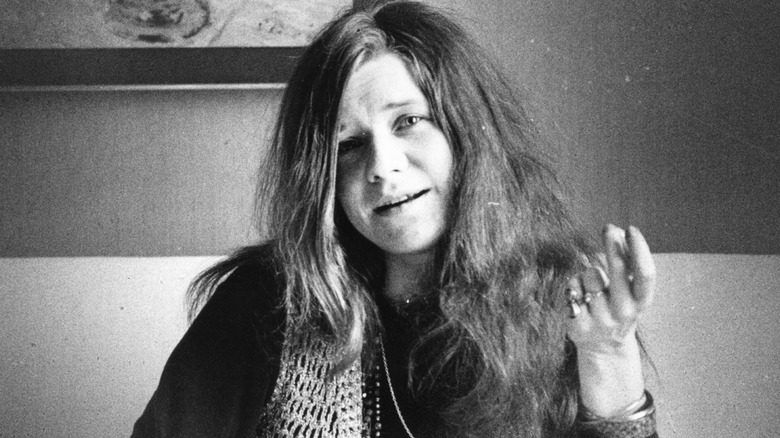
It's a rare but tragic occurrence in the otherwise joyful world of pop music: A musician dies right at the peak of their fame, and then their most recent single goes to No. 1 on the chart. Topping the Hot 100 is both a professional triumph and a dream fulfilled for many artists, but a handful of singers and songwriters — iconic, legendary, and groundbreaking ones at that — didn't get to enjoy it because of an extremely untimely or early death.
Such musician deaths were so unexpected that they were working on new music in the weeks and days before they died in accidents, from the effects of substance abuse, or murder. That can create a sad and unique confluence of events — the artists had a hot single ready to rise up the charts, and the collective outpouring of grief from fans took it over the top and all the way to No. 1. It's only ever happened a relative few times in music history, and with these four legendary artists of the '60s and '70s. Here are some classic singers who died just before their songs went to No. 1.
Otis Redding — (Sittin' On) The Dock of the Bay
Throughout the 1960s, Otis Redding was a near constant presence on the upper rungs of the R&B chart and the middle part of the all-genre Hot 100. He wrote and recorded the original version of "Respect," made famous and taken to No. 1 in June 1967 by Aretha Franklin. One of his best-known songs and biggest overall hits was "Try a Little Tenderness," a pleading and undeniably catchy love song that showed off Redding's voice and depicted a potential future superstar.
Redding performed that 1966 single on "Upbeat," a nationally broadcast Cleveland-based music show, on December 9, 1967. A day later, Redding and his backing band, the Bar-Kays, were on board a small plane that departed Cleveland before it crashed into Lake Monona in Wisconsin. Nearly everyone on the flight died, including 26-year-old Redding.
Just a few days before he died, Redding entered a Memphis studio and recorded most of a brand new ballad with a beat, co-written with Steve Cropper, called "(Sittin' On) The Dock of the Bay." The infectious whistling at the end was a temporary fix: Redding was supposed to come up with some vocals and put them in later. He didn't get the chance, and his label rushed out the record. In March 1968, "(Sittin' On) The Dock of the Bay" spent the first of its four weeks at No. 1.
Janis Joplin — Me and Bobby McGee
Janis Joplin's rise to the top of the rock 'n' roll world didn't take very long, but she wouldn't live long enough to enjoy much of her celebrity or acclaim. An electrifying performance at the Monterey Pop Festival in 1967 got Joplin and her band, Big Brother and the Holding Company, a record deal, which produced the single "Piece of My Heart," a Top 20 hit in late 1968. It was around that time that Joplin went solo and got to work on her 1969 solo debut, "I Got Dem Ol' Kozmic Blues Again Mama!" Joplin spent a lot of 1970 working on her next LP, which would be named "Pearl" after Joplin's preferred nickname. Credited to Janis Joplin and the Full Tilt Boogie Band, "Pearl" hit stores in February 1971 — about four months after Joplin died of a drug overdose.
Columbia Records pieced together what Joplin had left behind to compile "Pearl," including her raw and passionate take on "Me and Bobby McGee," written by her friend and former flame Kris Kristofferson. The biggest hit Joplin would ever sing, "Me and Bobby McGee" topped the Hot 100 for two weeks in March 1971.
Jim Croce — Time in a Bottle
Jim Croce's time in the spotlight was ultimately brief but intense. After releasing two albums of folk-inspired story songs in the late 1960s, Croce had a hit on his hands with the 1972 LP "You Don't Mess Around With Jim." The title track and "Operator (That's Not the Way it Feels)" reached the Top 10 and Top 20, respectively, and in the summer of 1973, Croce went to No. 1 with "Bad, Bad Leroy Brown."
On September 20, 1973, Croce played a show at Northwestern State College in Louisiana, then boarded a small plane to travel to another concert in Sherman, Texas. The plane struck a tree shortly after taking off from the airport in Natchitoches, Louisiana. Six people died in the accident, including the pilot, Croce's road and booking agents, comedian and touring partner George Stevens, guitarist Maury Meuhleisen, and Croce himself. He was 30 years old.
In the weeks after his death, Croce's record label released two singles by the singer-songwriter, and both quickly scaled the Hot 100. The defiant "I Got a Name" peaked at No. 10, and then came "Time in a Bottle." Excruciatingly poignant, "Time in a Bottle" is a melancholy ballad about how life is fleeting and can slip away so quickly. It reached No. 1 in December 1973.
John Lennon — (Just Like) Starting Over
In the final 12 months of his life, John Lennon came out of a self-imposed five-year break and began making music again. Inspired by the odd, catchy, and animal-sound-laden "Rock Lobster" by the B-52's, which reminded him of the experimental music made by his wife, Yoko Ono, Lennon started writing songs and picked up a guitar. Lennon had to sign a new record deal, and he went with Geffen Records, which allowed him the freedom to make a collaborative album with Ono. That album, "Double Fantasy," with alternating Lennon and Ono tracks, hit stores in November 1980. The first promotional single, released about two weeks prior, was a Lennon track: the nostalgic and lyrically appropriate "(Just Like) Starting Over," a throwback with a palpable 1950s, early rock 'n' roll sound.
On December 8, 1980, Lennon was tragically murdered, shot outside his New York City apartment building. One way his fans expressed their grief was by purchasing and listening to "Double Fantasy" and "(Just Like) Starting Over." The single quickly ascended the Hot 100 and, on December 27, 1980, the song became the second No. 1 single of Lennon's solo career, following 1974's "Whatever Gets You Thru the Night."