

Musicians Who Self-Produced Their Own Albums Only To Crash And Burn
Whether caused by hubris, incompetence, or good intentions gone awry, the rock landscape is littered with talented musicians whose forays into self-produced albums were critically lambasted, took a commercial nosedive, or both. In other words, they crashed and burned. As an added injury, many of these albums also failed miserably in other goals, such as establishing a new musical direction or making longtime fans see them in a new light.
It probably stung all the more because these artists tried to emerge from the shadows of producers who forged their sound: The Stranglers' Hugh Cornwell set out without the help of producer Martin Rushent; Be Bop Deluxe's Bill Nelson forged ahead without Roy Thomas Baker; The Dead Boys' Stiv Bators proceeded without producer-rock singer Genya Ravan, and the Rolling Stones split with Andrew Loog Oldham.
Maybe these musicians believed they were stepping into the spotlight they believed they deserved. Instead, they blundered into the harsh glare of failure. It's perhaps the inevitable result when an acclaimed, commercially successful, and ambitious artist undertakes a self-produced album when there is no one to rein them in. Sadly, and somewhat predictably, the results are often cringeworthy.
Joe Strummer - Earthquake Weather
As the charismatic and impassioned front man and main songwriter of The Clash, Joe Strummer transcended punk, delivering some of the most committed and compelling rock music ever recorded. It's all the more disappointing, then, that "Earthquake Weather" is so dispiriting. Strummer seems to draw from his soundtrack work that preceded this 1989 project, particularly his Latin-infused score for 1987's "Walker." Unfortunately, while "Walker's" soundscape is spare and evocative, "Earthquake Weather" is shapeless and diffuse.
Essentially describing the album as dull and mediocre, Trouser Press said: "Strummer's flat self- production and the band's consciously casual approach squash any traces of life out of the songs." Labeling the album a "must to avoid," music critic Robert Christgau singled out the album's cacophonous guitarist: "Zander Schloss does what he can to make things worse." If the critics were harsh, consumers were indifferent: Neither the album nor its two singles charted.
It's possible that Strummer was lost without his Clash songwriting partner, Mick Jones, whose sharp pop instincts neatly dovetailed with Strummer's alliterative wordplay. "I felt uncertain as to what to do, and that sort of breeds a lack of confidence," Strummer told Magnet about that period in his life. From 1999 to 2002, Strummer would regain his mojo with his band the Mescaleros, but "Earthquake Weather" is a portrait of an artist in the wilderness.
Hugh Cornwell - Wolf
As front man and guitarist for the Stranglers, Hugh Cornwell did much to popularize the British proto-punk and sophisticated pop band. He wrote the lyrics for the band's iconic 1982 tune "Golden Brown," which failed to chart in the U.S., but blew up on Instagram in 2025. In 1988, after 14 years with the Stranglers, Cornwell wanted to experiment outside the band's increasingly tense framework. The result was Cornwell's 1988 solo album "Wolf."
"[Wolf is] a bit lighter in texture and subject matter," Cornwell said to Stereo Embers Magazine; this was an understatement, as "Wolf" failed to chart, and its reviews were tepid at best. Trouser Press said: "Wolf stakes out no significant musical terrain and contains nothing the Stranglers couldn't have done just as well." Record Collector echoed that sentiment, saying "Wolf" was dated and "mired in glossy 80s production values."
Although the album's off-kilter single, "Another Kind of Love," reached No. 11 on the U.S. Alternative charts, the next single Cornwell recorded with the Stranglers in 1990, "Sweet Smell of Success," did better. Perhaps most telling, Cornwell never revisited "Wolf's" lightweight dance pop, returning to a style similar to the Stranglers on subsequent solo albums. Cornwell arguably returned to form in his solo career, but the course correction wouldn't have been necessary if his first solo album hadn't been a musical dead end.
Bill Nelson's Red Noise - Sound On Sound
In the 1970s, Bill Nelson led British band Be Bop Deluxe, making his name as an art-rock guitar slinger. Although Nelson's group was experimental and ambitious, Be Bop Deluxe was always guitar-focused. Although 1978's "Drastic Plastic" eschewed rock for new wave and synth pop, Be Bop fans were alienated when Nelson disbanded the group for a new project that pushed guitars off the sonic menu. Produced by Nelson along with John Leckie, "Sound-On-Sound" is the debut — and only — studio album by Nelson's band Red Noise. It embraces frantic electro-punk, announcing that Nelson was done playing guitar hero.
By rushing towards the future, however, Nelson had discarded the lyrical songcraft and alien beauty that had enhanced Be Bop's best material. Instead, "Sound-On-Sound" is harsh, mechanical, and frenzied, an antic herky-jerky onslaught with no dynamics to pull a listener out of its onrushing current of sound. "I never felt the album was that difficult to listen to, but the reaction was awful," Nelson told Trouser Press, which noted in a review that "Sound on Sound" lacked strong songs, saying: "Some are half-formed and not up to [Nelson's] usual standards."
The lack of critical approbation equaled the album's commercial neglect: While "Drastic Plastic" broke the Billboard 200, "Sound-On-Sound" failed to chart in the U.S.
Stiv Bators - Disconnected
Stiv Bators is best remembered as the front man of confrontational punk outfit the Dead Boys, as well as the singer of goth-punk supergroup the Lords of the New Church. Few remember or even know about Bators' brief, charmingly outlandish foray into pop rock on his only solo record, "Disconnected," released in 1980. The Dead Boys were always a shambolic crew, and after two studio albums, they self-destructed. At that point, Bators hooked up with bassist and childhood friend Frank Secich.
The resulting album, co-produced by Bators and Thom Wilson, offers dark, melodic 1960s-style garage rock like the arpeggiated "Make Up Your Mind," along with an anemic cover of the Electric Prunes' "I Had Too Much to Dream (Last Night)." With off-color lyrics, prodigious poor taste, and a giddy sense of fun, "Disconnected" didn't connect with fans of the Dead Boys' nihilism or with 1960s pop-rock aficionados. Lollipop Magazine noted that Bator's musical change of pace "will disappoint a lot of the more regimented folks in the punk audience."
The Dead Boys' 1977 debut album "Young, Loud and Snotty" peaked at No. 189 on the Billboard 200, while the Lords of the New Church's 1984 LP "The Method to Our Madness" hit No. 158. But "Disconnected," despite its sense of goofy outrage, didn't chart at all.
The Rolling Stones – Their Satanic Majesties Request
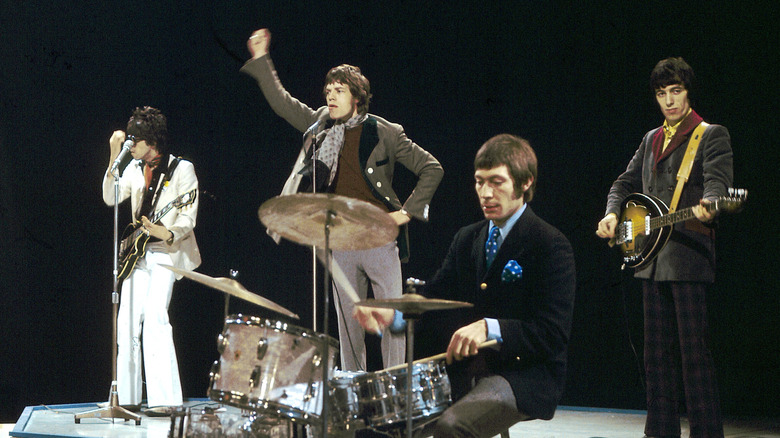
The sessions for "Their Satanic Majesties Request", the Rolling Stones' first experiment at a self-produced record after the departure of manager-producer Andrew Loog Oldham, were chaotic. "Every day at the studio it was a lottery as to who would turn up and what – if any – positive contribution they would make when they did," bassist Bill Wyman wrote in "Rolling with the Stones." There are several contenders for the group's worst LP, but only "Their Satanic Majesties Request" was sabotaged by the band's overstuffed production and uninspired songwriting.
On its 1967 release, "Their Satanic Majesties Request" initially sold well, reaching No. 2 in the U.S., but the album has since undergone a critical reassessment. Ultimate Classic Rock rated it as the Stones' 10th-worst album, noting that it suffers from a "dearth of great songs." Placing it 13th out of 25 Rolling Stones albums, Stereogum called it a "baffling Beatles-aping" album. Contemporary reviews were also harsh; Rolling Stone said the band had become "infused with the pretentions of their musical inferiors."
Even the Stones band members themselves later had unkind words for "Their Satanic Majesties Request." Keith Richards, in true rock 'n' roll style, was the most direct, dismissing the LP (via Mick St. Michael's "Keith Richards: In His Own Words") as "a load of ***p."