

5 Classic Rock Stars Accused Of Indefensible Bandmate Betrayals
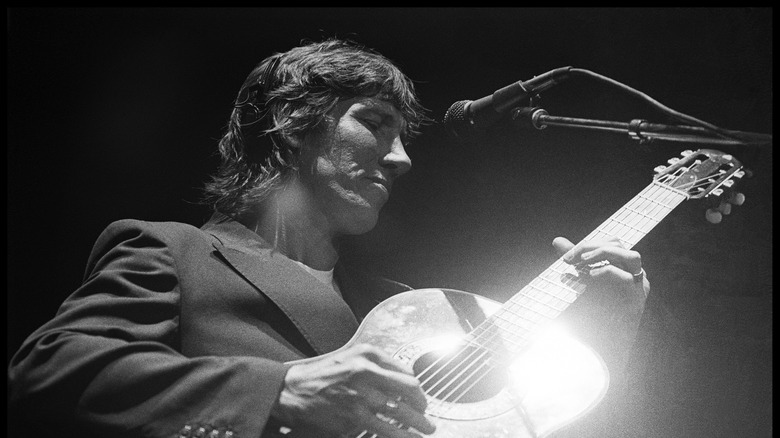
It has become something of a cliche for rock stars to say they're "doing it for the fans" when, after years apart, they decide to reform for a lucrative stadium tour or release rare material that had never previously seen the light of day. But those artists may have already left their fanbase disgusted after causing rifts with their own bandmates.
When disputes arise and band members behave badly, it can forever change them in the eyes of fans. Worse, it can permanently alter the dynamic between band members, affecting their ability to collaborate creatively even if the band doesn't split as a result. In several cases, it meant the end of some of the most celebrated partnerships in the history of rock music, with the betrayals still debated among fans today. From the solo aspirations of a Beatle to Guns N' Roses' infamous split, here are five rock stars who drew the ire of their adoring fans by betraying their musical collaborators.
Paul McCartney
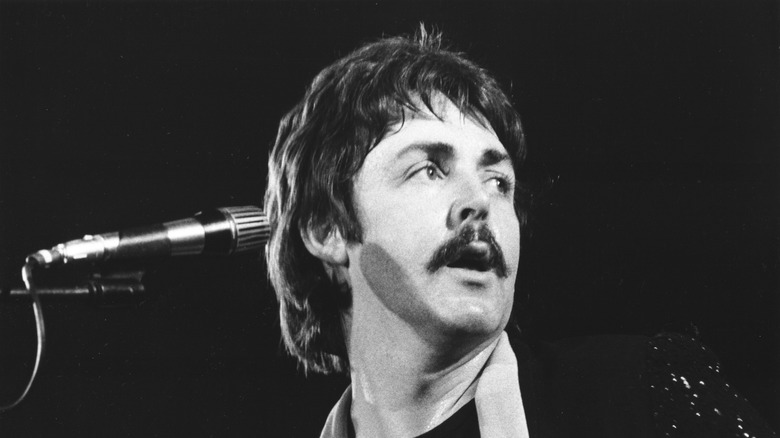
He may be considered the patron saint of classic rock today, but Paul McCartney's career has not been without controversy. When the Beatles split back in 1970, the band's bassist and co-songwriter was persona non grata for legions of fans who believed he had stabbed the other members of the Fab Four in the back.
The apparent betrayal came on April 9 of that year, when McCartney was promoting the release of his self-titled debut solo album. At the suggestion of his assistant Peter Brown, McCartney had written answers to a list of questions about his new record and the future of the Beatles. While he stopped short of saying the Beatles as a band was over, he admitted that he was planning no new Beatles releases in the future and declared the end of his songwriting partnership with John Lennon. It was a shock to his fans and bandmates, with Lennon accusing McCartney of exploiting the collapse of the band to provide press for his solo career. McCartney later sued his bandmates in an attempt to dissolve their contract with manager Allen Klein, muddying his reputation further.
Some fans devised other potential reasons for the breakup of the band, such as the apparently malign influence of Lennon's second wife, Yoko Ono, with it later being revealed that Lennon had announced he intended to leave the band as early as 1969. But as the decades passed, a more nuanced understanding of the Beatles' breakup came to light. The band was suffering from a lack of direction, addiction, exhaustion, and management issues that together brought the Beatles to an end. McCartney, meanwhile, has been largely forgiven for the manner in which he launched his solo career.
Roger Waters
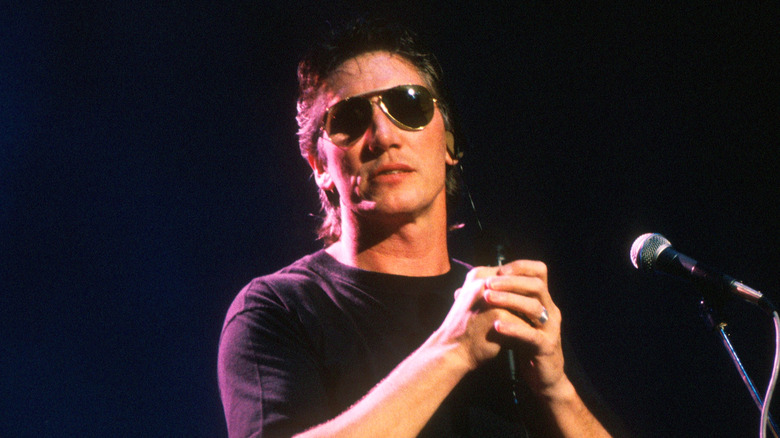
The critically acclaimed evolution of British prog-rockers Pink Floyd throughout the 1970s was driven by the growing influence of Roger Waters, the band's conceptually minded bassist. On albums like "Dark Side of the Moon" and "The Wall," Pink Floyd offered grand rock offerings that could barely be topped while maintaining the band's commercial appeal. All imperial periods come to an end eventually, and indeed, 1983's "The Final Cut" saw the band running out of steam, with Waters leaving the band shortly after.
As far as Waters was concerned, his departure effectively meant the end of the band. But when collaborators David Gilmour and Nick Mason made it clear they intended to continue as Pink Floyd, Waters found himself on the back foot. In a move that horrified fans and drew condemnation from the music press, Waters sued his former bandmates for control of the Pink Floyd name and attempted to prevent them from moving forward with future releases.
The move was a PR nightmare for Waters, who came to see that the contracts in place prevented him from being the arbiter of what counted as a Pink Floyd release. He had believed that the record-buying public would largely reject any future releases by the band that he was no longer involved in. But that was not the case; in fact, 1987's "A Momentary Lapse of Reason" proved to be a respectable commercial success. It was obvious that the fans had sided with Gilmour and Mason — decades later, Waters admitted that suing his former bandmates had been a mistake, though tensions persisted, particularly between Waters and Gilmour.
Axl Rose
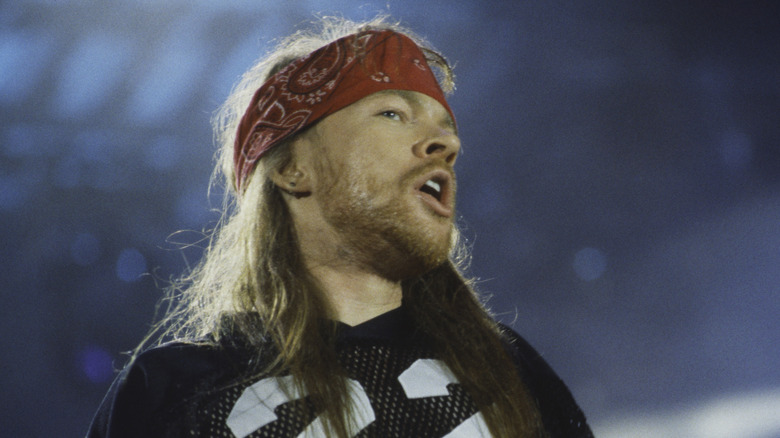
In the 1990s and 2000s, Axl Rose drew scorn from fans and critics for his questionable stewardship of Guns N' Roses in the years leading up to the much-delayed 2008 studio album "Chinese Democracy." As the 1990s wore on, Rose managed to utterly alienate his bandmates with his desire to deviate from GNR's classic sound in pursuit of his own artistic vision, which in turn was held back by an apparent lack of professionalism. At the same time, he was becoming increasingly controlling, in one instance re-recording one of Slash's guitar parts using an external guitarist without Slash's approval.
The impasse led to Slash and McKagan's departures in 1996 and the spectacle of Rose piecing together a "Nu-GNR" to work on the album. Meanwhile, the ongoing delays meant that when "Chinese Democracy" was finally released, it was unable to live up to the weight of expectation that had grown over the years. Once that saga was over, however, tensions began to thaw between the members of the classic line-up, and all has been pretty much forgiven, with legendary guitarist Slash going so far as to praise the album that led to his departure from GNR for two decades.
David Lee Roth
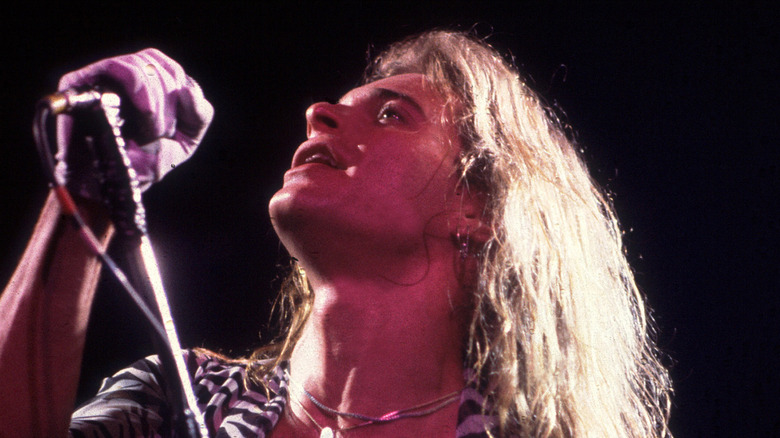
In 1985, David Lee Roth, the unashamedly egomaniacal front man who helped take hard rock group Van Halen to its creative and commercial apex in the early 1980s, fulfilled the worst fears of both his bandmates and his fans by announcing his departure from the iconic band to pursue a fledgling solo career. The disappointment across the rock world was palpable, with fans heartbroken that such a well-oiled rock machine could fall apart right when it had hit its stride. But as drummer Alex Van Halen admitted in 2025, trouble had been brewing behind the scenes.
In Alex's autobiography "Brothers" (via Billboard), he describes the dynamic between Roth, himself, and his brother Eddie Van Halen as "dysfunctional." Indeed, there were known to be arguments between members, with Roth disagreeing with Eddie over touring commitments. Nevertheless, he adds that Roth's departure was "the most disappointing thing I'd experienced in my life, the thing that seemed the most wasteful and unjust. Until I lost my brother."
Roth and the band would reunite on occasion decades later, notably touring together in 2007 after being inducted into the Rock and Roll Hall of Fame, and releasing the 2012 album "A Different Kind of Truth." But for many Van Halen fans, there is still the question of what might have been if Roth had remained with the band back in the day.
Don Henley and Glenn Frey
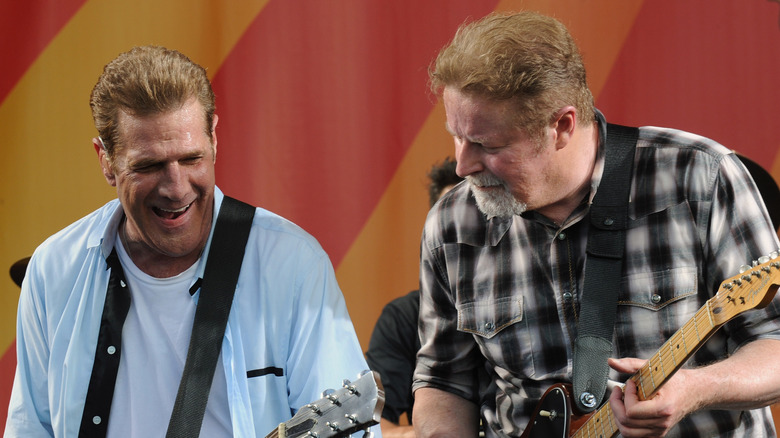
The Eagles is considered one of the defining acts of the classic rock era, and has continued to be a touring behemoth well into the 21st century. But sadly, the fans have had to deal with a bitter feud within the band's core line-up that saw the Eagles derailed twice by the abrupt departure of songwriter and guitarist Don Felder.
The first incident occurred in 1980, during a concert supporting Democratic State Senator Alan Cranston. Founding Eagles member Glenn Frey had brought the band on board, but Felder, who was dubious of politics in general, was far from enthusiastic. After Frey had witnessed Felder acting rudely toward Cranston's wife, he flew off the handle and smashed a beer bottle, and the two spent the evening's performance threatening each other with violence off-mic. After the show, Felder destroyed a guitar and escaped in his limo, after which the Eagles disbanded for 14 years.
The end of the band was a testament to Felder's central role in making the band a success, despite not being a founding member. But when he finally returned in 1994, he found that he had been demoted, at least in financial terms, with Frey and fellow founding member Don Henley claiming a greater share of the band's profits than Felder. Felder continued to pressure Henley and Frey for an equal split, but by 2001, they forced him out of the band. They eventually reached a financial settlement, but in attempting to maintain a greater share of the profits, Henley and Frey deprived Eagles fans of a defining member.