

'80s Rockers Who Paid The Price When Relationships Consumed Their Careers
We may receive a commission on purchases made from links.
There's nothing like the fallout from a radioactive relationship: The turbulence and tears, the ultimatums and reconciliations, the messy meltdowns and toxic cycles. This can get even more volatile when your life is under a magnifying glass and the distinctions between what's public and private break down. That's why rock stars' love lives, especially when chaotic, are so gripping. When Stevie Nicks sings, "I'll follow you down / 'Til the sound of my voice will haunt you" in "Silver Springs," she's basically hexing Fleetwood Mac bandmate and ex Lindsey Buckingham, adding to the song's power. But as much as emotional turmoil can fuel rock music, it can also swallow up musicians' careers and tarnish legacies.
Chaotic relationships sunk musicians in every era, but among the rock stars that were big in the '80s, you'll find brutal examples. Crumbling marriages left Billy Joel reeling and fighting for his finances and blew up iconic alternative band Sonic Youth. The explosive, violent way Tommy Lee destroyed his relationship damaged the Mötley Crüe drummer's reputation and detracts from his legacy. Of course, Lindsey Buckingham appears on this list, too, as the tensions of working with his ex forced his exit from Fleetwood Mac. In each case, private tsunamis became public and professional disasters. They've capsized musical careers, sunk bands, sullied reputations, and drained bank accounts. In rock 'n' roll, as in civilian life, love can exact a heavy price and give you a bad name. Sometimes, love takes everything.
Billy Joel feels the heat and gets burned
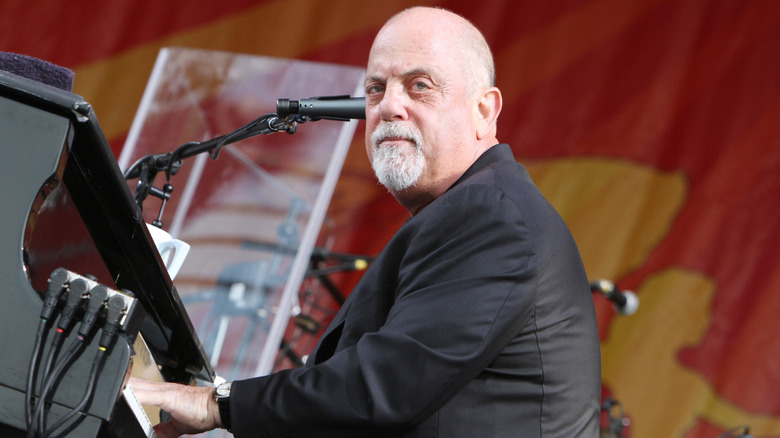
On the backs of '70s and '80s hits like "Piano Man" and "We Didn't Start the Fire," Billy Joel became an institution, racking up Grammys, topping charts, and filling arenas. But his luck in love was another story. His first wife, Elizabeth Weber, was also his business manager, and her larger stake in his work became a bone of contention. After filing for divorce in 1982, they tried to reconcile, but things came to a head when a motorcycle accident sent Joel to the hospital. While recovering and on pain killers, Weber tried to have him sign over rights to his music and properties. "That really killed it right there and then," Joel told author Fred Schruers in "Billy Joel: The Definitive Biography."
A second marriage, to supermodel Christie Brinkley, also crumbled. Financial issues caused by the divorce and an embezzling manager in Weber's brother Frank meant Joel had to tour constantly, causing tension in the relationship. There were other issues, too. As Brinkley made clear in her memoir "Uptown Girl," "I never wanted to end things with Billy. But his drinking was bigger than the both of us." The divorce was finalized in 1994, not long after he released "River of Dreams," his last album of new music. "Christie likes to joke that the end of the marriage ... spelled the end of my songwriting career," Joel quipped in "The Definitive Biography." "At least, I think it's a joke."
Tommy Lee's tattered life goes public

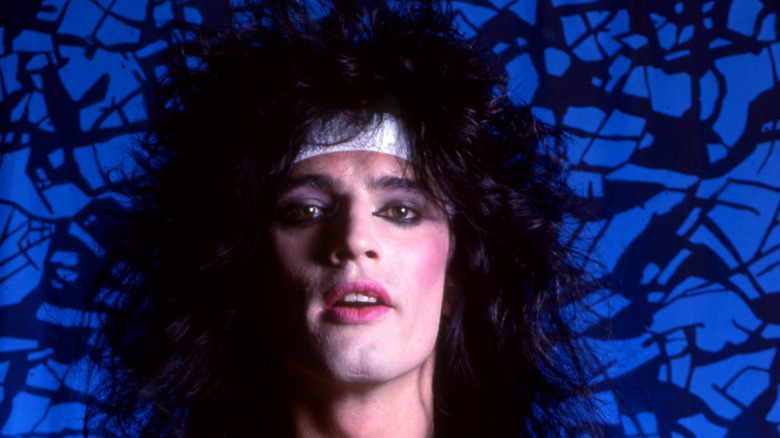
Few '80s rockers have lived up to their bad boy image as much as Tommy Lee, who catapulted to fame and fortune as the drummer for glam metal band Mötley Crüe. As notorious as he became for his playing and outrageous performances — even the band's first gig at the Starwood near LA's Sunset Strip erupted into violence — his personal life would cloud over his music career. In 1995, after a flash-in-the-pan romance, he married his third wife: "Baywatch" actor and model Pamela Anderson. But the stresses of being a high-profile celebrity turned their dreamy rock 'n' roll fairytale romance into a nightmare witnessed on TV, in tabloids, and through the lenses of the paparazzi.
If you remember the mid-'90s, you'll recall the stolen sex tape that is, as Amanda Chicago Lewis put it in Rolling Stone, "the most infamous stolen celebrity artifact on the planet." The scandals led to legal battles, scrutiny, and salacious headlines, lighting the fuse of their combustible relationship. Lee's drinking, drug use, and personal issues made things ugly. "[M]y anger ... all boiled down to nothing but my own insecurity, neediness, and fear," Lee reflected in the Mötley Crüe autobiography, "The Dirt: Confessions of the World's Most Notorious Rock Band." Following a violent altercation in 1998, he was convicted of spousal abuse and spent six months in jail, ending the marriage for good. By the turn of the millennium, the '80s rock icon's days of musical relevance had evaporated, and his public image was up in smoke.
Thurston Moore and Kim Gordon leave their youth behind

If you were into alternative music, then the dissolution of Thurston Moore and Kim Gordon's marriage in 2011 was an utter gut check. Wed in 1984, they seemed effortlessly cool and drama-free: Art stars driven by their personal and creative union. As part of Sonic Youth, their uncompromising noise rock — a searing rebuke to the chart-topping music of the '80s — inspired generations of musicians and opened the doors for bands like Nirvana. The more that emerged about their tragic story, the worse it felt.
As Kim Gordon told Elle, "We seemed to have a normal relationship inside of a crazy world. And in fact, it ended in a kind of normal way — midlife crisis, starstruck woman." A text message she wasn't supposed to see on Moore's phone revealed he was having a secret relationship with book editor Eva Prinz, with whom he founded the art press Ecstatic Peace Library. She confronted him, and though the two tried couples counseling, his affair persisted. That ended not only a 27-year marriage but also Sonic Youth's legendary run.
Months after the split, the band played a final tour in South America, fulfilling a final set of obligations. "Everyone pretended things were the same," Gordon recalled in her memoir "Girl in a Band," but it was clear this was it. Remembering their final performance in Sao Paolo, Brazil, she wrote, "At one point my voice fell like it was scraping against its own bottom ... Thurston and I didn't look at each other once." In a way, their divorce was when indie rock lost its innocence, revealing uncomfortable truths and collapsing a foundational band.
Lindsey Buckingham goes his own way

For much of Fleetwood Mac's career, interpersonal drama, romance, jealousy, heartbreak, and tension actually made the band's work stronger. We get caught in the band's classic line-up's tangled web of breakups, affairs, and relationships because we hear it reflected in their songs. On the seminal "Rumours" album, Lindsey Buckingham's "Go Your Own Way" and Stevie Nicks' "Dreams" represent both sides of their infamous first breakup. But the pain that sparks so much music can also snuff its flame. For Buckingham, the tensions and emotional turmoil of working with his ex — even decades after their romance collapsed in 1976 — no doubt factored into his two exits from the band in 1987 and 2018.
"Our relationship has always been volatile," Nicks told Rolling Stone after the band fired Buckingham in 2018. "We were never married, but we might as well have been. Some couples ... destroy everyone around them because it's just hard." Tensions would periodically erupt — Buckingham infamously kicked Nicks on stage during the "Tusk" tour in 1980. In 1987, barbed words turned into a physical altercation between the two, preceding his first exit from the band on the eve of a tour promoting "Tango in the Night." The final shoe dropped at a benefit show in New York in 2018, where Buckingham's rude behavior upset Nicks so much that she told the band they'd have to choose between them. The tumultuous tide that made their creative pairing tick crashed like a wave, leaving him drifting off to sea.
If you or someone you know is dealing with domestic abuse, you can call the National Domestic Violence Hotline at 1−800−799−7233. You can also find more information, resources, and support at their website.