

Musicians Who Scored Grammys After Their Bands Kicked Them Out
Bands and beefs go hand in hand, all the way back to The Beatles' breakup and the group's shockingly short seven-year run. Making music requires a drive and vision that can get tangled in ego, success (or the lack thereof), label demands, ego, financial stressors, health problems, substance issues, and more ego. Sometimes, band members get the boot. And sometimes, those booted members win Grammys.
Band members can get kicked out for lots of reasons, just as subsequent careers can follow lots of different trajectories. OG "Yes" singer Jon Anderson got kicked out in 2008 — almost 40 years after the band's 1969 debut — after being sick for four years and has gone on to do his small-scale music thing. Eric Clapton left Cream after only two years (1966 to 1968) because of interpersonal and label-related conflicts, then went on to forge an immensely successful solo career comprising 17 Grammy wins out of 37 nominations. But he was never fired. Morrissey did well after The Smiths' ridiculous infighting broke them up, but he never won a Grammy.
That being said, a handful of artists who got fired not only achieved success afterward but sometimes equaled or surpassed the success of their original groups, Grammys included. Funny enough, they all got fired for reasons related to drugs and alcohol (and yes, sometimes ego). This includes Dave Mustaine, Lemmy Kilmister, Scott Weiland, and the Prince of Darkness himself, Ozzy Osbourne.
Dave Mustaine finally got a post-Metallica Grammy
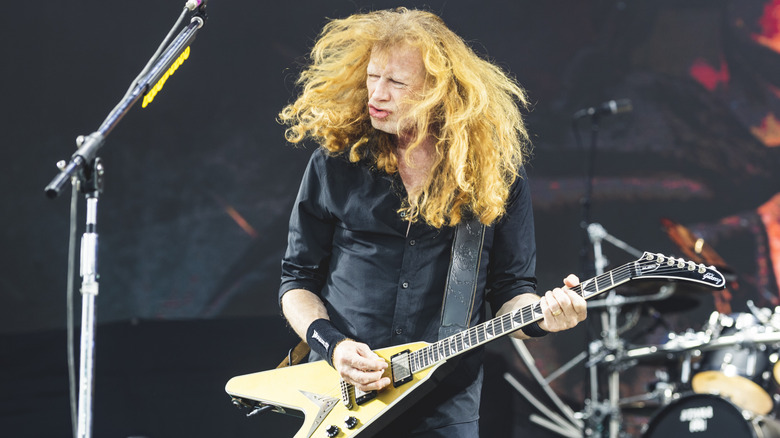
If you can count on one thing from Dave Mustaine, it's that he's going to tell you he was in Metallica. When exactly? Oh, from 1981 to 1983, for less than two years, before he was fired. That's prior to Metallica either releasing or recording its debut album, "Kill 'Em All." But Mustaine had style and flair, same as he did hair, enough to land him his gig in what would become metal's biggest band based on his warm-up exercises alone. And thanks to Mustaine getting fired, we were granted two very different, excellent bands: Metallica and Mustaine's Megadeth, the latter of which finally cinched a Grammy in 2017, 27 years after the group's first nomination. Huzzah for rivalries.
Say what you will about Mustaine's ego, but he's honest about why he got kicked out of Metallica. As he very bluntly told Loudwire, "I'd be aggressive and confrontational because I was a violent drunk. I lost all inhibitions when I was drinking, and that didn't go over to well in the end." Well, there you have it. The rest of Metallica hired lead guitarist Kirk Hammett to replace Mustaine and then told Mustaine about it while he was hungover.
Mustaine didn't just get mad, though — he made his own band. Megadeth released its debut in 1985 with a title worthy of Mustaine's bluntness, "Killing Is My Business ... And Business Is Good!" Surviving lineup change after change, Megadeth developed a signature, highly guitar-intricate sound where every song has about 20 solos. 1990's "Rust in Peace," with monumental tracks like "Holy Wars" and "Tornado of Souls," garnered the band its first Grammy nomination for best metal performance. The group finally won that Grammy with its 15th studio album, "Dystopia."
Ozzy Osbourne got a Grammy before Black Sabbath did
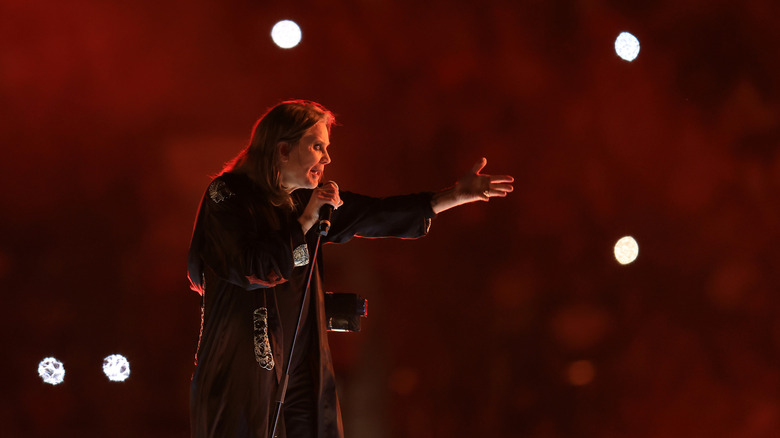
Long before the Prince of Darkness metamorphosed into a lovable reality TV star, Ozzy Osbourne was the guy who was "drunk all the time," as he said in an interview in 1990 with Raw Power (available on YouTube). Osbourne was speaking of when he was fired from Black Sabbath, the father of metal, back in 1979. By then, the Birmingham-founded band had already released every massive, Osbourne-era hit we know: "War Pigs," "Iron Man," Paranoid," etc. In subsequent years, Osbourne's substance abuse got to the point where he quite literally couldn't perform on stage. It was him or the band, and so he got canned.
While Black Sabbath continued with Ronnie James Dio's godly vocals at the helm, Osbourne formed his own, self-named band. His 1980 debut, "Blizzard of Ozz," delivered a staple classic rock banger right out of the gate with "Crazy Train" (which only reached No. 39 on the Billboard Hot 100 after his death in 2025). Osbourne himself rode the substance train during the '80s, right down to the perpetually mentioned bat head-biting incident, all of which practically outshone his musicianship. It took until 2006 for him to get sober with the help of his family.
Along the way, it was the heartfelt "I Don't Want to Change the World," off 1991's equally heartfelt "No More Tears," that nabbed Osbourne a Grammy for best metal performance with vocal. This happened years before Black Sabbath finally received Grammy recognition for "Iron Man" off 1998's live album, "Reunion." Before his death in 2025, Osbourne wound up winning five Grammys out of 12 nominations.
Lemmy Kilmister got Grammy acknowledgement after decades
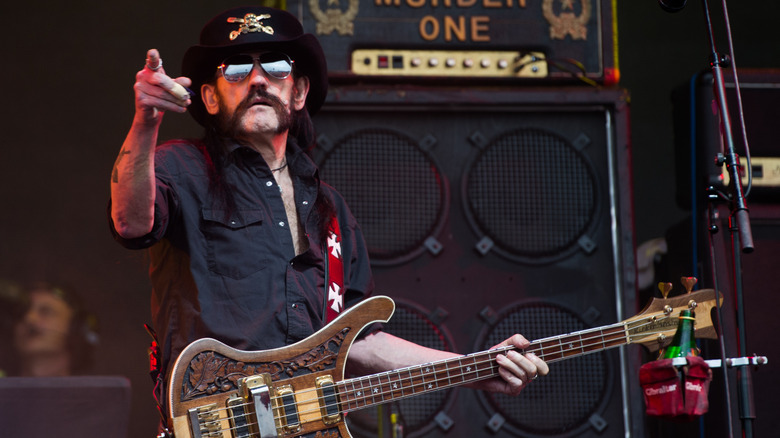
It took 30 years, but Motörhead's Lemmy Kilmister finally got his revenge — and his Grammy. Okay, it wasn't that serious, as Kilmister and his former Hawkwind bandmates joked about Kilmister getting fired from Hawkwind in 1975, and they maintained a "magical bond" throughout life, as Loudersound quotes Hawkwind frontman Dave Brock. Also, Kilmister despised the Grammys, who looked down on Motörhead's proudly rough rock and gambling/fighting/biker bar image. "Everyone was dressed in hired penguin tuxedos, trying to look as much as possible like the motherf****** who were stealing their money," he said (via Loudersound). This is why everyone loved him, and it's why Motörhead called it quits after his death in 2015.
But before all this, Kilmister was just a guy dozing off in a car at the U.S.-Canada border while traveling between gigs. He'd been a part of the space-rock outfit Hawkwind for four years, from 1971 to 1975, and indulged in the typical alcohol, drugs, and party-hardy lifestyle. After getting arrested at the border for amphetamine possession, Hawkwind missed a couple shows, and Kilmister got the boot. As The Guardian quotes Kilmister, "Being fired from Hawkwind for drugs is a bit like being pushed off the Empire State Building for liking heights, you know?"
No matter, because Kilmistery's new band, the legendary Motörhead, eventually got industry recognition and a Grammy. Funny enough, when that Grammy came in 2005, it wasn't for a Motörhead song but a cover of Metallica's "Whiplash." As Kilmister jeeringly said of the win on Loudersound in wonderfully incorrigible fashion, "It was like, 'We still don't think you're any good, but we gotta give you an award cos you've been going for 30 f****** years.'"
Scott Weiland got a Grammy in STP and Velvet Revolver
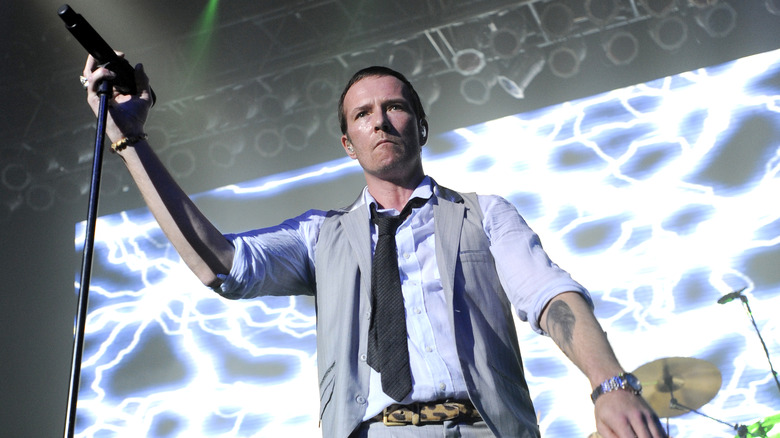
Now for a completely tragic, messy, and bitter take on the "band member gets fired for drug use then gets a Grammy" tale, featuring Scott Weiland of Stone Temple Pilots (STP) and Velvet Revolver. Weiland had substance abuse issues, including with heroin and opiates, even going back to STP's early days when the group won a Grammy for "Plush" off its 1992 debut, "Core." But when he started showing up late to shows, missing them altogether, and using the band to pursue his solo career, he eventually got kicked out in 2013.
That final breakup came after an official, temporary breakup from 2003 to 2008, also due to Weiland's behavior, during which he sang for Velvet Revolver. The short-lived supergroup, which also contained guitarist Slash from Guns N' Roses, only put out two records during its brief life, in 2004 and 2007. But the magic was there, enough to grant Weiland and the band a Grammy for "Slither" from the band's debut, "Contraband." This could have been the start of a recovery story, but instead, Velvet Revolver also got fed up with Weiland and kicked him out in 2008 for "increasingly erratic on-stage behavior and personal problems," as Rolling Stone quotes the band.
STP's second go only lasted five years, from 2008 to 2013, but the group managed to release new music during that time, even garnering a Grammy nomination for "Between the Lines" from its 2010 self-titled album. But the whole tale ended in suits and countersuits when STP sued the fired Weiland for using STP's name on his own (a violation of contract), and Weiland countersued to dissolve the band. Weiland died from an accidental overdose on his tour bus in 2015.