

Musicians Who Tanked Their Careers With One Regrettable Flop Song
For many big-name bands and musicians, there was one magical track that turned everything around — a song that caught hold of the cultural zeitgeist, filling stadiums with adoring fans and causing albums to practically fly off the shelves. Yet, there's a dark side to all that. If the right song played at the right moment can make a musician's fortune, then it stands that the wrong one released at the wrong time can cause a precipitous downfall. For some unlucky artists, all it took was one flop song to utterly tank their careers.
Of course, the definition of "tanked" is nebulous. It can apply to definitively career-ending situations, such as a brand breaking up or a solo artist ignominiously fading away. Yet, it can also refer to major career speedbumps that tarnished a longstanding reputation or at least meant someone had to put in serious work to get back on top. Consider that pretty much everyone knows who Madonna is, but few people fondly recall her attempted rapping or awkward social commentary in "American Life."
While we're at it, a flop song can be a financial disaster, but we think it's fair to deem creative duds flops, too. So, even if Billy Squier's rather infamous "Rock Me Tonite" was the lead single on a platinum album, it also marked a creative low point and a major downturn in his career. At that moment, he joined the ranks of musicians who lost almost everything with one flop song.
Rock Me Tonite — Billy Squier
Perhaps, if the visuals had been different, Billy Squier's "Rock Me Tonite" wouldn't have been so harmful. Maybe the depth of the fall made things worse. Starting in 1981, Squier released two multi-platinum albums, "Don't Say No" and "Emotions in Motion." So, 1984's "Signs of Life" was set to be another top-ranking effort, with the single "Rock Me Tonite" coming in at No. 15 on the Billboard Hot 100. Then, the music video released. Reportedly inspired by the film "American Gigolo," it showed Squier wriggling around in a pastel bedroom, which allegedly so put off fans that his music career was destroyed in one moment.
Squier didn't quit, though, and kept recording music and playing live well into the 2020s, while his music has gained a second life sampled on tracks from the likes of Eminem and Big Daddy Kane. Yet, "Rock Me Tonite" still marked a turning point. "Signs of Life" did pretty well, hitting platinum ... but it wasn't a multi-platinum phenom, and subsequent releases were even less successful.
Crowds dwindled, too. "I went from 15,000 and 20,000 people a night to 10,000 people," Squier said in "I Want My MTV: The Uncensored Story of the Music Video Revolution." "Everything I'd worked for my whole life was crumbling, and I couldn't stop it. How can a four-minute video do that?" But he admitted that, with the rise of music videos, image was increasingly vital — in this case, to his great detriment.
Get Her Back — Robin Thicke
Hey, remember Robin Thicke? He came out with "Blurred Lines" and its controversial, well, everything, in 2013, and then ... well, what then? He's recorded some music since and has appeared as a regular judge on Fox's "The Masked Singer," but it's hardly the glittering music career of one's dreams. What went wrong? While "Blurred Lines" raised hackles and may have been a brutal career-ending moment, others point to a different track that really tanked Thicke's career: The infamous "Get Her Back."
It began, more or less, with the release of 2014's "Paula" and Thicke's separation from his wife, actor Paula Patton, the following year. Not only was the album obviously, painfully named for his soon-to-be ex-wife, but the lead single, "Get Her Back," really hammered the sad sack point home. It included a music video in which a maudlin Thicke sings while texts between Patton and himself — perhaps real, perhaps not — appear on the screen. It was, as many in the media brutally concluded, a cringey, self-serving song that ruined any attempt at reconciliation and seriously bruised Thicke's career. Both the track and "Paula" were critical and commercial flops. Given how the couple divorced the next year, Patton was obviously unimpressed by the effort.
Thicke later told "The Breakfast Club" that he now understands he messed up. "There were some things I could have done better," he said, expressing gratitude for their son and Patton's parenting, among other things. "Once you get through that," he later added, "you're only stronger and you're only better." His music career, however, never quite recovered.
American Life — Madonna
You've surely heard of Madonna and her many, many hits (and multiple world records). "Material Girl," "Vogue," "Like a Prayer" ... no one needs to hear the whole list, do they? But, considering her career began with her self-titled debut in 1983, she's had plenty of time for flubs, too. At least one of those low points had some people — including a critic with The New York Times — loudly wondering if Madonna was well and truly over. It happened in 2003, mere days after the U.S. invasion of Iraq began and just two years after September 11, 2001. In this intense, fearful landscape, Madonna released "American Life," the title track from her album of the same name. Its accompanying music video was meant to shake viewers out of complacency and into protest against war and thoughtless consumerism.
Only that all fell flat coming from the ultra-successful and mega-rich Madonna — and that was before she began to rap. The bridge of "American Life" sports the superstar attempting to rhythmically make her way through a list of the unsatisfying hallmarks of a successful life, from nannies to a jet. Meanwhile, the music video attempted satire via wartime fashion but likewise failed to connect. To so many carefully positioning themselves as patriotic Americans, Madonna's anti-war sentiment also came across as simply anti-American. Thus, "American Life" was broadly considered a commercial disappointment if not an outright flop, especially when compared to the mega-hits that streamed out of her earlier albums.
This Is What She's Like — Dexys Midnight Runners
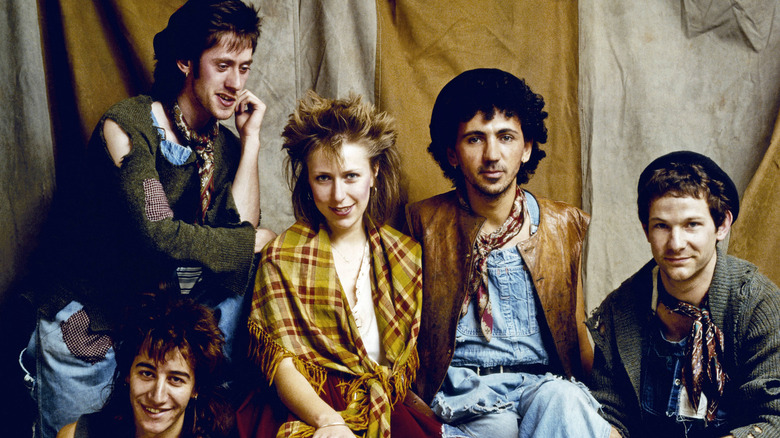
With a poppy, happy hit like "Come on Eileen," Dexys Midnight Runners seemed destined for great things. But perhaps the meteoric, long-lasting success of that classic 1982 track proved to be a bit much. Kevin Rowland, the lead singer, was accused of overly controlling behavior, to the point where the band briefly crumbled and had to be reformed with some new members even before "Come on Eileen" hit the radio. Then, its follow-up album and lead single proved controversial.
Released in 1985, "Don't Stand Me Down" was a product of Rowland's contrary process, which initially included his refusal to release a lead single. When he finally capitulated, the single was "This Is What She's Like," a 12-minute monster. The company cut it down to a radio edit, but the lengthy initial track and stylistic changes for the band (including a move to preppy suits) sank any chances of success. Dexys Midnight Runners failed to make a commercial impact, and the band folded, with Rowland experiencing substance use issues in the aftermath.
But "This Is What She's Like" has experienced a reevaluation. Some critics have reconsidered the lyrics and energetic tune, sometimes calling it the band's best work. In the most recent iteration of the band (reformed in the 2000s), trombonist "Big" Jim Paterson even told The Guardian that Dexys Midnight Runners plays it in concert for a leisurely 22 minutes. Yet, though a version of the band lingers and a healthier Rowland continues to perform, there's no denying "This Is What She's Like" very nearly ended the band.
If you or anyone you know needs help with addiction issues, help is available. Visit the Substance Abuse and Mental Health Services Administration website or contact SAMHSA's National Helpline at 1-800-662-HELP (4357).