

5 Songs From 1967 That Define Rock History
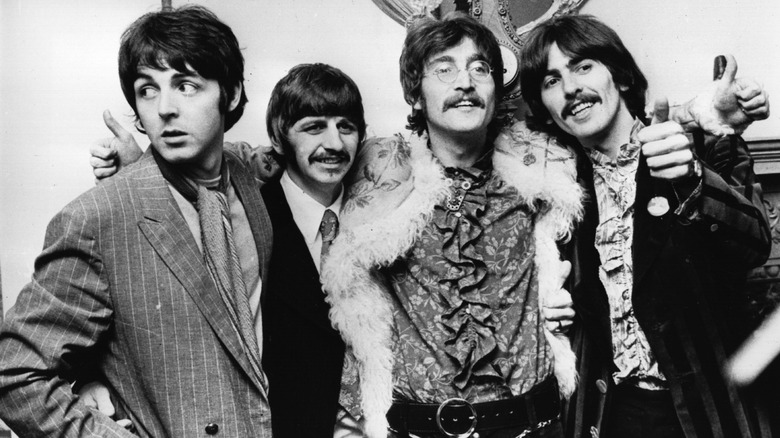
The songs from 1967 that define rock history best are the ones that reflect the era that spawned them and also shaped the music we hear now. The year's biggest breakthroughs and freshest sounds still resonate and influence artists today. Psychedelic music broke big with full-blown albums by major artists like The Beatles and can be heard in modern artists like Gorillaz and Kula Shaker. Progressive rock also became a musical force in 1967, and the genre keeps innovating with recent releases from groups like Motorpsycho and rock veteran Peter Gabriel. Soul and R&B became socially conscious, and that tradition endures in the work of socially conscious rappers like Chris Patrick and neo-soul artists like Erykah Badu. Rock's avant-garde emerged that year, spearheaded by The Velvet Underground. Outsider music still exerts its influence on today's zeitgeist with artists like Kami Kehoe.
Music from the tumultuous year of 1967 still feels vital because it forged today. These nearly 60-year-old rock songs draw on issues, ideas, and dreams that are still current. And like the journey described in Jefferson Airplane's "White Rabbit," the music draws us through a looking glass that connects now with then.
The Velvet Underground — Venus in Furs
Amid an unrelenting drone laid down by John Cale's viola and Lou Reed's guitar, Reed speak-sings dark poetry: "Downy sins of streetlight fancies / Chase the costumes she shall wear." "Venus in Furs," off The Velvet Underground's 1967 debut album, goes against the Summer of Love's lyrical grain. Sex was a fair topic for '60s songwriters, but Reed's seductive stanzas on "Venus in Furs," inspired by the novella of the same name by Ritter von Leopold Sacher-Masoch, broke taboos with the tale of man enslaved by his lover.
Eschewing psychedelia, blues rock, and politics, the tune also broke with the musical zeitgeist. Drawing on his work with avant-garde composer La Monte Young's Theatre of Eternal Music, Velvets co-founder Cale devised the hypnotic viola drone that undergirds the unsettling song like a swarm of angry hornets. Reed's guitar contributes to the drone with an alternate "ostrich" tuning he invented in 1965, where all the strings are tuned to D. That detuned sonorous sound presages grunge, glam, goth, post-punk, kraut, and noise rock.
One of the untold truths of The Velvet Underground is that the band's debut album flopped commercially, selling only 30,000 copies in five years. But songs on this breakthrough disc, like "Venus in Furs," proved surprisingly influential. "Everyone who bought one of those 30,000 copies started a band!" Brian Eno told Musician (via More Dark than Shark). With "Venus in Furs," we hear the invention of underground rock, the ultimate outsiders' music.
The Moody Blues — Nights in White Satin
Fluttering flute and sweetly sweeping strings segue into mid-tempo strummed guitar as Justin Hayward croons, "Nights in white satin, never reaching the end / Letters I've written, never meaning to send." With that wistful opening, The Moody Blues kickstarted progressive rock. Orchestral and grandiose, "Nights in White Satin" had humble beginnings. "I sat on the side of the bed and just wrote the two verses," Hayward told Guitar Player. "I was at the end of one big love affair and the beginning of another."
"Nights in White Satin" was slated for the band's 1967 album "Days of Future Past," when composer Peter Knight changed the course of the LP. "It was his idea to change it around to a concept album about a day and night," Hayward told Uncut. Thus, The Moody Blues was among the first to achieve two prog rock staples— a concept album with orchestral contributions.
"Days of Future Past" embodies the best and worst elements of prog. On the minus side, the album contains pretentious poetry spoken by Pinder: "Cold-hearted orb that rules the night," which points to Spinal Tap's "Stonehenge." On the other hand, "Nights" boasts a soaring sound that enthralls stereo enthusiasts — it was designed to do so by the band's record company — and Hayward's lyrics convey a theme both universal and personal. The Moody Blues subsequently recorded at least one of the 1960s' most overrated songs, but "Nights in White Satin" isn't one of them.
Aretha Franklin — Respect
"R-E-S-P-E-C-T, find out what it means to me / R-E-S-P-E-C-T, take care of T-C-B." With this call-out toward the end of "Respect," Aretha Franklin literally spells out what women want and deserve. On the surface, it's a syncopated R&B shout-out, but a closer look reveals that "Respect" is a multi-layered empowerment anthem, seen as a civil rights clarion call and a feminist manifesto. Franklin's true life story is often heartbreaking, but "Respect" was a triumph, shooting to the top of Billboard's Hot 100.
The tune is so identified with Franklin that it's surprising she didn't write it and wasn't the first to record it — Otis Redding wrote and recorded the song in 1965. It reached No. 35 on the U.S. charts, and Redding performed the song at the Monterey Pop Festival in 1967. Franklin flipped the gender of the tune's protagonist and added a jolt of sexual/political equality with the spelled-out "R-E-S-P-E-C-T" bridge, which Redding's version lacks.
Soon after the song was released in 1967, Franklin's hometown Detroit was engulfed in race riots, and the tune became an emblem of hope and defiance as the country seemed riven apart. Since then, "Respect" continues to influence rock songs advocating for a range of rights, including Bob Marley & The Wailers' "Get Up, Stand Up," Helen Reddy's "I Am Woman," and The Clash's "Know Your Rights." In 2026, as many women and people of color see their hard-won rights ripped away, Franklin's signature song confirms that they warrant, and will win back, respect.
The Beatles — A Day in the Life
Atop strummed guitar and building piano chords, John Lennon laments, "I read the news today, oh, boy." The provocative "A Day in the Life" places a capstone on The Beatles' psychedelic manifesto "Sgt. Pepper's Lonely Hearts Club Band," while avoiding many of the genre's tropes. Backward guitars and exotic sitars appear elsewhere on the album, but not here. Though Lennon's lyrics, delivered with unsettling detachment, are often called surreal, they're actually hyper-specific and prophetic. Lennon could be describing the helplessness we feel while doomscrolling on our phones.
There are No. 1 Beatles songs that are forgotten today, but "A Day in the Life," not released as a single B-side until 1978 and then reaching Billboard's No. 71, endures. "Pepper's," and the song that closes it, unleashed a wave of psychedelic rock in 1967. Like the thick, explosive piano chord that closes the song, the genre persists, with the 1980s Paisley Underground resurgence all the way to modern echoes in 2026.
"A Day in the Life" is influential, covered by artists as diverse as Chris Cornell and The Fall, and Rolling Stone anointed it The Beatles' greatest song in 2011. Even the tune's drug references are arguably not dated. "Paul [McCartney]'s contribution was the beautiful little lick in the song, 'I'd love to turn you on,'" Lennon noted in "All We Are Saying." Debatably, McCartney's lyric also depicts Lennon reaching out to another human — the one thread worth hanging onto amid an overwhelming, demoralizing data dump.
Jefferson Airplane — White Rabbit
Like The Beatles' "A Day in the Life," Jefferson Airplane's "White Rabbit" eschews several stereotypical psych rock signifiers — improvised jams, fuzz guitars, and wah-wah pedals — but is no less hypnotic. Jack Casady's nimble bass, Spencer Dryden's martial drums, and Jorma Kaukonen's Spanish-style electric guitar lay down a building bolero groove, making space for the song's main instrument: Grace Slick's preternatural voice.
"One pill makes you larger / And one pill makes you small / And the ones that mother gives you / Don't do anything at all," Slick sings, referencing Lewis Carroll's "Alice's Adventures in Wonderland" and "Through the Looking-Glass." Although the song's drug references slipped past radio programmers, allowing it to reach No. 8 on Billboard, listeners arguably caught the buzz. Ultimate Classic Rock calls it "one of the druggiest cuts ever recorded," but Slick said the song has additional meanings, telling The Guardian that the lyric "feed your head" referred to "feeding your head by paying attention." That message, delivered by one of rock's premiere women vocalists, arguably carries a feminist missive that an open mind will increase opportunities and understanding.
With a timeless sound and message, "White Rabbit" remains relevant. Its central image of two pills entered pop culture in the blue pill-red pill choice offered in "The Matrix," which has been appropriated by misogynist movements, seemingly missing the open-minded part of the pill analogy. As Slick told The Wall Street Journal, "The White Rabbit is your curiosity."