

Rock Bands That Booted Their Managers Once They Became Mega-Successful
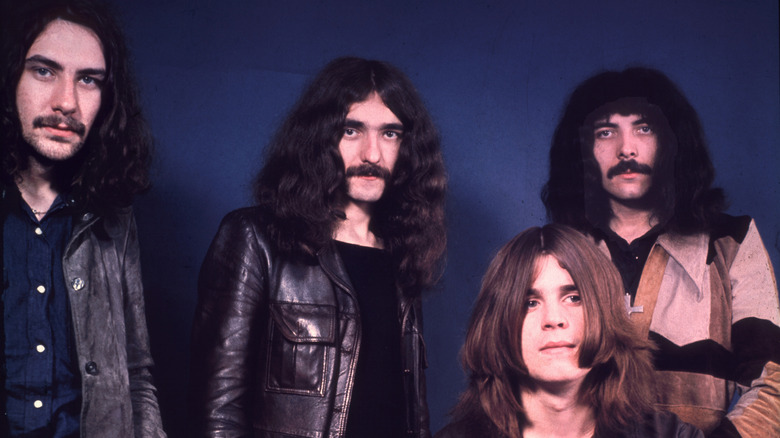
If it takes chemistry for a rock band to work — the kind that builds between musicians or develops with audiences — then the band manager is the catalyst. Though not part of the chemical reaction, so to speak, they're the critical ingredient that makes everything bubble over. It was Brian Epstein, for example, who plucked four talented lads from small clubs in Liverpool and helped foment Beatlemania and pack Shea Stadium. The Beatles "had what I thought was a sort of presence and ... star-quality," he reflected in a 1964 radio interview (via BBC). "Whatever that is, they had it, or I sensed that they had it." Managers are often the first to see it and believe in it, but unfortunately, sometimes they get cut loose — even after helping bands rise to stardom.
The business end of rock 'n' roll can be cutthroat, getting especially dirty when a band breaks big. Things change when massive sums of money are involved, when record and publishing deals are at stake, and of course, as band members grow and evolve. That's why, time and again, band managers have been canned once their musical acts climbed the summit. Promised more money and success by competitors — and feeling he couldn't handle the pressure — Black Sabbath sent Jim Simpson packing. For The Beach Boys, splitting with Brian, Carl, and Dennis Wilson's father and band manager meant becoming free of abuse and exploitation. The road a band takes to become successful is often paved with greed, bitter feelings, and broken relationships. Whether the reasons were personal or financial, these rock bands cut their managers loose just as their careers hit the stratosphere.
Mötley Crüe

Managing Mötley Crüe during the '80s glam metal band's rise and peak must've caused its share of headaches. Unlike others on this list, Doc McGhee — whose roster included Bon Jovi, Scorpions, and Kiss — didn't really like the group's music, despite seeing massive potential. "I couldn't even understand what they were playing, they were so bad," he recalled on the "Talk Is Jericho" podcast, adding, "But I saw 3,000 kids going apes — and buying every piece of merchandise." Early on, the band's rowdy, hard-partying reputation preceded them, and labels steered clear. A record deal came only after the self-funded and self-released debut album "Too Fast for Love."
Independent success was one thing, but with McGhee in the fold, Mötley Crüe took over. The band's second album, 1983's "Shout at the Devil," hit No. 17 on the Billboard 200 charts, setting up a furious run that peaked with the 1989 album "Dr. Feelgood," hitting No. 1 that same year. Most of this period — with the band at the height of its decadence and destruction — was with McGhee at the helm. But ultimately, outsized egos and illiberal amounts of vodka caused the arrangement to explode.
McGhee organized and produced the Moscow Music Peace Festival — a two-day anti-drug concert in the USSR in August 1989 — booking major acts like Bon Jovi and Ozzy Osbourne, alongside Mötley Crüe. Incensed that Bon Jovi was getting better treatment, Tommy Lee confronted the manager after the set, threw him to the ground, and Nikki Sixx fired him. The end befitted the band: Chaotic, a little dangerous, and the cause of brutal next-day headaches.
Black Sabbath
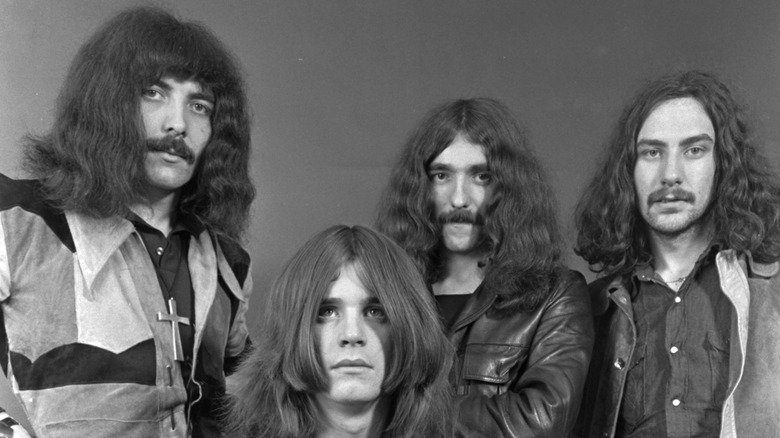
It was with Jim Simpson as manager that Birmingham, England-based band Earth took the moniker Black Sabbath and staked its claim as the heaviest and most thunderous in rock. With the release of the band's second album "Paranoid" in 1970, Ozzy Osbourne's antics and Tony Iommi's guitar wizardry became legendary and profitable. In the U.S., the LP peaked at No. 12 on the Billboard 200, and it hit No. 1 in the U.K. There's no denying the band manager's role in those achievements and his place in building the heavy metal pioneer's massive legacy.
A jazz musician and founder of the independent Big Bear Records label, Simpson signed the young band in 1968, paid for recording sessions, took over management duties, and secured a record deal. The last part wasn't easy — no less than 14 labels passed on the band's eponymous debut album before it landed them a deal with Phonogram's Vertigo Records label. Just as Black Sabbath was hitting its stride, he lost the band to, as he told BirminghamWorld, "London-based managers with posh cars and smart suits." Reportedly, the band members felt the job was too big for Simpson and that he was no longer cut out for it.
While the next manager Patrick Meehan broke Black Sabbath further into the mainstream, he also took the lion's share of the money. Ultimately, it took litigation for the band members to officially get rid of him after they severed their contract with him in 1974. As Simpson said in a press release (via Loudwire), "It was when they broke their contract" by firing Meehan "that it all went wrong for them."
The Beach Boys
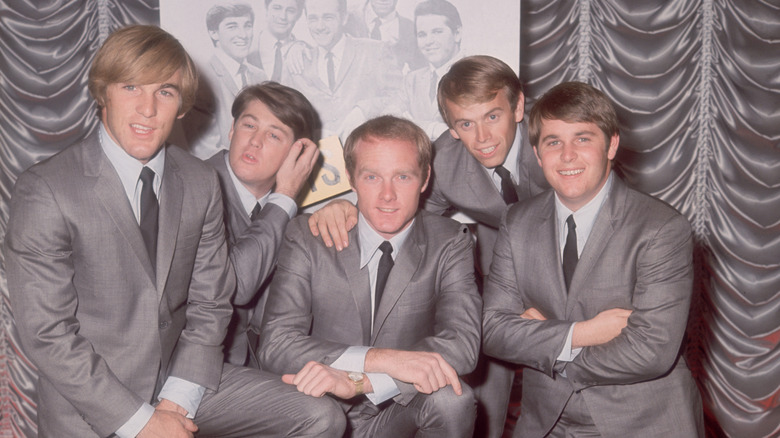
When family ties blur with band management and music business, the results can get truly radioactive. The tragic real-life story of the band will always be marked by its first manager: Murry Wilson, father of Brian, Dennis, and Carl Wilson. A lesser-known songwriter with a few industry contacts, he secured his sons (joined by nephew Mike Love and their friend Al Jardine) a record deal with Capitol Records in 1962. The country caught the wave, with 1963's "Surfin' U.S.A." landing The Beach Boys the first of 15 Top 10 singles on the Billboard Hot 100. But the sunny early hits and meteoric rise of the band are clouded with stories of Murry's abuse.
It took decades for The Beach Boys to open up about the extent of his cruelty. In his 1991 memoir "Wouldn't It Be Nice: My Own Story," Brian, who often got the worst of it, details beatings, emotional abuse, and chillingly elaborate psychological torture. Murry was finally pushed out during the recording of "Help Me, Rhonda" in 1965, after he derailed the session by drunkenly berating Brian and the other band members. After his exit, Murry fought back however he could: Releasing an album to compete with "Pet Sounds" and selling off the band's back catalog without their knowledge in 1969.
After the split and as the band was hitting a commercial peak, Brian's mental health struggles continued, triggering a nervous breakdown. "I was coming apart," he told Rolling Stone. "The rubber band had stretched as far as it would go."
Guns N' Roses
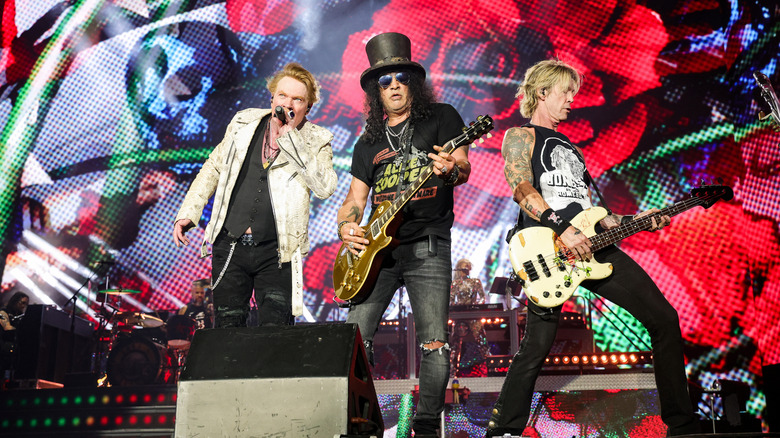
If you consider Slash the greatest guitarist of all time or will always be moved by Axl Rose's howls on "Sweet Child o' Mine," you can thank Alan Niven. It wasn't easy — band management in the hair metal era seems particularly loaded with occupational hazards. But Niven hustled the members of Guns 'N' Roses from a Sunset Strip flophouse with a broken toilet to the penthouses of rock royalty. He got the job, he told the LA Times, "[b]ecause nobody else would do it," adding, "I was not bottom of the barrel, darling — I was underneath the barrel."
Managing from 1986 to 1991, Niven oversaw the explosive rise of the hard rock band, including its debut album, "Appetite for Destruction," which hit No. 1 on the Billboard 200 in 1988. But things got rocky when the band was recording "Use Your Illusion I" and "Use Your Illusion II" in late 1990. According to Rolling Stone, Rose threatened to stop working on the albums unless Niven was fired. It was a gut punch to the band manager, who recalled the experience on the "Appetite for Distortion" podcast. "That had an impact on me that I didn't anticipate because for me, what I was doing was not a job, it was a way of life," he explained.
Whether the firing was good for the band is debatable. Following Niven's departure, "Use Your Illusion I" and "II" — both released September 17, 1991 — represented a final high-water mark for Guns 'N' Roses. But by 1992, bands like Nirvana had taken the spotlight and never gave it back.
The Rolling Stones
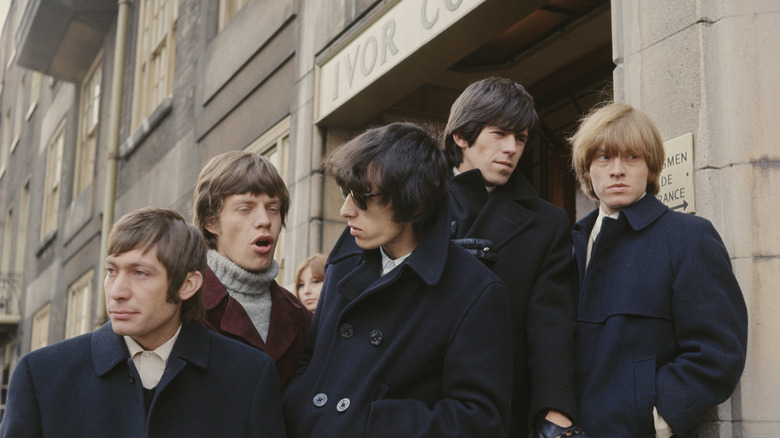
Andrew Loog Oldham was 19 years old when he took the reins of The Rolling Stones' career in 1963. That made him younger than every member of the group. Breaking into the music business as a publicist for The Beatles, he signed the band after getting a tip to check them out at a small club. He quickly gained the band's confidence and got them to sign him on as manager. "I was probably 48 hours ahead of the rest of the business in getting there," he recalled (via Far Out). "That's the way God planned it."
Loog Oldham scored the band its first record deal with the Decca label and pushed the Stones' self-titled 1964 debut to the top of the U.K. charts and No. 11 on the Billboard 200 (released state-side as "England's Newest Hit Makers: The Rolling Stones"). Taking cues from his former boss, Beatles manager Brian Epstein, he thought about image: Getting the band to wear matching suits and, when every act started doing it, dispensing with them. In addition to producing the early albums, Loog Oldham gets credit for the band's image as the streetwise, tougher foil to The Beatles.
Eventually, Loog Oldham brought in Allen Klein to co-manage the group, and by 1967 — during the recording of "Their Satanic Majesties Request" — he split. Though he wasn't pushed out by the band members, the drinking, drugs, and partying that came with rock 'n' roll management took a toll and spelled his exit. Still, he's a huge part of the iconic band's foundation. "I was inspired by the Stones," he told MusicRadar. "I served that inspiration."
If you or anyone you know needs help with addiction issues, help is available. Visit the Substance Abuse and Mental Health Services Administration website or contact SAMHSA's National Helpline at 1-800-662-HELP (4357).
If you or someone you know is dealing with domestic abuse, you can call the National Domestic Violence Hotline at 1−800−799−7233. You can also find more information, resources, and support at their website.