

5 Rock Songs From 1963 That Sound Even Cooler Today
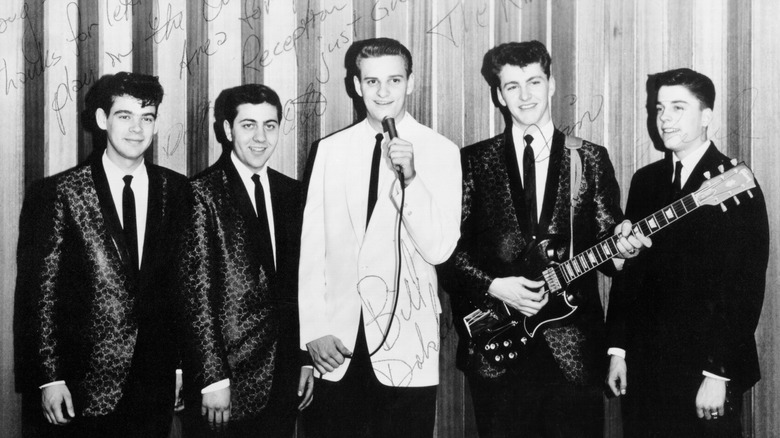
For those who were there at the time, the sound of rock in 1963 is especially easy to evoke. Before the dawn of Beatlemania but after the lull in rock music that occurred at the very start of the decade, 1963 saw an explosion in surf rock outfits, with the Beach Boys coming to the fore, as well as the continued influence of R&B on many of the biggest rock tracks of the day.
Much of the music created that year was fun, exciting, and focused on having a good time. And thankfully for both those reaching back for the sake of nostalgia as well as those exploring the music of 1963 for the first time, much of what was recorded that year still has the power to enthrall more than six decades after it was first put on wax. Here are five great tracks that give an insight into the rock landscape of 1963 and offer the kind of performances that can still make casual listeners stop and take notice.
Wipe Out – The Surfaris
The early 1960s was the dawn of surf rock, when several bands set the template that would bring the Beach Boys to prominence during the middle of the decade. But before Brian Wilson et al. populated the genre with sweet harmonies, surf rock was known for its stomping instrumentals. And "Wipe Out," the classic single by Californian outfit the Surfaris, is one of the songs that capture what surf rock was all about.
Based on a 12-bar blues structure, the track employs a driving drum beat — performed by 15-year-old Ron Wilson — and intricate, wave-like guitar parts to create the ultimate soundtrack to wipeouts and crashing waves. The track's high points are undoubtedly when Wilson's rolling drums become the solo star, accompanied only by occasional stabs of guitar and bass that build the tension toward the return of the lead guitar part.
The track made the Surfaris a sought-after act, but like many American surf outfits, they were jettisoned with the arrival of the British Invasion. However, the song has enjoyed a huge afterlife, being regularly sampled for a range of media and widely covered, though the original still reigns supreme as the pinnacle of instrumental surf rock alongside Dick Dale's "Misirlou" and the Chantays' "Pipeline."
Money (That's What I Want) – The Beatles
The Beatles' career didn't begin when the band arrived on American shores in 1964. Before that, the Fab Four had worked in the U.K. and Germany as a respected live act and had released several singles in both markets. "Money (That's What I Want)" was released in the U.K. in 1963, helping to cement the Beatles' reputation as a rock phenomenon.
The track is a cover of a 1959 hit by Tamla Motown artist Barrett Strong, and gives an insight into the raw energy that the band's early live shows must have had. Like other classic Beatles covers such as "Twist & Shout," "Money" features John Lennon on lead vocals, and like on that better-known track he is in full-voiced rock and roller mode, while Paul McCartney and George Harrison offer bright and tight backing. The song opens with a catchy piano riff played by influential Beatles producer and collaborator George Martin. Meanwhile, Ringo Starr's shuffling drumbeat shows why he replaced Pete Best in the band in 1962. "Money" was dropped from live sets as early as November 1964 when the Beatles' own material began to take precedence, but thanks to the Fab Four's popularizing of the song, it has been performed by countless artists ever since, with versions by Bruno Mars, the Doors, and Bryan Adams, to name a few.
Memphis – Lonnie Mack
It may not be remembered among the big rock instrumentals of the early 1960s, but Indiana-born guitar virtuoso Lonnie Mack's "Memphis," an instrumental version of Chuck Berry's 1959 song "Memphis, Tennessee," is utterly historic. The track, which reached No. 5 on the Billboard Hot 100 in July 1963, features intricate lead guitar work that outdoes other heroes of the same era and leads the way for the next generation of guitarists to follow in his footsteps.
A pioneering blues-rock recording, the track sees Mack achieve an exceptional guitar tone with the use of a Gibson Flying V and Magnatone 460 amplifier, which allows him to wham, bend, and achieve tremolo effects that had rarely been heard before. While some early rock instrumentals seem quaint with the passing of years, "Memphis" is still astounding for Mack's virtuosity and the unexpected twists and turns his playing takes throughout the track.
California Sun – The Rivieras
Some songs from 1963 sound cool today precisely because they do sound dated. The Rivieras' cover of Joe Jones' "California Sun" is one of those songs, with primitive "they don't make music like this anymore" performance style and production values that lend the recording a pleasing warmth and rawness today.
The Rivieras transform the R&B material into a surf-friendly rocker. The opening drums closely resemble those of the Trashmen's "Surfin' Bird," a familiar surf-rock track that was also released in 1963. But whereas the Trashmen's track leans toward manic, "California Sun" manages to balance its upbeat rhythm and garage aesthetics — just listen to that frenetic organ — with a pop-centric chord progression and a melodious performance from vocalist Marty Fortson.
There may be more popular surf-rock artifacts, but "California Sun" has the widest appeal in its surf-R&B-garage crossover status. It has also become a punk staple, covered by the Ramones, the Dictators, and more.
Boss – The Rumblers
They weren't called the Rumblers for nothing. As the 1963 track "Boss" shows, the teenage band from Southern California had a knack for stomping instrumentals that spanned the genres of R&B and surf rock to deliver something cool and unique.
On "Boss," twangy guitars and a thumping bassline compete with wild sax passages, building to a crescendo that couldn't fail to fill a dance floor even today. Some of the more famous instrumentals of the era pushed the tempo to extremes to excite their listeners, but "Boss" shows that a steady, medium pace is still enough to get your hips shaking.
It prefigures later garage and surf-rock inspired groups like the Cramps, establishing the playful but threatening dynamics that would give such bands their edge. The Rumblers was only a short-lived band, as its guitarist Johnny Kirkland was drafted into the military two years after the release of "Boss," effectively ending the band's career, but the track remains one of the most enjoyable instrumentals of the early 1960s.