

4 Flop Musicians From The '70s That Have Earned Respect From Younger Generations
The popular music landscape of the '70s, where artists like Led Zeppelin, Stevie Wonder, and more rose to ridiculous fame, didn't mean success for all artists and all kinds of music. With that said, younger generations have uncovered some undoubtedly talented singers and songwriters that are reaching new successes in the 2020s. In this list, we'll look back at some talented musicians who worked in an industry that didn't seem to align with their artistic vision — luck may have just not been on their side.
The following artists, despite the quality of their music that would later — and sometimes even at the time of their releases — be acknowledged, weren't able to find any notable commercial success. These commercial struggles led many of these artists to stop making music altogether before their works would reemerge much later. Now, some of their songs have blown up on social media by Gen Z fans, and some rose to stardom in other countries that the artist had no ties to. Regardless, all have turned a mostly, if not wholly, flop career into a memorable one. These are four flop artists from the height of the '70s music and styles who have turned it around thanks to the digging of younger fans.
Labi Siffre
One of the sweetest and most tender voices in folk and singer-songwriter music wasn't greeted with much success in his early career, but his music has greatly reemerged in recent years. Labi Siffre, who sings in a trademark lofty, sentimental voice, released a fair few albums in the 1970s, with six full-length records from 1970 to 1975. He took a sizable break after, with his next album releasing in 1988. The British singer, songwriter, and poet had some reasonable chart success, with six tunes reaching the main U.K. singles chart, especially early in his career. This success, though, was almost exclusively in the U.K., and Siffre never found much traction in the U.S.
Since then, Siffre's music has found standing with younger audiences. In the years soon after his prime, his songs "My Song" and "I Got The..." were sampled in popular hip-hop songs from Eminem and Kanye West, putting his signature voice into a mostly new audience. His tracks have also been popularly covered (one might even be better than the original), and some tunes, like his now top hit "Bless the Telephone," have had success on social platforms like TikTok, resulting in hundreds of millions of streams. Siffre's music has also been featured prominently in recent films like "The Holdovers" and "Sentimental Value," with each receiving significant acclaim.
Nick Drake
In the years since his untimely death, Nick Drake has become one of the premier and most influential voices in '70s folk and folk rock music. His mix of dreamlike soundscapes and eerie guitar music, paired with his posh, saintly voice, has enchanted new fans and inspired other singers and songwriters. Nick Drake's career spanned three albums from 1969 to 1972, with "Bryter Layter" releasing in '71 and "Pink Moon" in '72. None of his songs or albums ever charted during his life, with only some light U.K. chart placements in 2004.
The beginning of Drake's reemergence may have been in 2000 following the placement of one of his songs, "Pink Moon," in a Volkswagen ad. As time has passed, this success has compounded, and Drake has become a remembered staple of the late '60s and early '70s era of folk and folk rock music. His most known songs, "Northern Sky" and the aforementioned "Pink Moon," have been streamed a combined 330 million times on Spotify, and his track "Place to Be" has become a modern folk standard, including being covered by popular Gen Z musicians. The style of his songs lends itself less to social media success and viral placements, but his story, combined with the definitive quality of his music, has turned Drake into an artist with plenty of respect from modern audiences.
Linda Perhacs
Linda Perhacs, still a relative unknown in comparison to some of these now-mainstream artists, has enjoyed one of the more dramatic reemergences, with almost no success at all to speak of during the 1970s. She released her first and only (until much, much later) album, "Parallelograms," in 1970. The record blends dreamlike vocals and arrangements through a medium best described as psychedelic folk and has a unique style that, in retrospect, seems to fit with much of the similar popular music of the time.
Though there was certain quality in the original recordings, the label made edits that Perhacs didn't agree with, and the album flopped. She returned to her career as a dental hygienist, and that seemed to be that. But when the album was reissued a few years later by the label Wild Places, a new audience seemed to be found. Her songs "Hey, Who Really Cares" and "Chimacum Rain," among the highlights of the record, have found success on streaming platforms, as well as placements on popular folk playlists. This success led Perhacs to continue her recording career in the 2010s, where she released two albums.
Rodríguez
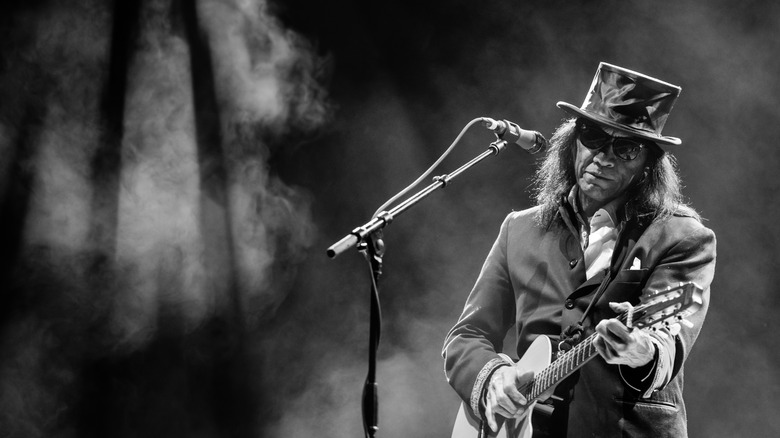
Sixto Rodriguez, a Detroit singer-songwriter who was most known professionally by his last name, released some tunes in the '60s and two albums in 1970 and '71, "Cold Fact" and "Coming from Reality," respectively. The albums and Rodriguez's style combine elements of folk and rock, as well as funk and blues, to create memorable and unique songs, songs that are often compared to Dylan's for similarities in lyrical imagery and content. Because of issues with the label (which would soon after go out of business) and perhaps some bad luck, neither album achieved enough success for Rodriguez to continue his career, and he returned to a normal life.
Strangely, his music was uncovered in two countries, Australia and South Africa, where he became a star, enough to tour the nations in the '80s and '90s. This specific success, and his unique story, later turned into the 2012 film "Searching for Sugar Man," which won an Academy Award for Best Documentary. With this now-mainstream recognition, Rodriguez continued performing through 2020 before his death in 2023. His songs, headlined by "Crucify Your Mind" and "Sugar Man," have accumulated hundreds of millions of streams since, and he's remembered as an essential folk musician with his unique tackles on both love songs and protest music.