

5 Classic Rock Songs From 1969 That Prove It Was The Decade's Best Summer For Music
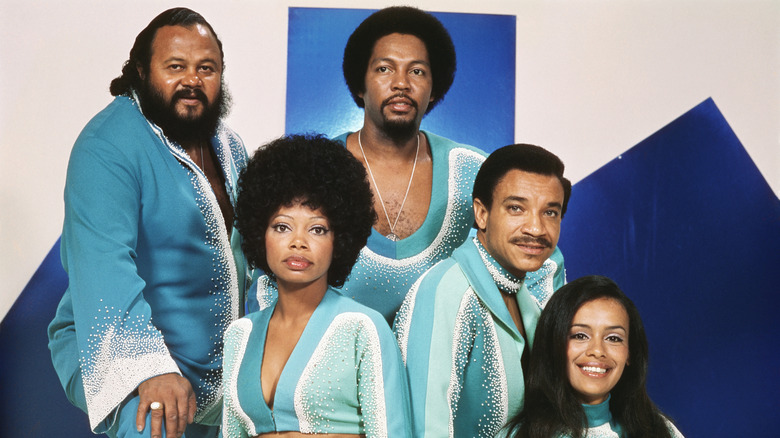
We submit that the best decade for summer music is the 1960s, and that the decade's best year for summer music is its last. 1969 brought a bumper crop of summer rock classics that has rarely been equaled, ranging from the 5th Dimension's reimagining of "Aquarius/Let the Sunshine In," which brought rock to Broadway, and Broadway to the Billboard Hot 100, to George Harrison's luminous "Here Comes the Sun," which reached out to listeners at the end of a tumultuous decade with the warmth of a proffered hand.
1969 was the summer of "Something in the Air" and the landing on the moon; the Woodstock Music Festival and "Hot Fun in the Summertime"; and the Stonewall uprising and "I'm Free." All these tunes, which drew from rock, pop, R&B, and soul, are summertime classics that endure to this day. You can easily imagine them blasting from a beach radio in 2026 as well as 1969.
In 1969, if just for one summer, the decade's discontent thawed and melted into a celebration of freedom, the good life, and potential for positive change. All of these qualities are embodied in these five songs — radiant rock classics from the best season of the best year of the best decade for summer music.
Sly and the Family Stone - Hot Fun in the Summertime
Percussive piano dances like sunlight through the trees, laid-back harmonies swarm like a warm, caressing breeze, and swaying horns honk like distant traffic barely heard from the beach. In August 1969, you didn't need to hear the song's title to know what Sly and the Family Stone were celebrating in "Hot Fun in the Summertime." With the surrealistic exception of "I cloud nine when I want to," composer Sly Stone's lyrics embrace specific images — a county fairground in the sunshine, the first day out of school, anticipation of a girlfriend coming home — that entwine the personal with the universal to economically capture the season's promise of unhurried freedom.
The band's record company initially opposed the summery single's late release in August, so Stone's promotions man, Steve Topley, struck acetates and gave them to Top 40 radio stations. "It was Top 40 radio that broke Sly, not ... R&B," Topley says in "Sly and the Family Stone: An Oral History." "Hot Fun in the Summertime" peaked at No. 2 in the U.S.
Stone's experiences with addiction would subsequently derail his life and career, but in 1969 that future was barely a storm cloud on the horizon. With its bouncy rhythms and evocation of deliciously lazy days ahead, "Hot Fun in the Summertime" transcends genre. It's not just the 1960s' preeminent love letter to summer; it's a timeless paean to being in the moment, an eternal season in the sun.
The 5th Dimension - Aquarius/Let the Sunshine In
In the summer of 1969, when the 5th Dimension dropped its chart-topping collision of two songs from the hit musical "Hair," "What's your sign?" was a good icebreaker, the counterculture was in full swing, and interest in pop astrology was spiking.
Some of that astral outlook was due to "Hair," a psychedelic rock musical that opened on Broadway in 1968 and ran for over four years. On a trip to New York, 5th Dimension member Billy Davis Jr. was blown away by "Hair" and wanted to record "Aquarius." The group's producer, Bones Howe, didn't. "I said it's a half song," Howe told "The Billboard Book of Number One Hits." The problem was solved when Howe took a second "Hair" tune, "Let the Sunshine In," and "put them together like two trains."
Released in March, the stitched-together song dominated the charts through June. With an orchestral intro inspired by the Frank Sinatra showtune "Lost in the Stars" and a message touting harmony and understanding, "Aquarius/Let the Sunshine In" boasted broad, generation-spanning appeal. A summation of the decade's flower-power movement derived from a Broadway showstopper, it's the 1960s' most iconic summer singalong — a celebration of community coming together to let the sunshine in.
Thunderclap Newman - Something in the Air
Over Jimmy McCulloch's jangling guitar, drummer John "Speedy" Keen's velvety falsetto delivers a message that is assured and direct: "Call out the instigators / Because there's something in the air." Released two years after 1967's Summer of Love and one year after the clarion calls of the Rolling Stones' "Street Fighting Man" and the Beatles' "Revolution," Thunderclap Newman's "Something in the Air" must have seemed late to the '60s zeitgeist party. Instead, it combines two genres of summery '60s rock – psychedelic pop and protest manifesto — in perfect harmony.
The unlikely British No. 1 hit was recorded by a group that didn't exist. Looking for a project outside The Who, Pete Townshend brought together jazz pianist Andy "Thunderclap" Newman, teenage guitarist McCulloch and Townshend's chauffeur Keen, who also wrote The Who's 1967 song "Armenia City in the Sky." Townsend played bass and produced "Something in the Air" at his home studio. "It's one of the best pieces of work that I've ever been involved in," Townshend told Variety. "It's poetic, it's mysterious, it's joyful."
With sweeping, Townshend-arranged strings, Newman's barrelhouse piano, and heroic horns, "Something in the Air" could pass for a "Penny Lane"-era flower-power track. Lyrically, though, it's more committed than the Beatles' and Stones' fence-setting stance toward social change. With lyrics about handing out ammunition, Keen is unambiguously calling for revolution. "Something in the Air" is hopeful and almost fragile, but it's also a unifying anthem, urging people to joyously throw off oppression.
The Who - I'm Free
Propelled by Pete Townshend's bright and bouncy six-chord riff, The Who's "I'm Free" is a guitar-driven tune that bops as much as it rocks. The music's lightness carries over into the lyrics, which dramatize the liberating moment on its parent album "Tommy," where the titular protagonist breaks free of a prison imposed by his lack of hearing, sight, and speech. Townshend maintains his lyrics express spiritual freedom from materialism: "If I told you what it takes / To reach the highest high / You'd laugh and say nothing's that simple."
Townshend had a similar revelation about his song's irresistible riff. In the album's liner notes, via Internet Archive's WayBack Machine, Townshend says he crafted the polka-meets-pogo riff by studying the Rolling Stones' "Street Fighting Man." "When I finally discovered how it went, I thought, 'Well blimey, it can't be that simple," Townshend remembers. Released in July 1969, "I'm Free" became a summer hit, reaching reached No. 37 on Billboard's Hot 100.
Separated from the cosmic, magical realism narrative of "Tommy," "I'm Free" works as an emancipation anthem. Its jubilant words can apply to any situation where you've thrown off the dead weight of something that no longer serves you. For kids in 1969, it evoked the sensory high and endless weeks of freedom that summer brings. "I'm Free" conjures memories of being 9 years old, running in an open field with arms outstretched, ready to take off and fly.
The Beatles - Here Comes the Sun
"Here Comes the Sun" serves as a bookend to the tumultuous '60s. George Harrison began composing the tune during the decade's final summer, and it appears on "Abbey Road," the final album the Beatles recorded. Despite the song's insistent warmth and positivity, the real meaning behind "Here Comes the Sun" reveals a tale of burnout and renewal.
A combination of a bad health, legal woes, and bad blood with the Beatles made the early months of 1969 Harrison's winter of discontent. The cold, cruel season seemed endless, so Harrison visited his friend Eric Clapton at home in Surrey, England. "I was walking around the garden with one of Eric's acoustic guitars and wrote 'Here Comes the Sun,'" Harrison wrote in "I, Me, Mine." "I felt very proud that it was my garden that was inspiring it," Clapton said in "George Harrison: Living in the Material World."
Recorded with Paul McCartney and Ringo Starr — John Lennon was sidelined by injuries sustained in a car crash — the song established Harrison's songwriting bona fides with critics. With Harrison's ringing, silvery guitar and fluting Moog synthesizer, the tune boasts a delicate madrigal quality befitting its inception in an English garden. With lyrics about clear skies and melting ice, the shimmery song seems to offer hope for better days ahead. As Harrison gently assures us, "It's alright." "Here Comes the Sun" closes out the 1960s on a high note, proving that 1969 produced the finest summer music.