

5 One-Hit Wonder Love Songs From The '60s That Still Have Us Head Over Heels
The 1960s brought with it a culture of peace and love as well as an explosion of new popular music, and naturally, the two found themselves intertwined again and again. There's no more popular topic in music than love, especially during the decade that made free love its identity. The result was a period bursting with hit love songs, though not everyone is lucky enough to land a hit twice. Some of the best and most enduring sentimental songs of the '60s that boomers loved came from musicians who never matched their songs' success again, but when it comes to timeless explorations of true love, one is all you need.
To celebrate these less-celebrated artists, we've assembled five of the best one-hit wonders of the '60s, and in the spirit of the era, all of them are dedicated to love. By one-hit wonders, we mean bands that released one song that outperformed all their other singles by a mile. Though the bands may have hit the charts on other occasions, none of those other singles came close to their one massive triumph. Here are five of these hit songs, all of them chosen because they voice unique or time-tested takes on love and can still melt your heart, even 60 years later.
Stay — Maurice Williams & the Zodiacs
Volumes of ironically dense text could be written about the charming simplicity of "Stay" by Maurice Williams & the Zodiacs. It's precisely because of that simplicity that the tune is such a relatable and easy-to-digest snapshot of love. At just over a minute and a half, and with not an ounce of analogy to cover up its basic story, "Stay" is like its young subjects: innocent, honest, and with only love on its mind.
The story in "Stay" is that of a lover asking their date to stay out for just one more dance, and with both of their parents' permission, no less. The request and the entire production surrounding it are as pure as the driven snow, and there is no twist in the bridge section or otherwise. Williams, who wrote the song when he was just 15, used so little and yet captured so much. That feeling of wanting a date to last forever, the elation that comes with a first dance or handhold, and the all-consuming infatuation that is a young crush — all of them feel alive in Williams' words and voice.
"Stay" is brief. At the date of this writing, it still holds the record for shortest song to top the Billboard Hot 100. Yet despite its lack of complexity and humble origins, the tune has indeed stayed in the hearts of many. It has been covered time and again, some versions having charted themselves, and also found new life in the late '80s as part of the "Dirty Dancing" soundtrack.
I Will Follow Him — Little Peggy March
Originally written and recorded by Franck Pourcel as an instrumental named "Chariot," "I Will Follow Him" didn't realize its full potential until Little Peggy March's recording. In between the original and March's version, the song was renamed, French lyrics were written, and then finally English lyrics came along, which March turned into her own unique song, "I Will Follow Him."
Typical of many love songs of the day, the lyrics to "I Will Follow Him" are plain and direct: The singer loves a man and would do anything to follow him. That truly is all of it, but the most basic sentiments are often the most universal, and that's the strength of March's version. The song's "I love him, I love him, I love him / And where He goes I'll follow, I'll follow, I'll follow" refrain is more repetitive than most, but again, that is part of the song's charm.
Over the course of the track, the refrain becomes like a mantra, a goal the song's subject is singularly focused on to the expense of all else. This is a feeling that may be relatable to listeners who've felt the same youthful infatuation in years past. Astonishingly, March was only 15 when the song reached No. 1 on the Billboard charts, but her soaring vocals, which suggest a far more experienced singer, make "I Will Follow Him" a heartwarming pop hit.
A Groovy Kind of Love — The Mindbenders
During Wayne Fontana & The Mindbenders' original run, the band had a couple of Top 10 Billboard hits. But after Fontana's 1965 exit (in the middle of a concert, no less), the group became The Mindbenders and returned with "A Groovy Kind of Love," a leisurely jaunt through the more saccharine side of longing. With its unhurried, shuffling pace and chorus-like backing vocals reminiscent of the Mamas & the Papas, the song is cutesy and harmless (which might surprise anyone more familiar with the pained, desolate cover from singer Phil Collins of Genesis).
The song wasn't written by anyone in The Mindbenders. Instead, it came from a pair of young writers named Toni Wine and Carole Bayer Sager. Sager went on to pen hits like the Grammy-winning "That's What Friends Are For," earn an Oscar and two Golden Globes for songwriting, and rack up countless other awards and accolades in her time. "A Groovy Kind of Love" was actually her first hit, and it's interesting to see such a songsmith's beginnings. True, there are more clumsy lines like "When I'm feeling blue, all I have to do / Is take a look at you, then I'm not so blue," but there are also relatively daring (or, if nothing else, dark) lines like "When I'm in your arms, nothing seems to matter / If the world would shatter, I don't care." Though Sager went on to decades of relevancy, The Mindbenders sadly did not.
When a Man Loves a Woman — Percy Sledge
Percy Sledge's "When a Man Loves a Woman" is an iconic love song with some of the most gut-wrenchingly soulful singing in the medium's history. The story behind the song's creation has long been contested: Calvin Lewis and Andrew Wright officially wrote it, but Sledge maintains that he should be credited, as well. In truth, the music and lyrics have always been secondary to Sledge's vocal performance. His pained yowling takes the song's already aching lyrics into the emotional stratosphere, and it's the reason the song is so instantly recognizable and affecting.
After "When a Man Loves a Woman," Sledge never again reached the No. 1 spot with another single, though he did chart a number of times. Either way, anyone with a love song as iconic as "When a Man Loves a Woman" can rest easy, knowing their work still plays soundtrack to swooning to this day. If that weren't enough, "When a Man Loves A Woman" itself took back the No. 1 spot a full 25 years later when covered by another iconic voice, Michael Bolton.
Be My Baby — The Ronettes
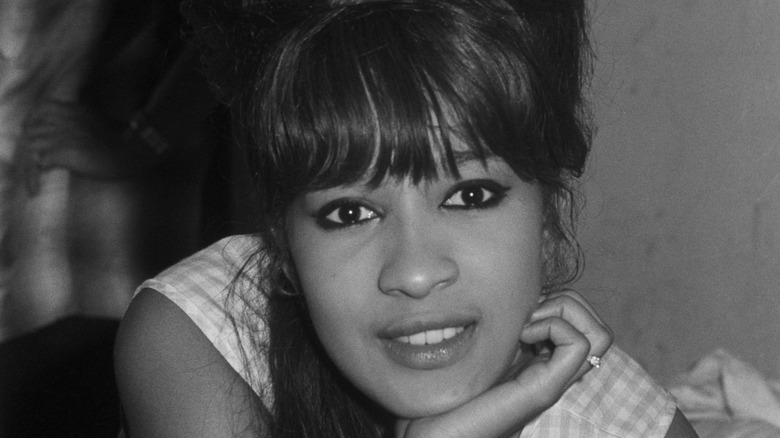
It's been lauded about as much as any pop song and has spent over 60 years in regular rotation on radio and in movies, and with good reason. "Be My Baby" by The Ronettes is widely considered an almost perfect pop song — an uber-influential hit with a production and vocal performance that have inspired generations. Surprisingly, though, the song was The Ronettes' biggest hit by far, with the group's only other entry into the Billboard Top 10 a version of the Christmas standard "Sleigh Ride" (still ubiquitous, but nowhere near as impactful or influential).
The highpoint in "Be My Baby" is lead singer Ronnie Spector's vocals, simultaneously controlled and adept and yet filled with a rawness and bite evocative of young, desperate love. Madonna once described Spector's voice as "sexy, hungry, [and] totally trashy" — a high compliment from the Queen of Pop and an apt description (via Rolling Stone). Despite the song's relatively prosaic lyrics, Spector's delivery elevates them to true art. The borderline cracking of her voice (or microphone, or both) that occurs when she belts "Oh, since the day I saw you / I have been waiting for you" imbues the song with a sense of real passion.
"The recording captures the full spectrum of my emotions: Everything from nervousness to excitement," Spector told The Guardian in 2015, and those nerves are relatable. Just as Spector's knees trembled as she sang, so do the hearts of listeners to this day, still head over heels for the emotive perfection of "Be My Baby."