

5 Rock Songs From 1958 That Sound Even Cooler Today
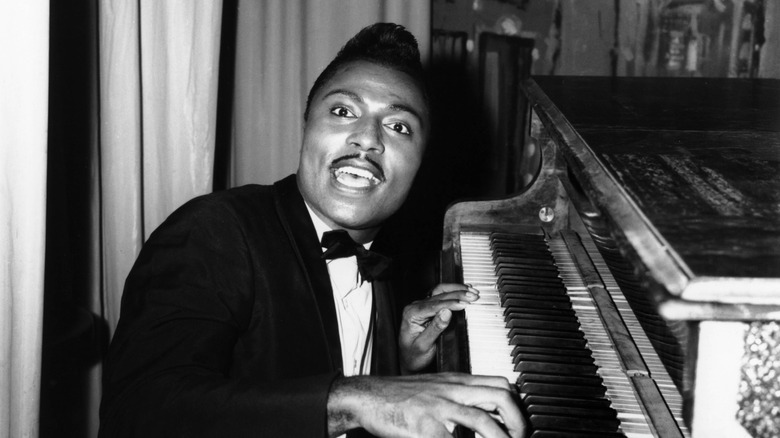
By 1958, rock 'n' roll was beginning to firmly establish itself as a dominant force on the pop charts, with hits that would come to be foundational to the sound of the genre for decades after. Pioneers including Chuck Berry, Little Richard, Link Wray, and countless other future icons released all-time classics during this period. On that note, we've selected five of the year's standout tracks that any rock fan ought to revisit.
Each song in our selection has proven so durable that it has achieved a new level of coolness by offering a glimpse into the rootsy raggedness of early rock music. They reveal why classic rock 'n' roll brings back those who lived through it time and again while also earning generations of new fans in later decades. These five songs, from artists like Larry Williams and Link Wray, are all hard-edged, performed with gusto, and, of course, exceptionally catchy.
Dizzy, Miss Lizzy — Larry Williams
Larry Williams may not be a household name nowadays, but the rock 'n' roll pianist and vocalist was instrumental in pushing the genre's R&B influences in a harsher direction. "Dizzy, Miss Lizzy" is Williams' finest hour, a twisty, up-tempo number that still feels like a dance-floor filler seven decades on. Williams penned the track a year after breaking through into the Billboard R&B charts with two Top 5 hits, "Short Fat Fannie" and "Bony Maronie," with the latter also cracking the Top 20 of the Hot 100. Though "Dizzy, Miss Lizzy" peaked at No. 69, it has grown in stature down the years to be considered one of the best recordings of 1958.
The song was later recorded by The Beatles for the album "Help!," and singer John Lennon gave Williams a run for his money in terms of offering the definitive vocal performance of the song. But with Williams' original, you get the chance to hear the songwriter himself delivering it exactly as he intended. The riotous energy surely influenced the Fab Four in their early days.
Good Golly, Miss Molly — Little Richard
The breakthrough track "Tutti Frutti" may be the definitive Little Richard song, and with good reason. But the truth is that the rock innovator's discography is loaded with tunes that display his unique energy and charisma — as the classic "Good Golly, Miss Molly" shows. The song, which was released as a single and proved to be a huge smash, sees Richard in typically scintillating form. He performs his trademark howls and piano embellishments over a rapid, driving rhythm section and roaring brass. As always, it's a high-octane rock 'n' roll record, the energy of which has never been successfully recreated.
The track was recorded as early as 1956, but by the time it was released in 1958, Richard had already announced his retirement from rock 'n' roll to become a preacher. As you have no doubt noticed, the title and very style of the song have similarities to Larry Williams' "Dizzy, Miss Lizzy." The two artists were rivals, with Richard's track assumed to have damaged Williams' commercial prospects. But today, they make an excellent one-two on any '50s rock 'n' roll playlist.
Rumble — Link Wray
It's frankly impossible to conceive nowadays that a rock song might have the potential to incur moral outrage and be banned from the radio. Yet that is exactly what happened with "Rumble," Link Wray's 1958 hit single and one of the era's most notable recordings. The track contains several innovations, including the ample use of power chords and distortion levels rarely heard on earlier rock 'n' roll records, and the effect was shocking for some listeners — so much so that the song was banned by several radio stations for fear that it might inspire street violence.
Of course, as with most attempts to censor art, the controversy only spurred the song's popularity, and "Rumble" climbed to No. 16 on the pop chart. Since then, Wray has been recognized as one of the most influential figures in the history of rock music. Artists including Led Zeppelin's Jimmy Page, Bruce Springsteen, and Bob Dylan paid homage to him after his death in 2005.
Summertime Blues — Eddie Cochran
Eddie Cochran was still just a teenager when he cut the rockabilly anthem "Summertime Blues." The song prefigured much of the music of the following decades in portraying the anxieties of his own generation. Written with manager Jerry Capehart in less than an hour, "Summertime Blues" has everything you might want from an edgy teen rock tune.
Of course, Cochran's jittery performance takes center stage. But the track also benefits from regular injections of comic relief from a fictional authority figure who bars the narrator from pursuing various avenues in life. The voice was based on the character of George "Kingfish" Stevens from "The Amos 'n' Andy Show" and, along with those killer guitar riffs, offers some of the song's most memorable moments.
Originally intended to be a B-side, "Summertime Blues" was upgraded to an A-side. Eventually, it climbed into the Top 10 of the Billboard Hot 100 in the summer of 1958. It has remained a fixture of the summer months ever since and has been covered by countless artists who have each given it their unique spin — but the original is still the best.
Johnny B. Goode — Chuck Berry
There really is no way of avoiding it, and why would we? No discussion about rock 'n' roll in 1958 is complete without mention of "Johnny B. Goode," Chuck Berry's masterful, game-changing single. Today, it's considered one of the greatest recordings ever put to wax.
The semi-autobiographical song tells the tale of a young guitarist from the rural Deep South who through pure talent amasses a huge fanbase and becomes a star with his name in lights. The story of a rags-to-riches music career has cast a long shadow over rock ever since, with countless budding musicians having regarded their skills as a way to get out of poverty. In this way, Chuck Berry's "Johnny B. Goode" represents the hopes that musicians themselves place in the music industry. From the incredible licks that open the track to Berry's assured, rolling vocal line, everything about "Johnny B. Goode" is irresistible. The man himself never improved on it, and there's arguably no better straight rock 'n' roll song in existence.