

5 Classic Albums That Define Prog Rock
Emerging in the late 1960s, progressive rock quickly became a force to be reckoned with in the years that followed. Its origins can be traced back to the 1967 release of the Beatles' groundbreaking "Sgt. Pepper's Lonely Heart Club Band," a milestone moment in rock history that marked a shift in the culture while ushering in the psychedelic era with the Summer of Love. In its wake, rock music grew bolder and more adventurous, splintering off into myriad sub-genres, including progressive rock. The new style merged modern rock with a variety of influences, ranging from jazz to symphonic music and beyond.
While prog rock may no longer enjoy the popularity it once did, the genre's fans still treasure its essential characteristics, which include complex arrangements, esoteric themes, unexpected time signatures, and impeccable musicianship. So when singling out a handful of albums that are most representative of prog, we measured several criteria, including historical importance, lasting influence, and longevity, focusing on music that's stood the test of time and continues to be discovered by new generations of music fans. With that in mind, keep reading for a look at five classic albums that define prog rock.
King Crimson - In the Court of the Crimson King
Widely regarded as prog rock's first masterpiece, "In the Court of the Crimson King" saw guitarist Robert Fripp lead King Crimson on a trailblazing musical journey that incorporated jazz and classical elements into guitar-driven hard rock. The results can be heard in "The Court of the Crimson King" and "21st Century Schizoid Man," the two standout tracks from the group's 1969 debut album.
More than five decades after its release, "In the Court of the Crimson King" remains an influential touchstone with modern-day prog rockers such as Steven Wilson of Porcupine Tree. "I grew up listening to this album," Wilson told Prog, "and its influence on my teenage self still forms a large part of my musical DNA." Wilson isn't the only acolyte to be dazzled by the album, which has inspired such diverse acts as Tool and St. Vincent, while Kanye West sampled "21st Century Schizoid Man" for his 2010 rap song "Power" (and subsequently got sued for it).
Fripp — who went on to work with artists including David Bowie, Talking Heads, and Peter Gabriel — has stated that "In the Court of the Crimson King" is rarely given its due for its influence in heavy metal, noting that Ozzy Osbourne covered "21st Century Schizoid Man." "The metallic — the powerful, metallic element — has always been there in Crimson," Fripp told Guitar World. "For me, it became increasingly articulated in the simple question: What would Jimi Hendrix have sounded like playing a Béla Bartók string quartet?"
Genesis - The Lamb Lies Down on Broadway
In examining the untold truth of Genesis, it's clear that the band's 1974 release (the last to feature original front man Peter Gabriel) was a prog-rock concept album for the ages, representing the pinnacle of that particular iteration of the band. "The Lamb Lies Down on Broadway" tells the very weird story of a Puerto Rican teenager named Rael who embarks on journey through the hellscape that was mid-1970s NYC to find his missing brother.
Gabriel's ambitious saga finds Rael encountering one surreal creature after another, including carpet crawlers, slippermen, Lilywhite Lilith, and a supernatural anesthetist. "A type of 'Pilgrim's Progress,' but with this street character in leather jacket and jeans," Gabriel told Classic Rock. "It was looking more towards 'West Side Story' as a starting point."
"The Lamb Lies Down on Broadway" was hardly released at an optimal time, with Gabriel besieged by personal issues that preceded his exit from the band. Initially met with mixed reviews, the album has since come to be recognized as a tour de force. "'The Lamb Lies Down On Broadway' was ahead of its time, imaginative and very well written," Genesis guitarist Steve Hackett told Prog, "which is why I think it has stood the test of time for 50 years." Gabriel concurred, telling the outlet that it was "heartwarming to see how people have grown to love it over time, and see it as a pivotal moment for early Genesis."
Yes - Fragile
Any true prog rock aficionado would expect Yes to make a best-of tabulation, but when choosing which Yes album, opinions tend to vary. There are some who'd point to "Tales of Topographic Oceans," a double album with just one track on each side, each of the four songs representing one of the Hindu shastras. Others would gravitate toward "Close to the Edge," and its epic 19-minute title track. However, "Fragile" wins out in this list, due to the presence of what are arguably two of the band's most popular songs: "Long Distance Runaround" and "Roundabout." Meanwhile, lesser-known tracks "South Side of the Sky" and "Heart of the Sunrise" display the kind of grandeur that radiates prog.
That said, "Fragile" is also rife with the kind of excesses that have, for good or ill, come to define the genre. Take "The Fish," essentially a vehicle for bassist Christ Squire to cut loose, while "Cans and Brahms" is a minute and 42 seconds of classically trained keyboardist Rick Wakeman showing off.
As it happens, "Fragile" is the favorite album of longtime front man Jon Anderson. "It was a very magic time and that wound up being a very inventive album," he told the Long Island Press, revealing he felt the next album, "Close to the Edge," "wound up being an extension of 'Fragile.'" For guitarist Steve Howe, "South Side of the Sky" remains a favorite track. Pointing to the song's "three different senses of developments," Howe told Prog, "It kind of rocks, and then, it doesn't."
Emerson, Lake & Palmer - Brain Salad Surgery
Having ditched their respective bands, in 1970 drummer Carl Palmer (Atomic Rooster), bassist Greg Lake (King Crimson) and keyboardist Keith Emerson (The Nice) joined forces to create prog-rock supergroup Emerson, Lake & Palmer. After releasing a few albums, it was with 1973's "Brain Salad Surgery," that all the elements fell into place.
Showcasing the musical virtuosity of all three men, the album seamlessly blends rock with classical influences, while Emerson's trailblazing experimentation with the Moog synthesizer created a sonic soundscape unlike anything heard before. "We were still ascending when we made 'Brain Salad Surgery,'" Emerson recalled in a 2014 interview with MusicRadar. "We were enjoying a sensational amount of success, and I suppose we felt as if we could do anything — and we certainly tried. Musically, lyrically and visually, we really went for it."
Nowhere does that spirit come across more vividly than "Karn Evil 9," a three-part opus consisting of distinct yet interconnecting sections. The best known is "Karn Evil 9: First Impression, Part 2." Kicking off with the familiar carnival barker refrain of "Welcome back my friends to the show that never ends," the track logged a lot of FM radio play during the 1970s. "It had a real commercial element to it, and the riffs were very strong," Emerson said, reminding that it was also easy for deejays to play, given it was the first track on the album's second side. "It's a tight, well-constructed piece of music," Emerson observed.
Pink Floyd - Dark Side of the Moon
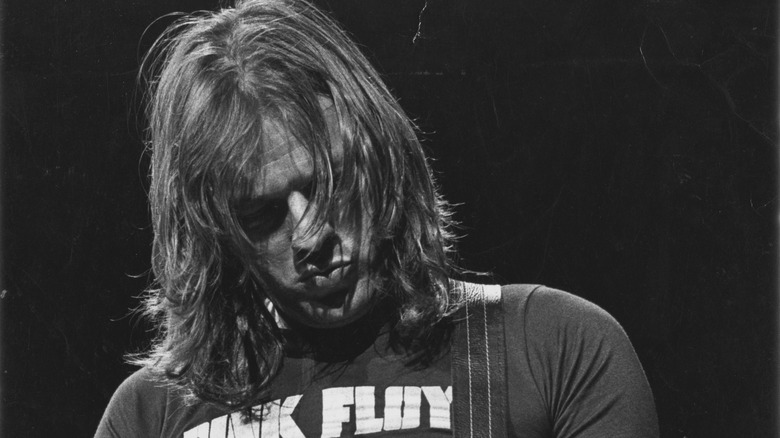
Decades after its release, Pink Floyd's "Dark Side of the Moon" remains a prog rock masterpiece. The 1973 classic contains all the essential prog elements, including an ambitious concept album that grafted jazz onto the band's psychedelic rock. Other hallmarks of prog include meticulous production, musical virtuosity, and dark themes, ranging from mental illness ("Brain Damage") to greed-based capitalism ("Money"). There's also the seamless blending of one song into another, along with inventive tape loops and snippets of conversation layered into the sonic tapestry, all resulting in a bold, adventurous album that concealed several hidden truths.
Not only is "Dark Side of the Moon" the most commercially successful prog albums ever, part of the untold truth of Pink Floyd is that it's also one of the most successful albums period. In fact, it's made history by spending nearly 1,000 weeks in the Billboard Top 200, more than than any other album.
The longevity of the album's legacy was made clear on the album's 50th anniversary, when Pink Floyd's Roger Waters released his own reimagined version, 2023's "The Dark Side of the Moon Redux." "This record actually deserves a reimagining," Waters declared in a promotional video. "Simply because the message has stood the test of time, the concept has stood the test of time and it's a really important thing. It needed to be expressed and it seemed like a really good way to celebrate the 50 years that the original recorded version of this work has survived."