

Every Music Lover Had One In The '80s — And It Deserves A Comeback
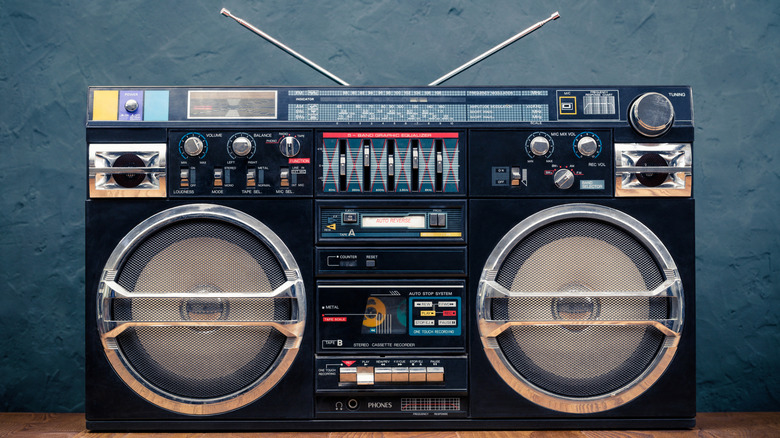
Back in the '80s, boomboxes ruled. These portable stereo systems, which typically included bass-heavy speaker setups, a radio, and at least one tape deck, were everywhere before the digital music revolution helped kill off the trend. But we feel this technology deserves a comeback, not least as a way to celebrate the communal side of music.
Born in 1966 when Philips introduced an early version of the boombox, the new systems took a while to catch on. In the 1960s, everyone may have had a hi-fi home stereo, but by the 1980s, many music lovers had moved on to tapes (and later CDs) and boomboxes were becoming ubiquitous. Not only did they allow folks to take their tunes with them outside, but boomboxes also tended to be cheaper than home stereo systems. Beyond portability and price, you could record songs straight off the radio, or, if you had a dual-tape-deck version, you could dub your friends' tapes (not that this was legal) and inexpensively grow your music collection. Besides these features, boomboxes were a status symbol and always brought the party wherever you took them.
Boomboxes also played a major role in the growth of hip-hop as the soundtrack to street breakdancing and block parties. Indeed, they deserve a spot next to the likes of rap pioneers such as Grandmaster Flash and DJ Kool Herc, since hip-hop culture wouldn't be the same without the boombox, especially the famed JVC RC-M90 featured on LL Cool J's first album.
Why boomboxes deserve a comeback
There are several reasons boomboxes deserve a comeback. For a start, with cassette tapes once again becoming popular in the mid-2020s, especially with Gen Z, those portable tape decks are the perfect way to get the full retro experience that older generations enjoyed when boomboxes were king, booming bass and all. Unlike with streaming, which is mainly hands-off and a very different vibe, boomboxes provide a unique music listening experience: With cassette players, you need to change the tape if you want to keep the music playing indefinitely, and in the '80s at least, cheaper models required the tape to be flipped once when they reached the end of side one.
Furthermore, the boombox's innately social function is especially relevant in light of the loneliness epidemic plaguing the U.S., with younger people particularly hard-hit. Today's technology, like smartphones and earbuds, acts to separate people from each other, the exact opposite of what boomboxes bring. They're meant to be used to share music with friends, whether at a picnic, street party, or beach outing.
The boombox boom may have peaked in the 1980s, yet there are modern versions that offer a retro or hybrid look with tape decks and CD players, but also Bluetooth connectivity and rechargeable batteries (and they're lighter than their ancestors). And while some folks may be inclined to seek out the real-deal 1980s models — and there's absolutely nothing wrong with that — we're arguing for the updated versions for practical reasons. Either way, it's high time we brought this portable party back. If nothing else, it's a good way to get out of the house and get both cardio and strength training as you walk down the street carrying one of these bad boys.