

The Most Devastating Days In Rock History
As any rock 'n' roll fan knows, loving a band is a double-edged sword. There's the amazing music, the transcendent live shows, and the excitement of seeing your fav succeed, but there is also the knowledge that tragedy lurks around every corner. The history of rock 'n' roll is littered with stories of horrific accidents, murders, acts of self-harm, addiction, and more.
It is difficult to measure what makes an incident particularly devastating. One way to gauge its impact is by how it affects those involved, such as family members, fans who were there, and society at large. Every rock 'n' roll death is a tragedy, but some reverberate far beyond the day itself, affecting individuals and even the world for years to come. With that in mind, here are some of the most devastating days in rock history.
The Day the Music Died
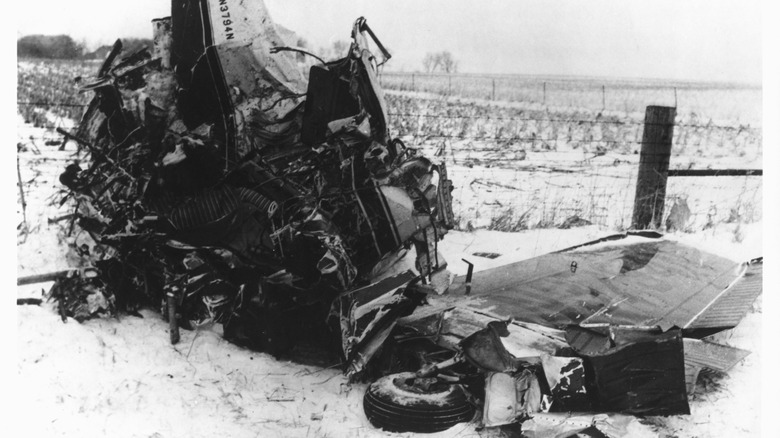
February 3, 1959, would become known as "The Day the Music Died." That was the day three young rock stars — J.P. Richardson (aka the Big Bopper), Buddy Holly, and Ritchie Valens — and their pilot, Roger Peterson, died in a plane crash while on tour. At the time, all three musicians were under 30 arguably at the peak of their careers. The accident was investigated, and the tragic explanation of the Day the Music Died is that the plane's owner, Jerry Dwyer, allowed a young, inexperienced pilot who wasn't trained to fly that kind of aircraft to take off with the musicians. A blizzard didn't help, either.
The story became national news that left a lasting impact on rock 'n' roll history, while also inspiring future musicians. While Don McLean's 1971 hit "American Pie" is the most famous tribute to the tragic event, it was not the only one. In 1959, Tommy Dee wrote "Three Stars" just a few months after the accident, and Eddie Cochran was one of several artists who covered the song that year. The effect of the rock star trio's deaths was still so raw that Cochran can be heard crying on the recording.
Dwyer was also deeply affected for the rest of his life. In an interview with Texas Monthly in 2009, one Clear Lake resident told the reporter, "Jerry and I are good friends, but I've never mentioned Buddy Holly to him because it has to be incredibly painful. Four human beings died in his airplane." They claimed Dwyer was still getting the occasional phone call from angry fans accusing him of killing Buddy Holly. Other fans, to this day, make their way to the crash site by the thousands.
The Altamont festival disaster
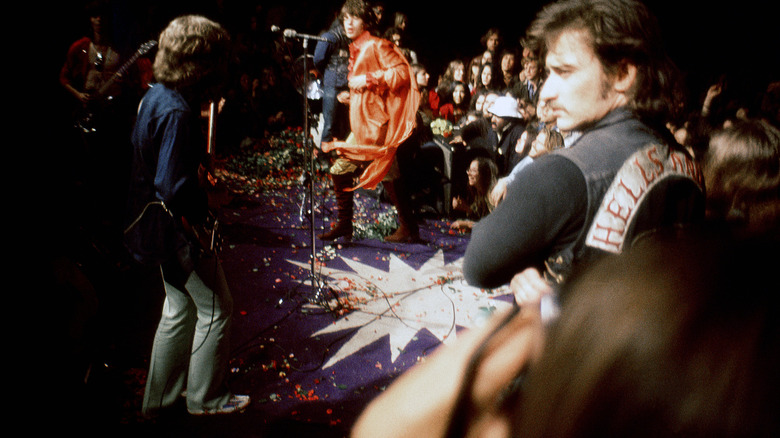
The Rolling Stones' decision to hire the Hells Angels as security for the Altamont festival and pay them in beer backfired spectacularly when members stabbed audience member Meredith Hunter to death. (The tragedy could have been even greater had the Hells Angels pulled off their intended revenge for the disaster's fallout: The motorcycle gang planned to kill Mick Jagger.) No one reached out to Alta Mae Anderson, Hunter's mother, after the tragedy, but she asked local officials to make it right by turning the speedway into a public park. "My son's blood is on the land," she said (via Rolling Stone). "... I cannot bring my son back, but by your action you may prevent any more wrongful deaths at Altamont." She didn't get her wish, as Altamont Speedway only closed for good in 2009, although it went through nine different owners, had endless problems, and was considered by many to be cursed. At the time of the incident, the local commissioners did at least ban all future concerts and limit capacity for all events.
One person who did not seem too affected by the killing, at least in the immediate aftermath, was Richard Carter, the owner of Altamont Speedway. When asked by the San Francisco Chronicle if he would do it all again considering what happened, Cross said, "By all means, yes. I think, if we do another festival, the first day of spring would be fine — that would give us time to make some preparations."
The murder of John Lennon
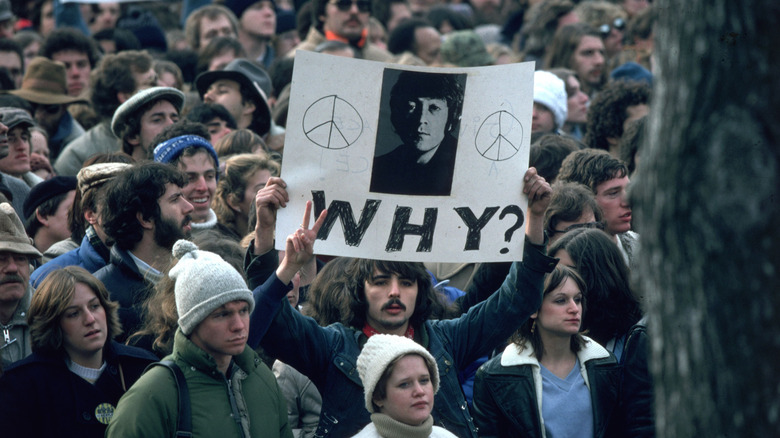
John Lennon's murder shocked the globe. Not only was he one of the most famous men in the world, but the violent act occurred in broad daylight — in front of his home, his wife, and several random New Yorkers who could not believe what they were seeing. Understandably, the people who witnessed John Lennon's murder were forever affected by it. In the 2023 docuseries "Lennon: Murder Without A Trial," taxi driver Richard Peterson could still remember what he saw as if it had just happened. "I'm looking at him through the front window of my cab," he recalled. "I'm looking at him shoot him. This guy just shot John Lennon. I thought they were making a movie, but I didn't see no lights or cameras or anything, so I realized, 'Hey, this ain't no movie.'" BBC reporter Tom Brook covered the murder for the organization and says it not only defined his entire career, but four decades later he still thinks about it every time he walks past the Dakota.
One of the people who remains deeply affected by that day (at least if you believe his claims to the parole board) is the murderer himself, Mark David Chapman. In 2020, he told the board (via the BBC), "I have no excuse. This was for self-glory. ... It was an extremely selfish act. I'm sorry for the pain that I caused to her [Ono]. I think about it all of the time."
The Lynyrd Skynyrd plane crash
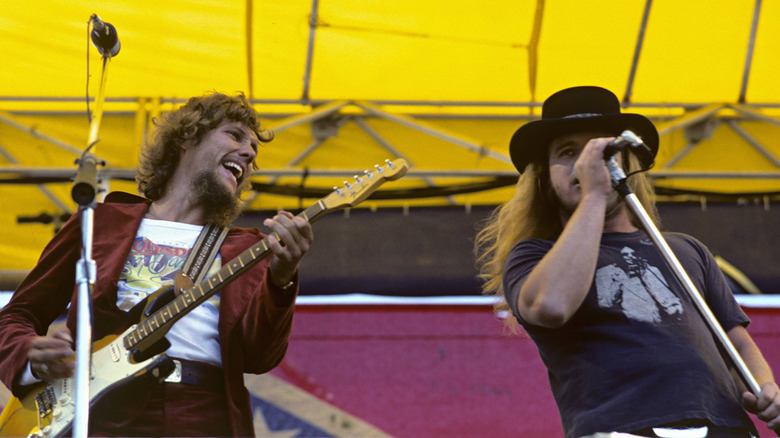
On October 20, 1977, Lynyrd Skynyrd and the band's entourage boarded an old, worn-out plane to head to the next stop on their "Street Survivors" tour. At the time, the band had already performed five shows to significant crowd sizes, which showed promise for the future dates. But unfortunately, they would never make it to the next stop. The plane ran out of fuel, and the resulting crash killed guitarist Steve Gaines and frontman Ronnie Van Zant (pictured left and right, respectively), as well as backing vocalist Cassie Gaines, assistant road manager Dean Kilpatrick, pilot Walter McCreary, and co-pilot William Gray Jr.
Amazingly, 20 people on board survived, although many suffered serious injuries. One of them, the band's drummer Artimus Pyle, is still haunted by the tragedy. "It's been 45 years since the plane crash, but it seems like yesterday," he told Forbes in 2022. "And I think about it every day." He gave his blessing to "Street Survivors," a movie about the incident, even though many others involved with the band and the accident sued to stop its release. "I wanted Lynyrd Skynyrd fans to know what we went through that fateful day and night," he explained. "And that my friends, Ronnie and the others, met their deaths very bravely." Fans certainly haven't forgotten the band or what happened. Not only are many Lynyrd Skynyrd songs considered classics today, but as of 2023, the crash memorial site was getting well over 1,000 visitors per month.
The Who deadly seating stampede
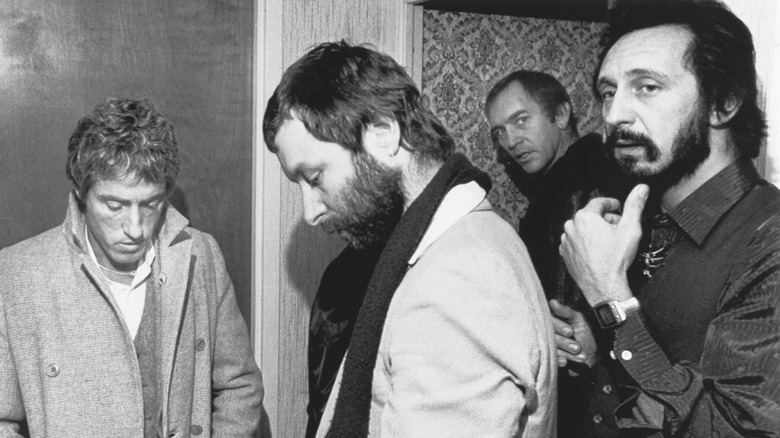
The Who played Riverfront Coliseum in Cincinnati on December 3, 1979. There were 3,578 reserved seats and 14,770 general admission (festival seating) tickets, so most people waiting for the doors to open knew they would have to fight for good seats. To make matters worse, the soundcheck noise confused many in the crowd, who thought they were missing the concert. In the push to get inside, 11 people were crushed or trampled to death.
"I saw a young man on a stretcher getting pushed across that entranceway," concertgoer Gerry Craven told Rolling Stone. "He was blue in the face. ... But it never crossed my mind at that time that so many people could have died that night. ... We didn't know that anything had happened until we got in our car on the way home and heard something on the radio." The band also had no idea that anything had happened. According to Pete Townsend, the members were only told once they were back in the hotel room. The logic had been that the show had to go on because canceling it and the fans trying to leave would just cause more chaos.
The tragedy had long-lasting effects for the city, the band, and people who were there. The Cincinnati City Council banned festival seating for the next 25 years. Many who attended the concert say they never went to another show or can't stand being in big crowds decades later. The Who finally played Cincinnati again in 2022, an event their manager says was part of the healing process.
The death of Elvis
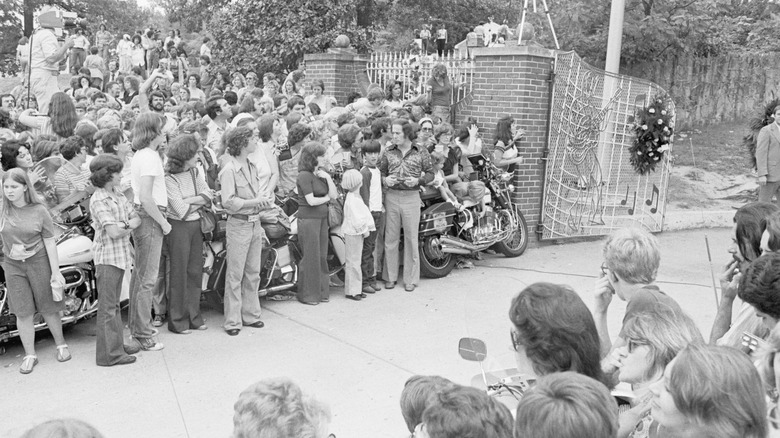
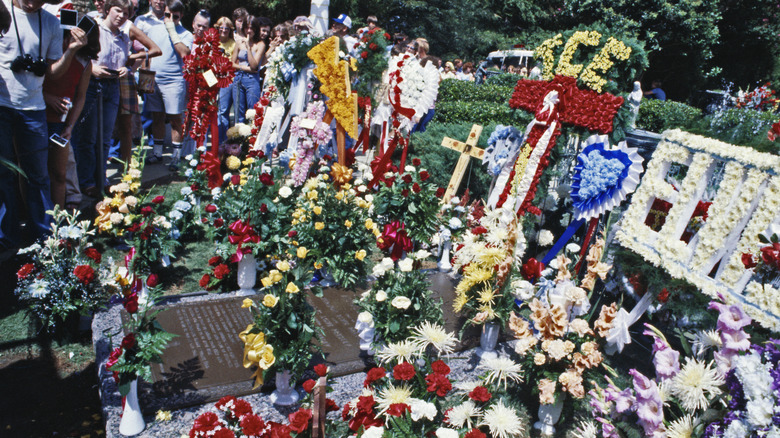
It's hard to comprehend what it was really like the day Elvis died in 1977. When the King of Rock 'n' Roll died suddenly on August 16 at just 42, it broke something in his millions of fans. Immediately, thousands descended on Memphis. "It was just overwhelming, the turnout," reporter Robert Hilburn, then the pop music critic for the LA Times, told Variety in 2017. "It was like a member of the family died ... That's what struck me, the depth of the emotion." When he went to a cafe, he said, "I noticed the jukebox was unplugged. The guy said it was too painful — people were crying."
When the public was invited to view the rock star's body for a brief period, they waited outside Graceland for hours in the summer heat. Some fainted and required medical attention. Robert Gordon was 16 at the time and thought Elvis was a bit cringe, but he quickly understood the magnitude of his death: "The phone lines went down because everybody was calling in and out in disbelief. ... you couldn't get a flower in town — all the florists were bought out by the Elvis fans who were arriving."
An estimated 80,000 people lined the streets when his hearse passed by during his funeral, while news helicopters were thick overhead. And it didn't end there. Every August, for the anniversary of his death, fans come together at Graceland to honor and mourn the King during Elvis Week.
The Metallica bus accident
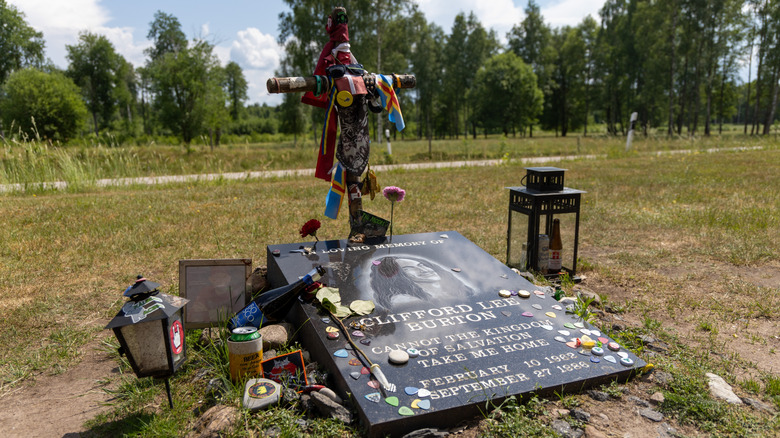
On September 27, 1986, Metallica was in the middle of a European tour when they were in a horrific bus accident in Sweden. Amazingly, most people on board walked away with no or minor injuries — but bassist Cliff Burton was crushed to death under the vehicle. The three remaining members of the band were distraught, though they tried to get back on the road as quickly as possible, knowing Burton would want them to.
A year after his death, Burton's parents spoke to Thrash Metal (via All Metallica) about their son. When asked if she wanted to say anything to the fans who had reached out, his mother said, "I'd certainly like to thank them all for their letters ... Here, a year later, I'm still getting letters! That's real love and affection, and that's really helped us through this last year. I can't begin to express how much that has meant to us."
For years, the band barely spoke about what happened until they opened up about it on VH1's "Behind the Music" in 1998. Their agony over a decade later is clear to see. In a 2016 video promoting the book "Metallica: Back to the Front," their pain was still just as raw, with Kirk Hammett wiping away tears when he talked about Burton. Fans haven't forgotten him either. In 2018, in response to a fan petition, Burton's hometown of Castro Valley, California declared February 10, which would have been his 58th birthday, to be "Cliff Burton Day."
The Pearl Jam concert crowd crush
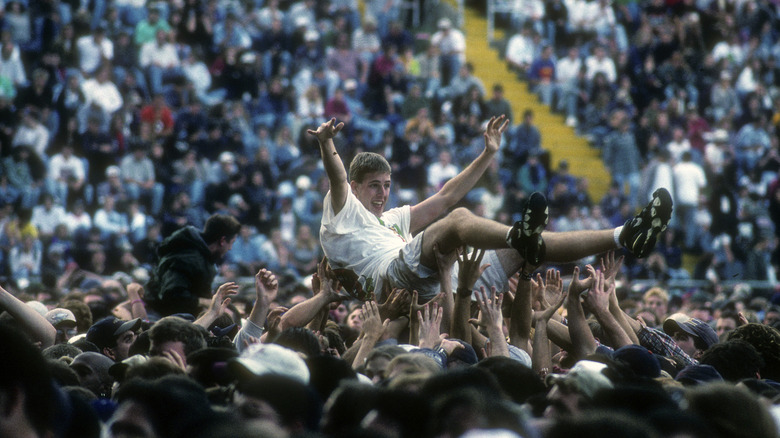
If you were watching Pearl Jam at Denmark's Roskilde Festival in 2000, you might have been confused when, according to Rolling Stone, frontman Eddie Vedder said to the crowd, "Imagine that I am your friend and that you must step back so as not to hurt me. You all have friends up front. I will now count to three, and you will all take three steps back." The crowd visibly moved backward, but for eight audience members, all men age 26 or under, it was too late. They had been suffocated or trampled to death in a crush in the mosh pit. A ninth died five days later from injuries he sustained in the incident.
While Oasis and the Pet Shop Boys canceled their appearances out of respect for the dead, the festival continued on as planned. A memorial service for the victims at a nearby cathedral saw over 1,000 mourners, including many who came straight from the festival, still covered in mud.
Pearl Jam was deeply affected by what happened. In 2002, they recorded "Love Boat Captain," a song about the tragedy. But with few exceptions, the band had not connected with the victims' families before 2003. That was when guitarist Stone Gossard traveled to Europe and met many of them, developing deep friendships with at least one set of parents. On the 20th anniversary of the tragedy, Pearl Jam released a statement explaining how nothing had been the same since that horrible day.
Kurt Cobain's death by suicide

Kurt Cobain and Nirvana had only been famous for four years when he died by suicide. His body was found a few days later on April 8, 1994. The tragedy was palpable — Cobain was another member of the 27 Club, with a young daughter and so much promise.
Cobain's death sparked concerns about copycat suicides, especially in Seattle. People knew how deeply his fans were affected by his death and how much publicity it was receiving. It also made people reflect on the number of references to the topic in Cobain's lyrics. "It's very painful," Michael Azerrad, author of the 1993 authorized Nirvana biography "Come as You Are: The Story of Nirvana," told ABC News. "You smack your forehead metaphorically and just think, 'Oh, why didn't I notice that?' It was staring at you in plain sight. But sometimes there's such a thing as hiding in plain sight, and that was one of those things." While copycat deaths thankfully didn't happen, more community outreach did, with many more people learning for the first time that they could call suicide hotlines for help.
Cobain's legacy was ultimately much more positive than might have seemed possible shortly after his death. Olivier Seavers, a Seattle music producer who wasn't born until a decade after Cobain's death, told the Seattle Times, "A lot of grunge lyrics bring to light issues that people weren't even really aware of. Kurt spoke up for LGBTQ people, women, and encouraged people to open their minds."
The Station Nightclub Fire
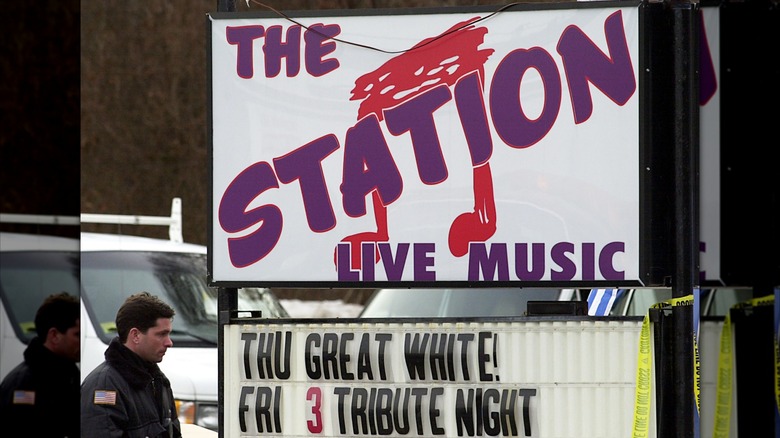
The Station nightclub fire was one of the most terrifying structural fires in history. People were packed into the Rhode Island venue to see the rock band Great White — or at least an iteration of the original band, which included frontman Jack Russell. A pyrotechnic disaster during a performance left one band member, guitarist Ty Longley, and 99 audience members dead in the fourth deadliest nightclub fire in American history. An additional 230 others were injured from burns, smoke inhalation, or being trampled. Only 132 people made it out unscathed.
The band's manager and the club's two owners pleaded guilty to various felonies related to the tragedy. Victim impact statements read at the manager's sentencing revealed loved ones of the deceased who could barely function or had thought about suicide.
Looking back on the tragedy on the 20th anniversary, Boston Public Radio pointed out that a similar deadly fire happened at the Ghost Ship warehouse in California in 2016. But law professor Daniel Medwed assured the outlet that there had been positive changes that came from the Station tragedy. "Immediately afterwards, the governor of Rhode Island issued a moratorium on the use of pyrotechnics in small venues," he explained. "There also was a movement that began to gain traction to create fire sprinkler laws across the country." The National Fire Protection Association also revised its guidelines. So while these incidents will never stop entirely, the Station victims did not die in vain.
The murder of Dimebag Darrell
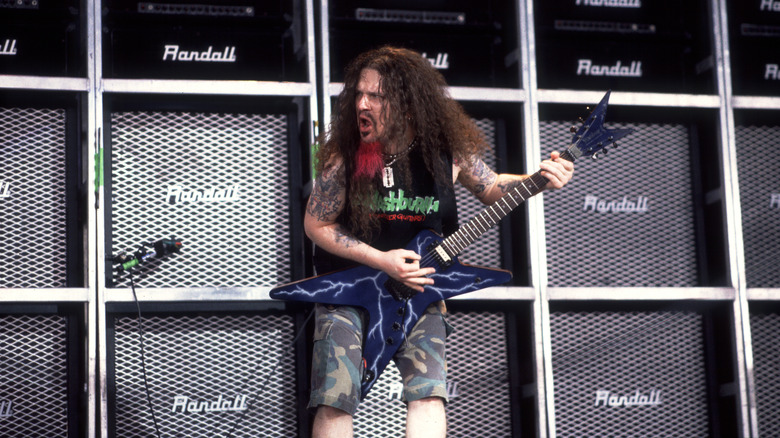
In 2004, former Pantera guitarist Dimebag Darrell was playing a gig with his new band, Damageplan, when attendee Nathan Gale jumped on stage and shot him dead. It was an unprecedented act of violence at a concert in front of fans. (The detail that makes Dimebag Darrell's death even stranger is that it happened on the anniversary of another tragic day in rock history: December 8, 2004, was exactly 24 years after the murder of John Lennon.) But Darrell's murder was just the beginning of the horrible tragedy. Gale, who was schizophrenic and believed Pantera was stealing his thoughts, killed three other people and injured two more before taking drum tech John "Kat" Brooks hostage.
At that point, Officer James Niggemeyer, who was on the scene minutes after the first 911 call, realized he had a clear shot and took it, killing the gunman. That heroic action affected him deeply. He experienced post-traumatic stress disorder, eventually left the police force, and was in therapy for many years.
The incident also drove a deep wedge between two former members of Pantera. Philip Anselmo had said some not-nice things about Darrell to the press before he was killed, and after the tragedy, Vinnie Paul made it clear he put part of the blame on Anselmo's angry rhetoric and refused to even consider a Pantera reunion. The pair remained estranged until Paul's own death in 2018.
If you or anyone you know needs help with addiction issues, help is available. Visit the Substance Abuse and Mental Health Services Administration website or contact SAMHSA's National Helpline at 1-800-662-HELP (4357).
If you or someone you know needs help with mental health, please contact the Crisis Text Line by texting HOME to 741741, call the National Alliance on Mental Illness helpline at 1-800-950-NAMI (6264), or visit the National Institute of Mental Health website.
If you or someone you know is struggling or in crisis, help is available. Call or text 988 or chat 988lifeline.org.