

Every Music Lover Had One In The '70s — And It Deserves A Comeback
We may receive a commission on purchases made from links.
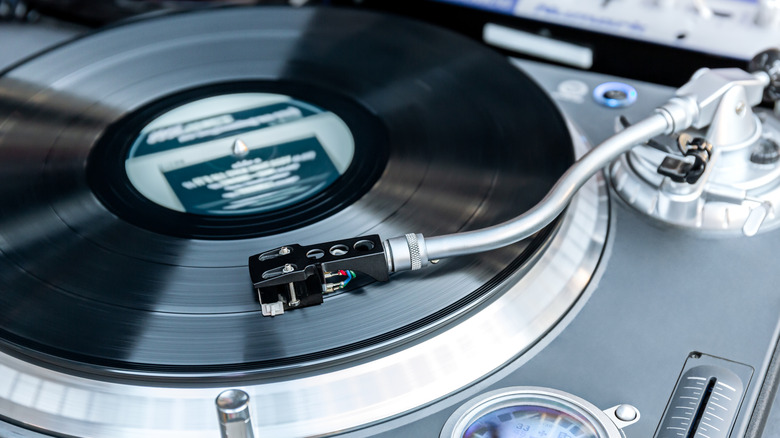
Since vinyl is on the rise, here's a question for vinyl newbies: Which type of turntable are you going to use? Folks back in the '70s already figured this out as soon as direct-drive turntables hit the market in 1970. They were quickly adopted by audiophiles and music lovers alike, and paired well with the '60s hi-fi stereo revolution. In our opinion, they deserve a full comeback.
"Direct-drive turntable" essentially means "motor under the record turntable," with the turntable being the spinny thing that you put the record on. Because the motor is directly under the record, the record reaches 100% speed more quickly, is more stable overall, and there are fewer variations in music quality. This type of physicality might blow the minds of folks who've only dealt in digital media, but it's part of the charm of vinyl and explains why Gen Z is driving vinyl sales. Humans like touching actual things; what can we say?
Before direct-drive turntables, folks used "belt-drive turntables." This means the motor is off to the side, detached from the turntable, and you've got to connect the two with a belt, like a fan belt in a car. The belt has to be changed over time, the record takes time to reach full speed, and there are dips in music quality. Some music enthusiasts don't mind this style, even nowadays, but for a hassle-free, high-quality listening experience, direct-drive is the way to go. You might as well join the vinyl revival in top form.
Direct-drive turntables helped overhaul home listening
Technics led the direct-drive turntable revolution with their SP-10 turntable, released in 1970. Five years prior, the Japanese company had turned its attention towards research-driven, nitty-gritty sound engineering to guide its product development. This kind of approach might seem dry to non-audiophiles and far removed from the fun someone feels while jamming out to their favorite artist, but this is what it took to bring the most out of recorded music.
The results speak for themselves. Even now, many listeners regard this half-century-old turntable and its offshoots as the best. And by best, we mean best sound quality. There are plenty of other record player components that affect sound quality, like the stylus, but without a direct-drive motor spinning and spinning at a perfectly consistent speed and strength for hours and hours, there's going to be stutters and hiccups in the music. Direct-drive turntables didn't just improve home listening, though. They're so stable that they formed the bedrock of the kind of record-scratching DJ work found in hip-hop, back to DJ Kool Herc in 1973 (he used a Technic Direct Drive Player System SL-1200).
Nowadays, music lovers can buy direct-drive turntables from a huge price range, from a few hundred dollars to thousands, even tens of thousands of dollars. Some of these are hybrid turntables, meaning they've got digital components on top of the core turntable, like Bluetooth connectivity and USB hookups. Folks can always go vintage, as well, and buy used, really beautiful versions on sites like eBay. No matter what, folks looking to get into vinyl would do well to learn from the '70s, right down to the music choices themselves. Now that that is solved, which came first, the record player, or records?